
On 29th January 2015, the Bishop of Ely, the Rt Revd Stephen Conway, took part in Baroness Perry of Southwark’s take note debate in the House of Lords on the progress of the Government’s school reforms. The Bishop, who recently took over the role of Chair of the Church of England’s National Society, focused his speech on the success of reforms in Church schools – including through the transition of many secondary schools into academies and the development of imaginative and collaborative ways to protect rural schools. He noted the Church’s focus on the development of free schools in areas of deprivation, the importance of high-quality training and recruitment of teachers, the importance of character education alongside other parts of the curriculum, and the hope that a holistic approach could be taken to education, to ensure that the next generation are best prepared for the future.
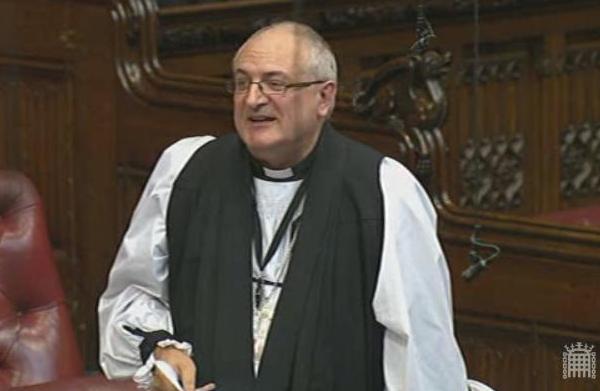 The Lord Bishop of Ely: I am very grateful to the noble Baroness for securing this timely debate, not least as I have just taken over as chair of the Church of England’s National Society, which is responsible for our schools. We talk about urgency and the long term, and our picture goes back until at least 1811, with the foundation of the National Society. We have planted thousands of schools, determined that every child in the country should have access to a decent education regardless of their capacity to pay for it. The church continues to want to be involved in the reform and improvement of education across the board, not just in church schools but across primary schools, community schools, secondary schools and the university sector.
At the last count, 60% of our Church of England secondary schools had, following the national statistic, become academies. I pay tribute to the diocesan boards of education, head teachers and school staff who have made dramatic and impactful efforts in improving these schools for the sake of their pupils. I cite the example of a cracking diocesan academy, the inspirational John Wallis Church of England Academy in Ashford in Kent, a three-to-19 academy that is having a really transformative impact on the whole community. In my own diocese, we are blessed with a very fine multi-academy trust board, which is the second largest local academy group in our region and the fastest-growing in the primary sector. We are determined to go further with expansion, but we remain fully committed to our schools that remain outside the multi-academy trust.
I know that the Government have been frustrated by the pace of academisation in the primary sector, but it is vital that we recognise that this might not be the right way for all schools. Last year we published a report on securing rural schools into the future. Its key recommendation was that our schools should be more imaginative in collaborating with each other, sharing different sites for different purposes and adjusting to the shifting dynamics of local populations, precisely so that we can continue to serve the most disadvantaged in our society, often in the hidden poverty of the countryside. I am pleased to be able to say that around the country in rural areas we have excellent executive head teachers leading clusters of schools towards greater school effectiveness and community engagement. It is crucial that schools remain as a presence in our rural communities, even if they are small, because otherwise we might have a lot more anonymous dormitory settlements for people who do not live where they sleep.
I know that the subject of free schools has become a controversial one and therefore somewhere that bishops should tread lightly, but I would like to share our experience of them. There are now a modest handful of Church of England free schools open and running, with more in the pipeline. Good relationships with a number of regional school commissioners have enabled us to use free schools to bring to whole new communities our offer of a distinctive, quality education based on a strong Christian ethos. This is very important for us in the Church of England because we have always been committed to ensuring that our schools serve people of disadvantage in any part of our society.
Demographic change is upon us and spurs us to seek to establish new schools where we see community need. Free schools have provided our diocesan boards with the option to seek out for themselves new ways of serving those in areas suffering multiple disadvantage, and for that we are very grateful. However, success in implementing policy is not enough; neither the current Secretary of State nor her predecessor will be satisfied if history recorded them as having revolutionised only the governance of our schools—even though, as we have heard, that governance is vital. For all of us, the much more pressing concern is whether or not these reforms have made an impact on the future that we are preparing with our children. The truth is that it may be too early to tell and we should take a long view. I note with interest the measured report from the Select Committee. Like the committee, I would not want to rush to too many conclusions. However, even with the reticence I might have about the impact of the reforms so far, I am much more concerned not only about ensuring that standards are high but, as we have spent the previous 20 years trying relentlessly to improve those schools’ performance, about asking how we test the standards themselves. What are we asking teachers under those standards to do, and why?
I am particularly grateful for everything that the noble Lord, Lord Baker, has been doing around the development of UTCs and for his reminding us of the profoundly vocational nature of education. I applaud that and hope that the church may become much more involved in the promotion of this model. As we celebrate the vocation of our children and young people in educational development, so alongside that we celebrate the vocation of our teachers. As we celebrate that noble vocation and put more effort into understanding its value, so I am sure we will increase the number of people prepared to offer themselves sacrificially to that profession.
I am delighted that both the Government and the Opposition have begun to talk more convincingly about character education, because this is a way into the conversation about what really matters in education. There can be no question but that we hope that children will become economically productive, become successful in employment and secure prosperity for our country. We need them to be literate and numerate. However, that cannot be all that we hope for. In our schools and colleges we forge partnerships with parents to begin shaping the citizens and communities that we wish for the future. How successful are our schools at integrating young people from different backgrounds? How successful are they at equipping them to make difficult decisions about themselves and others throughout their lives?
We want children who demonstrate not only personal resilience and academic ambition and curiosity but steadfastness in their service to others, commitment in and to their relationships and the courage and integrity to speak out against injustice. We need to do further work on weaving the development of emotional, spiritual and social intelligence into the whole curriculum so that, as we have heard already, all teachers—all the stakeholders in our schools—are responsible for helping the children to understand that, across their lives, their integrity, their purpose and their hope count. Like so many, the church will continue to explore what the new policy landscape means for the long-term future of education. We will all continue to debate the success of reforms in this Parliament, but I hope that as we do so we keep one eye on the bigger purpose of a holistic, smart education, which is our greatest investment in our future.
**
Baroness Garden of Frognal (Government Response): …The noble Baroness, Lady Jones, and the noble Lord, Lord Whitty, among others, referred to the House of Commons Education Select Committee report on academies and free schools, which has just been published. The committee’s research has led to wide-ranging recommendations. It acknowledges that it is too early to judge whether academies raise standards overall. It concludes that both academies and state-maintained schools have a role to play in system-wide improvement by looking outwards and accepting challenges to ensure high quality education for all children. At this point I pay tribute to the contribution of the right reverend Prelate when he set out the part played by the Church, which has always been significant over the centuries.
We are firmly on the side of people who want to work hard, get on and provide a decent education for their children so that they can reach their full potential. Parents, teachers, faith groups and social entrepreneurs who are successful in the rigorous application process have opened new state schools, and more than 250 free schools are up and running. Seven in 10 mainstream free schools are delivering good quality places in areas which need school places. More than half have been set up in our most deprived communities. My noble friend Lady Perry, the right reverend Prelate and my noble friend Lady Evans referred to the locations of these schools. Once fully operational, all existing and planned free schools will provide around 200,000 new places, and I pay tribute to my noble friend Lady Evans for her work with the new school networks…
Our aspiration is for all our schools to prepare all our young people for life in modern Britain, to inspire them academically but also to develop a range of character attributes, such as those outlined by the right reverend Prelate—resilience and grit—which underpin success in education and employment. To achieve this, we are investing £5 million to expand capacity in character education, build evidence of what works and deliver a national awards scheme to recognise existing excellence. In response to the noble Lord, Lord Knight, we are currently reviewing ASDAN’s certificate of professional effectiveness and its position in performance tables, but I will pass the noble Lord’s request for a meeting on to the Secretary of State.
(via Parliament.uk)
 The Church of England in Parliament
You must be logged in to post a comment.