Bishop of Southwark supports regret motions on changes to immigration regulations

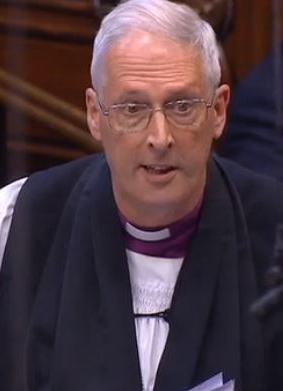
On 14th April 2026, the Bishop of Southwark spoke in support of two regret motions regarding the Statement of Changes in Immigration Rules published on 5th March 2026, expressing concern regarding the impact of the changes on refugees, family reunion, and discourse surrounding migration:

The Lord Bishop of Southwark: My Lords, it is a privilege to follow noble Members of this House speaking with wisdom, compassion and conviction. I understand that, in the current polarised climate, the Government want an immigration policy that is not only capable of exercising control over migration into this country but is demonstrably seen to be doing so. In that endeavour, the recent summary of immigration statistics, published for the year ending 31 December 2025, indicates a marked reduction in inward migration in most categories, although that of illegal channel crossings—itself not the largest category by some margin—remains stubbornly immune to downward pressure.

I wish to offer some observations from these Benches that, while sympathetic to where Ministers find themselves, none the less owe a debt of gratitude to the regret Motions from the noble Lords, Lord German and Lord Dubs, for making it possible to have this debate—for which I express thanks.

Continue reading “Bishop of Southwark supports regret motions on changes to immigration regulations”

Bishop of Southwark pays tribute to departing Clerk of Parliaments

The Bishop of Southwark joined in tributes to the departing Clerk of Parliaments, Simon Burton, on 13th April 2026:

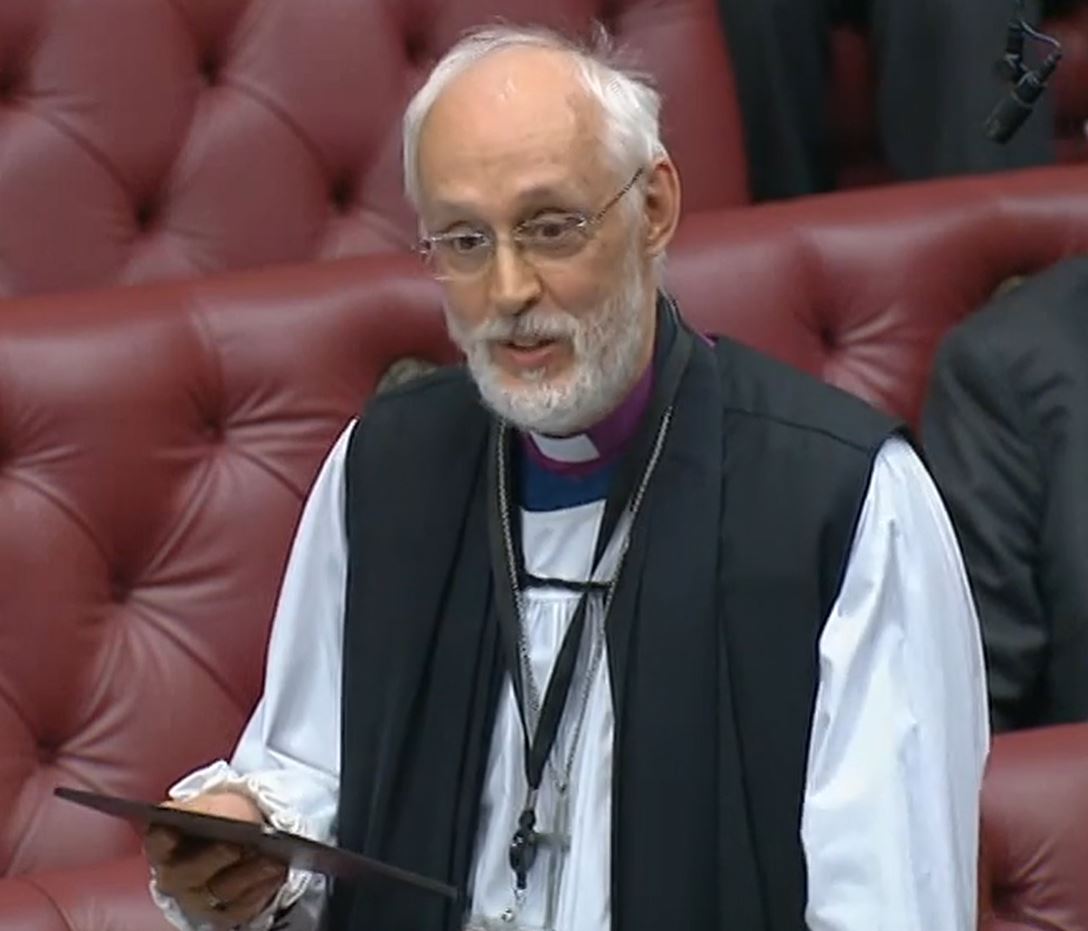
The Lord Bishop of Southwark: My Lords, from these Benches I echo the comments of those noble Lords who have gone before me. I pay tribute to Simon Burton, whose service as Clerk of the Parliaments has been of lasting value to the House.

The strength of our parliamentary life depends not only on those who speak in debate but on those who ensure that our work is carried out with integrity, order and constitutional faithfulness. In that vital task, Simon has served with distinction. As Clerk of the Parliaments, he has been both guardian of ancient custom and wise guide through modern complexity. He has exercised that responsibility with clarity of judgment, intellectual rigour and an unfailing sense of proportion.

Continue reading “Bishop of Southwark pays tribute to departing Clerk of Parliaments”

Terminally Ill Adults (End of Life) Bill: Bishop of Southwark supports amendments on conscientious objections

The Bishop of Southwark spoke in support of an amendment to the Terminally Ill Adults (End of Life Bill) intended to provide a framework for conscientious objections and opt-outs to the bill for a wider range of health and social care staff on 27th March 2026:

The Lord Bishop of Southwark: My Lords, I am glad to follow the noble Baroness, Lady Fox of Buckley, because I added my signature to Amendment 673 in the name of the noble Baroness, Lady Fraser, as did the noble Lords, Lord Carlile and Lord Hunt of Kings Heath.

Continue reading “Terminally Ill Adults (End of Life) Bill: Bishop of Southwark supports amendments on conscientious objections”

Bishop of Newcastle raises issue of equal access to care during debate on access to healthcare for those with learning disabilities

The Bishop of Newcastle spoke in a debate on access to health and social care for those with learning disabilities on 26th March 2026, highlighting the need for equality of access to care:

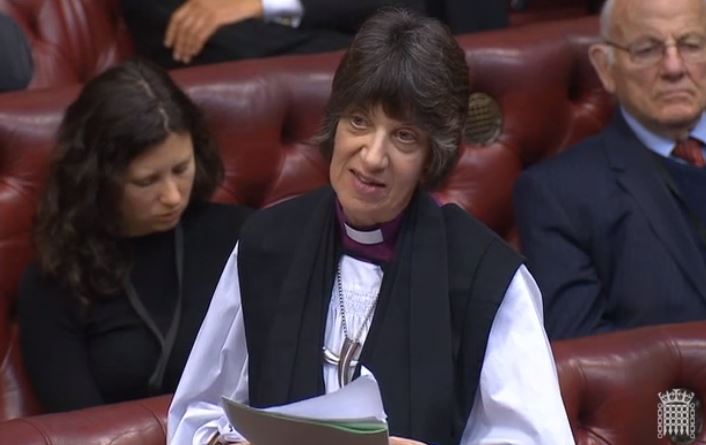
The Lord Bishop of Newcastle: My Lords, I am grateful to the noble Lord, Lord Scriven, for bringing forward this Question for Short Debate. I acknowledge his very personal connection to this topic and echo the words of the noble Baroness, Lady Ramsey of Wall Heath, in paying tribute to his powerful opening speech. I also express gratitude to the organisations that have written to me; I am particularly grateful for the extremely helpful briefing document from Mencap.

The topic of our debate has been on my mind since I sat on the Select Committee in your Lordships’ House as part of the Terminally Ill Adults (End of Life) Bill process. Persistent health inequalities for young people—well, for people generally—living with a learning disability and those with Down syndrome were raised on behalf of the National Down Syndrome Policy Group by Ken Ross, who gave evidence to the Select Committee describing

“a systemic direct and indirect bias shown within the health service, which could also be linked to a lack of understanding of the needs, wishes, health, learning and communication profiles of this particular group”.

Continue reading “Bishop of Newcastle raises issue of equal access to care during debate on access to healthcare for those with learning disabilities”

English Devolution and Community Empowerment Bill

The Bishop of Manchester spoke in support of amendments on the topic of community rights during a debate on the English Devolution and Community Empowerment Bill on 26th March 2026:

The Lord Bishop of Manchester: My Lords, I think I have been cued in. I will speak to my Amendment 318A as—yes, still—the Bishop of Manchester. There is a vacancy in London, but I think I am too old to be considered.

Over the last 18 months, I have been chairing the Manchester Social Housing Commission. Central to our work has been the contributions that local residents and communities representing their neighbourhoods make to our thinking and, eventually, our recommendations. We have seen how empowered communities make a real difference. They are the people who know what it is like to live where they do. They can shape local services for the best results.

Far from being a problem for authorities to manage, communities continually demonstrate how they respond to the cost of living crisis or the epidemic of loneliness. People in communities are vital in driving their own solutions. As I go around my diocese, I see again and again how local people taking the initiative really make a difference.

Continue reading “English Devolution and Community Empowerment Bill”

Terminally Ill Adults (End of Life) Bill: Bishop of Southwark supports amendments on protection of those with communication difficulties

On 20th March 2026, during a debate on the Terminally Ill Adults (End of Life) Bill, the Bishop of Southwark spoke in support of amendments to the bill focused on providing protection for those with speech, language, and communication difficulties:

The Lord Bishop of Southwark: My Lords, I support the amendments in this group, particularly Amendment 171 in the names of the noble Baronesses, Lady Nicholson of Winterbourne and Lady O’Loan.

Clause 5, as we have heard, introduces a key element in the infrastructure of assisted dying in this Bill by providing what is intended to be a safe, but not mandatory, introduction to the subject of death with the assistance of another human being. For proponents of the Bill, the advantages of such an introduction are obvious. In their minds, it will remove a good deal of unnecessary distress on the part of those who wish to proceed with such an option and on the part of those who do not. However, as we have heard from those of us who have long experience of pastoral encounters, the experience is likely to be rife with pitfalls.

Continue reading “Terminally Ill Adults (End of Life) Bill: Bishop of Southwark supports amendments on protection of those with communication difficulties”

Crime and Policing Bill: Archbishop of Canterbury speaks in debate on abortion law

The Archbishop of Canterbury spoke during a debate on the proposed clause 208 of the Crime and Policing Bill on 18th March 2026, which would seek “to add the requirement of DPP consent for the institution of the criminal proceedings in Clause 208 against a woman acting in relation to her own pregnancy and reduces the limitation period for the offence,”, opposing the clause and supporting amendments on the safeguarding of under-18s accessing abortion services:  

The Lord Archbishop of Canterbury: My Lords, many noble Lords will know that the Church of England’s view on abortion is one of principled opposition, recognising that there can be limited conditions under which abortion may be preferable to any available alternatives. This is based on the belief of the infinite worth and value of every human life, however old or young, and including life not yet born. The infinite value of human life is a fundamental Christian principle that underpins much of our legal system and has shaped existing laws on abortion. All life is precious. We therefore need to recognise that women confronted with the very complex and difficult decision to terminate a pregnancy deserve our utmost understanding, care and practical support as they face what is often a heart-wrenching decision.

However, I cannot support Clause 208. Though its intention may not be to change the 24-week abortion limit, it undoubtedly risks eroding the safeguards and enforcement of those legal limits and, inadvertently, undermining the value of human life.

Continue reading “Crime and Policing Bill: Archbishop of Canterbury speaks in debate on abortion law”

Crime and Policing Bill: Bishop of Oxford supports amendments on tech safety

The Bishop of Oxford spoke in support of amendments to the Crime and Policing Bill tabled by Baroness Kidron on regulation of chatbots and the need for safety infrastructure in technology:

The Lord Bishop of Oxford: My Lords, I also support the amendments in the name of the noble Baroness, Lady Kidron, and others, and thank them all most warmly. They seem to me appropriately comprehensive and detailed. I have been following the developments in chatbots for a year now: they are massive, they are rapid, they are driven by the pursuit of profit and shareholder value, and not by the welfare of individuals, whether adults or children. There is a tsunami of harm coming towards us, affecting not only the most vulnerable but the whole of our society. We urgently need this kind of regulation and risk assessment for chatbots.

Continue reading “Crime and Policing Bill: Bishop of Oxford supports amendments on tech safety”

Universal Credit (Removal of Two Child Limit) Bill: Bishop of Leicester welcomes legislation

The Bishop of Leicester spoke at the second reading of the Universal Credit (Removal of Two Child Limit) Bill on 12th March 2026, welcoming the bill and criticising the impact of the two child limit on poverty and the associated sense of shame those engaging with the welfare system are made to feel:

The Lord Bishop of Leicester: My Lords, I warmly welcome the introduction of the Bill and the opportunity today to comment on it. I congratulate the noble Baroness, Lady Teather, on her truly excellent maiden speech, and I look forward to the maiden contributions of the noble Baroness, Lady Antrobus, and the noble Lord, Lord Walker, as well as of other noble Lords.

I count myself very fortunate to have never experienced true poverty myself, but I have spent much of my working life living in communities where poverty was very real—both the absolute poverty of one of the poorest nations in Africa, where I worked for several years, and the relative poverty of inner-city Sheffield, where I was vicar for a decade before becoming Bishop of Leicester.

Continue reading “Universal Credit (Removal of Two Child Limit) Bill: Bishop of Leicester welcomes legislation”

Crime and Policing Bill: Bishop of Manchester supports amendments on civil accountability

On 11th March 2026, the Bishop of Manchester spoke during a debate on an amendment to the Crime and Policing Bill tabled by Lord Davies of Gower which “would prevent the Independent Office for Police Conduct from investigating an officer where that officer has already been investigated and acquitted in court for the same conduct matter,”, opposing the amendment and stressing the need for accountability in civil proceedings:

The Lord Bishop of Manchester: My Lords, can I add my two-penn’orth to this? I declare my interest as the co-chair of the national police ethics committee, but I am speaking more as a serving Bishop. I have to hear disciplinary complaints against clergy. Sometimes those clergy have committed something which is being investigated first by the police. To answer the point from the noble Lord, Lord Hogan-Howe, often the police tell us, “We don’t want you interfering until we have finished”. If the result of the criminal proceeding is that the person is convicted, I can then do quite a summary process in terms of applying a penalty or perhaps depriving that member of the clergy from serving in their parish, perhaps banning them from ministry for a time or for life. But all of that is very much on that balance of probabilities, on the civil standard. It is very different from the criminal standard.

Continue reading “Crime and Policing Bill: Bishop of Manchester supports amendments on civil accountability”