Social Housing Bill: Bishop of Manchester speaks at second reading

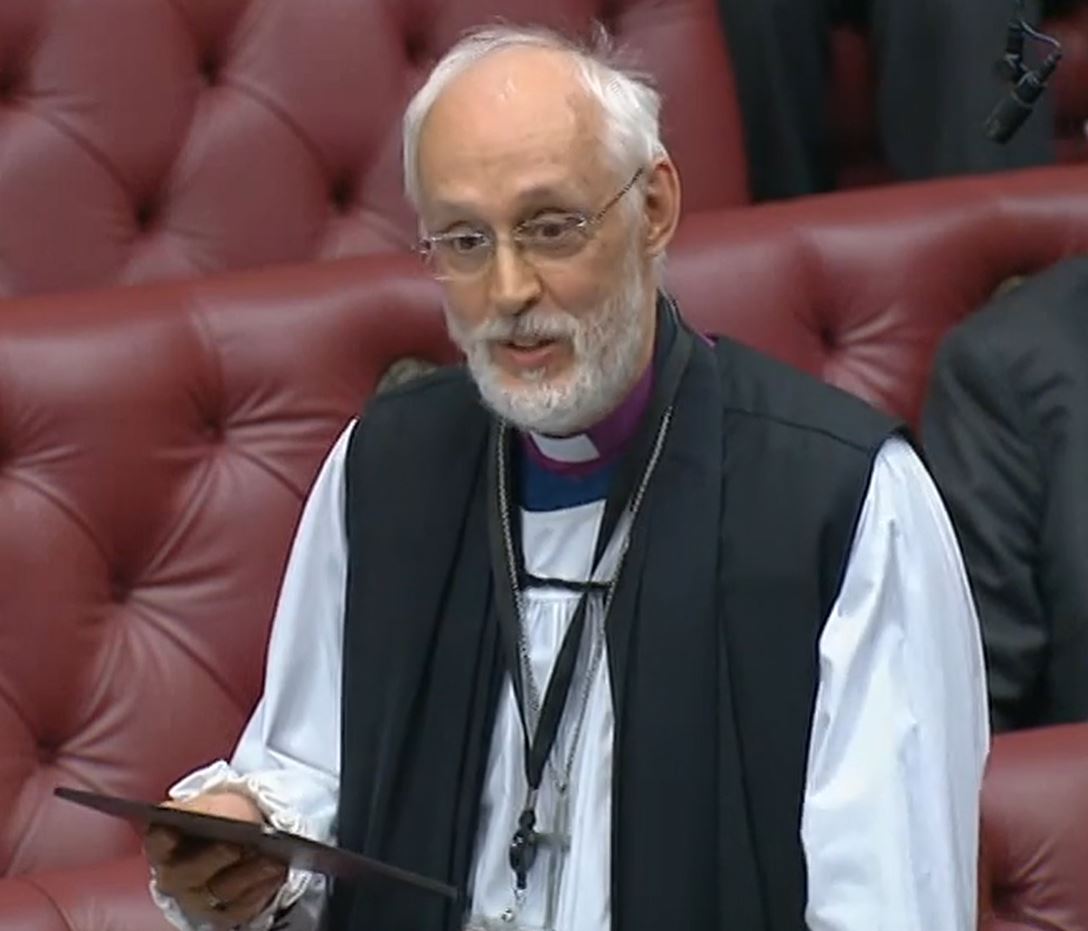
The Bishop of Manchester spoke at the second reading of the Social Housing Bill on 1st June 206, noting the need for secure and high-quality social housing to combat child poverty and help build communities:

The Lord Bishop of Manchester: My Lords, it is always daunting to follow the noble Lord, Lord Best, on a matter to do with housing. I begin by declaring my interest: I am the chair of the Church Housing Association, a recently formed, not-for-profit social housing provider that we are seeking to build, literally and metaphorically, on the five core values that were set out in the most reverend Primate the Archbishop of Canterbury’s commission on housing, Coming Home, which was debated in your Lordships’ House a few years ago. Those values—that social housing should be safe, secure, sustainable, sociable and satisfying—provide a set of tests against which any proposed legislation could be measured, hence I warmly welcome the Bill. It will make social housing better.

Housing is a fundamental human right. It is a foundation for other core rights, including things such as health, dignity, sanitation and sometimes the right to life itself. The Bill rightly addresses the concern that there is not enough stock in this country to house those in need.

Continue reading “Social Housing Bill: Bishop of Manchester speaks at second reading”

Bishop of Manchester asks about overseas aid

The Bishop of Manchester asked a question on the possibility of increasing overseas aid to mitigate harm to minority and disenfranchised communities in the Middle East, following a government statement on the economic response to the war in Iran on 1st June 2026:

The Lord Bishop of Manchester: My Lords, as this debate has continued, I have become increasingly concerned that the phrase “Middle East” in the title is referring to somewhere between Nottinghamshire in the north and Northamptonshire in the south. The Middle East to me is a series of countries where war is currently raging and people are suffering incredible consequences—I am thinking, for example, of Afghan refugees in Iran, who are one of the most vulnerable groups there, and many other Iranian citizens, and thinking of some of the Palestinians in the West Bank. Is this not the time, as well as looking after our own people, for the Government and Treasury to think about increasing our overseas aid to mitigate some of the severe harm that is being done to some minority communities or oppressed communities in different parts of the Middle East?

Continue reading “Bishop of Manchester asks about overseas aid”

Bishop of Manchester highlights concerns for mental health of trans people following supreme court judgement

The Bishop of Manchester asked a question on support for the mental health of trans people during a discussion on the implementation of Supreme Court judgment in For Women Scotland Ltd v The Scottish Ministers on 1st June 2026:

The Lord Bishop of Manchester: My Lords, alongside other faith leaders, I am increasingly coming across trans people—men and women, often young and quite fragile—who are increasingly frightened. They are frightened about participating in public life and about being challenged. Some are even frightened about going to the doctor. What assessment have His Majesty’s Government made of the mental health of trans people, and how will they support them with these changes?

Continue reading “Bishop of Manchester highlights concerns for mental health of trans people following supreme court judgement”

King’s Speech Debate: Bishop of Manchester speaks on importance of civil liberties

The Bishop of Manchester spoke during the King’s Speech Debate on foreign affairs, defence, and diplomacy on 21st May 2026, emphasising the need to balance security with civil liberties:

The Lord Bishop of Manchester: My Lords, before turning to the main substance of today’s debate, I briefly say that I warmly welcome the inclusion in the gracious Speech of a promise to tackle so-called conversion practices. These have severely damaged and traumatised many LGBT people over decades, not least when performed in the name of religion. I welcome that promise just as warmly today as I welcomed it from this same Bench on the three or four occasions when it has previously been made. I hope that, this time round, we will actually get to the point of legislating. Indeed, the General Synod of the Church of England overwhelmingly voted to press the Government to do just that several years ago.

Turning to today’s main topics, I want to speak briefly about Britain’s soft power, covert foreign influence and defending liberal democracy. As international threats grow more complex and less overt, Britain’s foreign policy and influence abroad depends less on traditional hard power alone and increasingly on proactive British diplomacy. Noble Lords have already alluded to this but, alongside our formal diplomatic missions, key institutions such the British Council and the World Service extend our cultural influence. Many of our universities, along with our public schools, play a key role in shaping future global leaders. They must be sufficiently supported and resourced to do the job we need them to do.

Continue reading “King’s Speech Debate: Bishop of Manchester speaks on importance of civil liberties”

Bishop of Manchester highlights role of faith communities in civil preparedness

The Bishop of Manchester spoke in a debate on civil preparedness on 20th April 2026, speaking on the role of faith groups and the importance of civil liberties:

My Lords, I share the gratitude already expressed to the noble Baroness, Lady Harris of Richmond, for securing this debate. In the short time available I will make just three brief observations, and I assure the Minister that none of them would lead to much expense.

First, on faith communities, I applaud that documents often refer to faith communities, but sometimes we appear to be wrapped up into a generic voluntary, community and faith sector. Faith groups are not just another example of voluntary or community activity; their reach goes much deeper into every corner of society. Their numbers far outweigh other bodies. They have different decision-making structures and are often networked in complex but effective ways, and many have significant links to the memberships of international bodies.

Our faith groups can and will have a major role to play in any situation that requires civil engagement and response, but that requires them to be seen as what they are, not lumped into a more convenient category. I am very grateful in my own diocese that the Greater Manchester Combined Authority fully recognises that distinctiveness. Having a very informed and supportive mayor means that we are recognised for who we are, and I believe that we make a major contribution already to civil society, as we could in terms of preparedness for a war situation.

Continue reading “Bishop of Manchester highlights role of faith communities in civil preparedness”

Bishop of Manchester asks about supporting small charities

The Bishop of Manchester asked a question on support for small charities on 20th April 2026:

The Lord Bishop of Manchester: My Lords, I particularly welcome the Minister’s earlier response referring to place-based donations. Many local charities are quite small, and small charities are the most vulnerable. Can the Minister give us more of an indication as to how small charities can be supported? They are the ones which are most in touch with their local communities and most likely to go to the wall if donations are falling.

Continue reading “Bishop of Manchester asks about supporting small charities”

English Devolution and Community Empowerment Bill

The Bishop of Manchester spoke in support of amendments on the topic of community rights during a debate on the English Devolution and Community Empowerment Bill on 26th March 2026:

The Lord Bishop of Manchester: My Lords, I think I have been cued in. I will speak to my Amendment 318A as—yes, still—the Bishop of Manchester. There is a vacancy in London, but I think I am too old to be considered.

Over the last 18 months, I have been chairing the Manchester Social Housing Commission. Central to our work has been the contributions that local residents and communities representing their neighbourhoods make to our thinking and, eventually, our recommendations. We have seen how empowered communities make a real difference. They are the people who know what it is like to live where they do. They can shape local services for the best results.

Far from being a problem for authorities to manage, communities continually demonstrate how they respond to the cost of living crisis or the epidemic of loneliness. People in communities are vital in driving their own solutions. As I go around my diocese, I see again and again how local people taking the initiative really make a difference.

Continue reading “English Devolution and Community Empowerment Bill”

Bishop of Manchester asks about access to healthcare in rural areas

The Bishop of Manchester asked a question on access to GP services in rural areas during a discussion on a Commons Urgent Question on the GP Contract on 17th March 2026:

The Lord Bishop of Manchester: My Lords, the Statement made in the other place refers explicitly to coastal areas and deprived places, and I welcome that. Will the Minister say something about how we can ensure that there is good access to GP services in rural areas?

Continue reading “Bishop of Manchester asks about access to healthcare in rural areas”

Votes: Pension Schemes Bill

On 16th March 2026, the House of Lords debated the Pension Schemes Bill. Votes were held on amendments to the bill, in which a Bishop took part:

Continue reading “Votes: Pension Schemes Bill”

Bishop of Manchester asks about tackling antisemitism on university campuses

The Bishop of Manchester asked a question on the roles of external actors in fuelling antisemitism on university campuses, and the role of university chaplaincy teams in addressing this, on 16th March 2026:

The Lord Bishop of Manchester: My Lords, this has been a significant issue in Manchester for all my time as Bishop and I am glad we are having this chance to consider it. What assessment is being made of the extent to which external actors—we have heard about university lecturers, but maybe even foreign Governments—are fuelling this? To what extent can the multifaith chaplaincy teams that many of our universities have be part of the means of addressing it?

Continue reading “Bishop of Manchester asks about tackling antisemitism on university campuses”