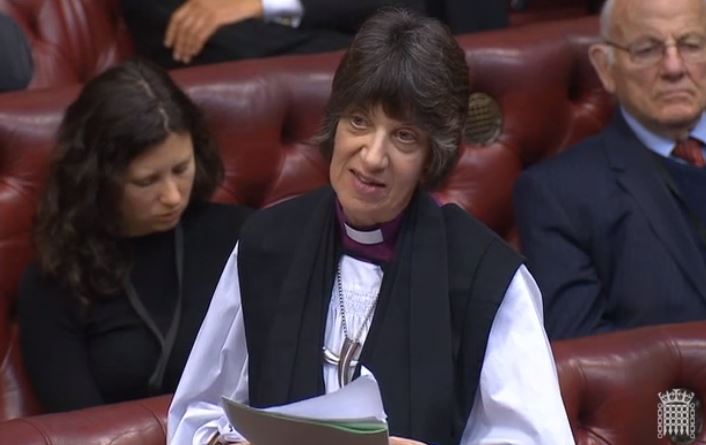
Terminally Ill Adults (End of Life) Bill: Bishop of Gloucester supports amendments on prisons and prisoners

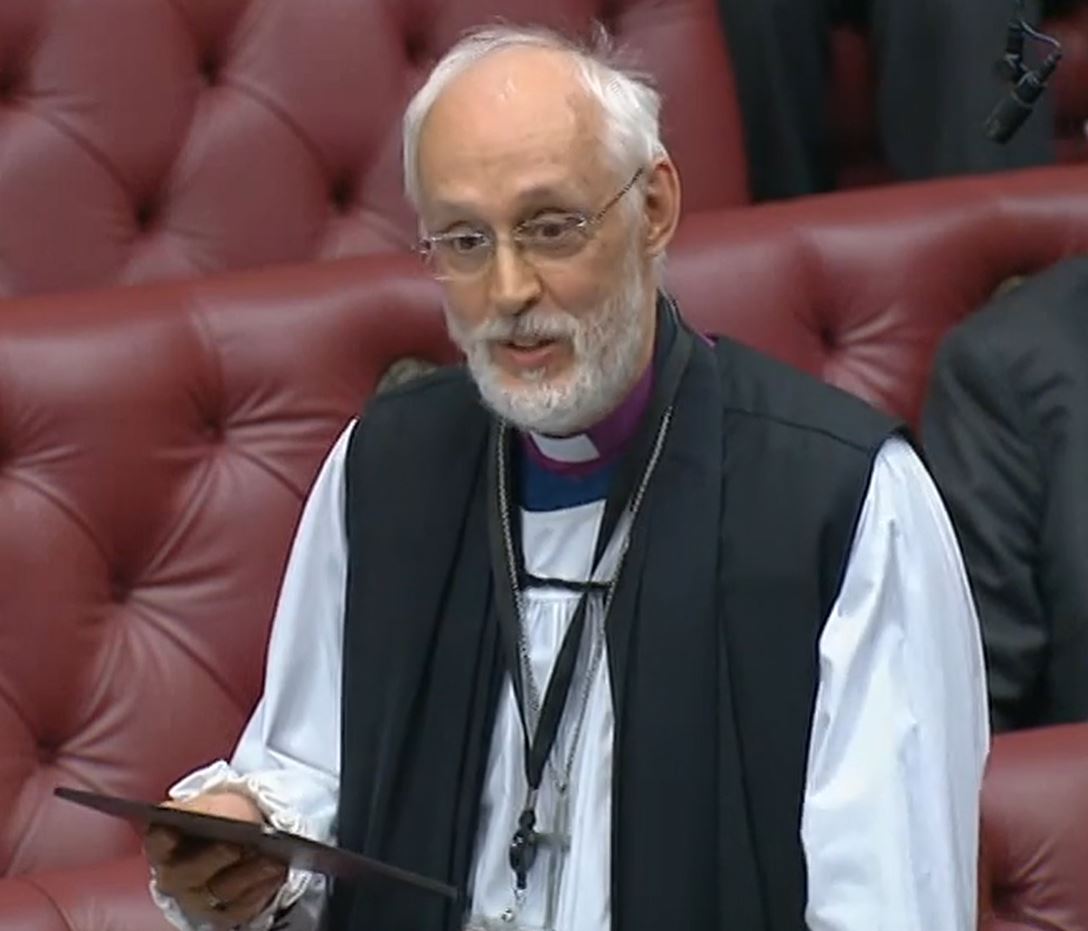
The Bishop of Gloucester spoke in support of amendments to the Terminally Ill Adults (End of Life) Bill focusing on healthcare for those in prison and safeguarding of prisoners under the bill on 12th December 2025:

The Lord Bishop of Gloucester: My Lords, I will speak to these amendments because I want to make a new point. A very vulnerable population that we must continue to remember is the prison population. Although we will deal with the prison population more fully in the group coming up, we must remember that this Bill currently does not exclude prisoners from being eligible. That means we must consider how each issue is likely to play out in a prison setting.

As we have heard extensively, these amendments deal with two main issues: first, access to primary care; and, secondly, how well that primary care physician knows the details of your medical history. The first is very closely related to inequalities and making sure that those who have worse access to care are not more likely to choose assisted dying. The prison population are therefore a key group that must be considered, since their health and access to healthcare are worse than that of the general population. That is evidenced by the recently published report by the Chief Medical Officer.

Continue reading “Terminally Ill Adults (End of Life) Bill: Bishop of Gloucester supports amendments on prisons and prisoners”

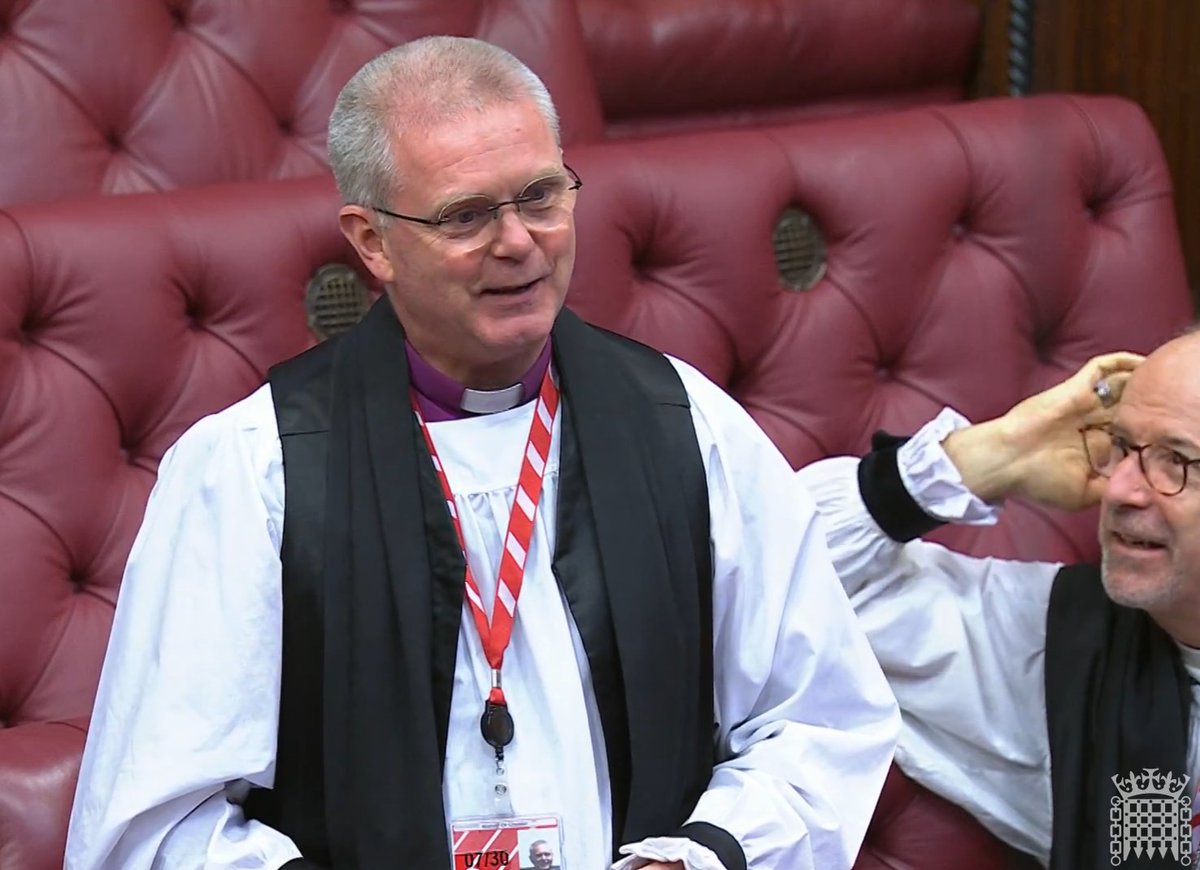
Terminally Ill Adults (End of Life) Bill: Bishop of Norwich supports amendments on impact of bill in border regions

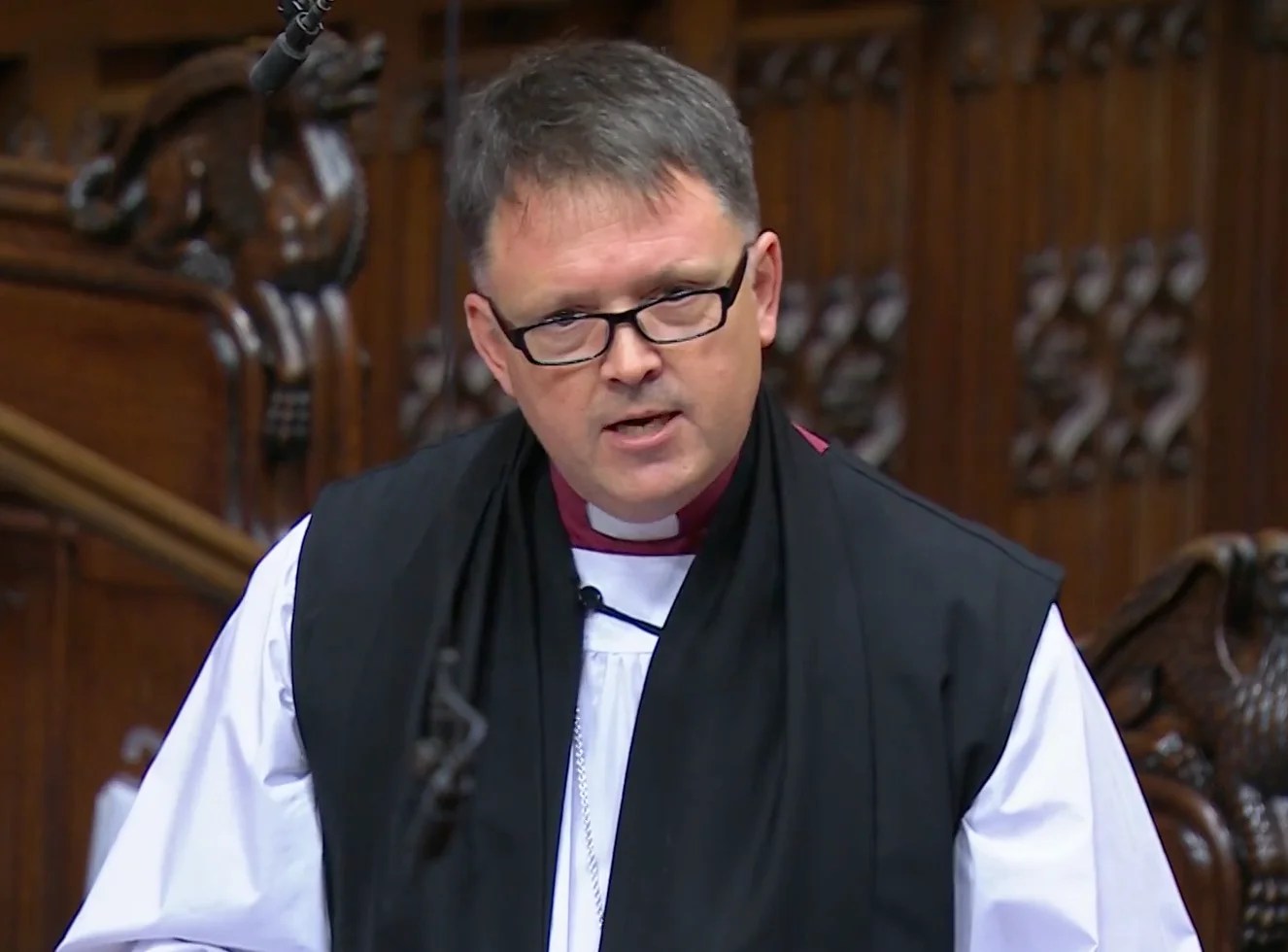
On 12th December 2025, Bishop of Norwich spoke in support of amendments to the Terminally Ill Adults (End of Life) Bill focused on ensuring training and resources given to GPs would also apply to Scotland in the event of the bill passing, and consideration of those living on the Scottish border:

The Lord Bishop of Norwich: My Lords, I support Amendments 17 and 309A, proposed by the noble Lord, Lord Beith, and so ably explained by the noble Baroness, Lady Fraser. I declare an interest, in that my wife is a GP and a medical examiner—so the Bill has had much discussion at home.

Having spent 10 years living in Northumberland, and having friends who live along the Scottish border, I know that many of those living sufficiently close to the border have chosen very deliberately to be registered with a Scottish GP because they then receive free prescriptions. This raises a number of questions for the noble and learned Lord.

Continue reading “Terminally Ill Adults (End of Life) Bill: Bishop of Norwich supports amendments on impact of bill in border regions”

Bishop of Manchester asks about UK Crisis and Resilience Fund

The Bishop of Manchester received the following written answer on 12th December 2025:

The Lord Bishop of Manchester asked His Majesty’s Government what steps they are taking to ensure that the Crisis and Resilience Fund will help local authorities to address the causes of financial crisis instead of the symptoms.

Continue reading “Bishop of Manchester asks about UK Crisis and Resilience Fund”

Bishop of Leicester speaks in debate on the UK’s demographic future

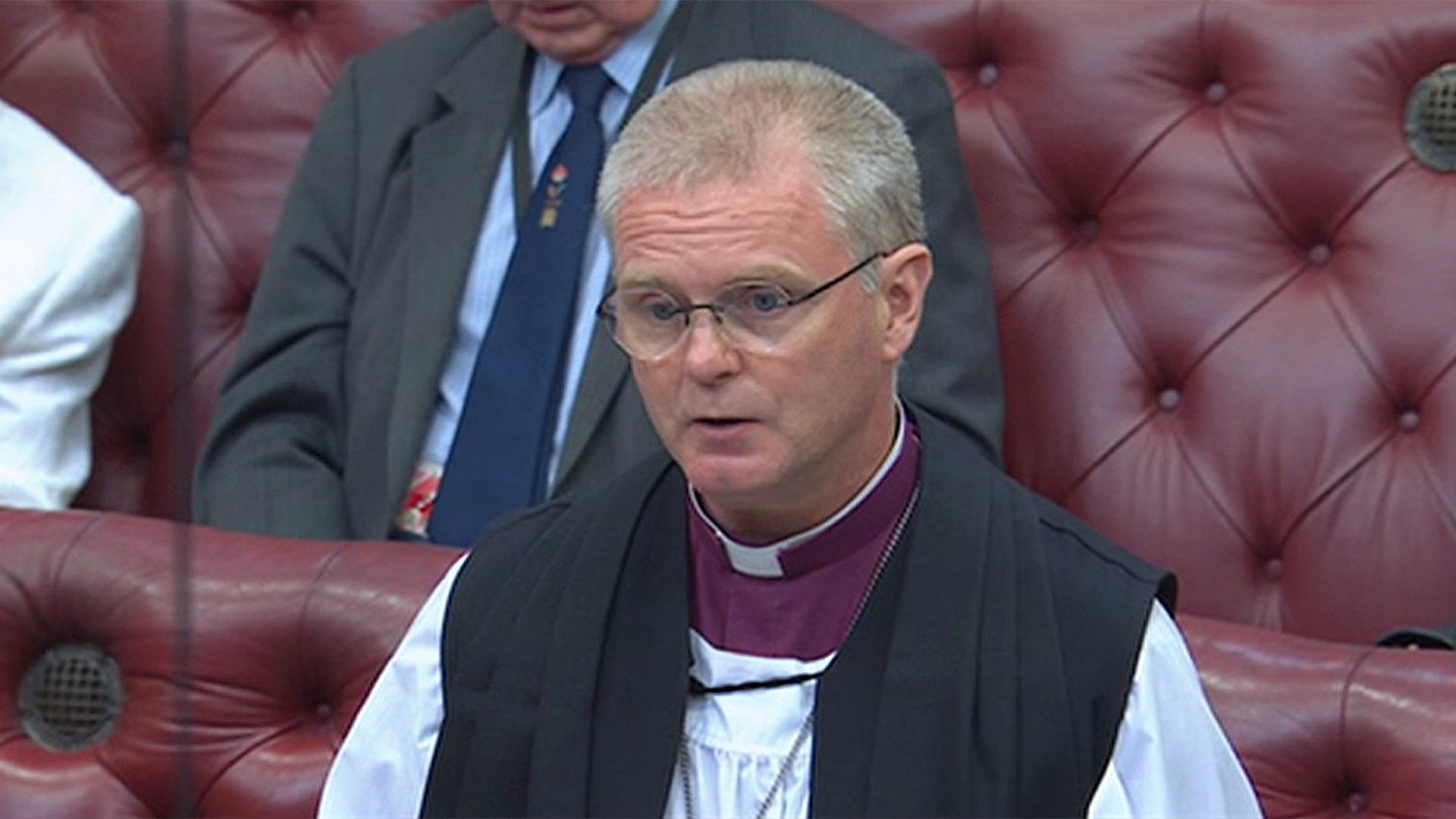
The Bishop of Leicester spoke in a debate on a report from the Common Good Foundation and Centre for Policy Studies on the UK’s demographic future on 11th December 2025, pointing out the impact of poverty and and inequality on social cohesion:

The Lord Bishop of Leicester: My Lords, I am grateful to the noble Lord, Lord Hodgson, for his work in bringing together this report and giving us the opportunity to debate it. I add my thanks to him for his fascinating speech today and his wider contribution to this House, and I wish him well for the future.

The authors of this report raise various thorny policy problems, each of which demands careful negotiation so as to manage conflicting trade-offs. It would be easy to brush them aside in favour of more electorally popular concerns or to oversimplify them to stoke division. I want to put on record first my support for an open debate on questions such as, “What is a reasonable level of population growth?” It may be an uncomfortable question, but what are we here for if not to model healthy, mature debates on uncomfortable questions?

I want to focus my remarks on the chapter on social cohesion by Bishop Michael Nazir-Ali. While I would differ from Dr Nazir-Ali on a few of his points, I welcome his overall thrust: calling for more attention to be paid to the fabric of our society and how it is affected by the demographic shifts noted in the report.

Continue reading “Bishop of Leicester speaks in debate on the UK’s demographic future”

Bishop of Southwell and Nottingham asks about role of historic churches in urban renewal

The Bishop of Southwell and Nottingham asked a question on revitalisation of historic city centre churches during a discussion on urban renewal on 11th December 2025:

The Lord Bishop of Southwell and Nottingham: My Lords, has the Minister considered the significance of historic church buildings in city centre revitalisation? In my diocese, for instance, the recent renewal of St Mary Magdalene Church in Newark has not only repaired the grade 1 listed building but significantly developed the town’s cultural and economic vitality. There is uncertainty about the future scheme for VAT relief for listed churches, and the cap introduced last year affected long-planned projects around the country. What assessment have His Majesty’s Government made of the impact of that and of continuing the scheme beyond March next year without the cap?

Continue reading “Bishop of Southwell and Nottingham asks about role of historic churches in urban renewal”

Bishop of Norwich asks about environmental concerns on flooding and marshland

The Bishop of Norwich received the following written answers on 12th December 2025:

The Bishop of Norwich asked His Majesty’s Government what plans they have for legislation to make it mandatory for insurance companies to provide flood cover at an affordable and fair price, to supersede the temporary Flood Re scheme.

Continue reading “Bishop of Norwich asks about environmental concerns on flooding and marshland”

Votes: Employment Rights Bill

On 10th December 2025, the House of Lords debated Commons Reasons and Amendments to the Employment Rights Bill. Votes were held on further amendments to the bill, in which Bishops took part:

Continue reading “Votes: Employment Rights Bill”

Bishop of Winchester moves that Abuse Redress and Armed Forces Chaplaincy Measures receive Royal Assent

On 9th December 2025, the Bishop of Winchester moved that two church measures, the Abuse Redress Measure and the Armed Forces Chaplains (Licensing) Measure, be sent to the King for Royal Assent:

The Lord Bishop of Winchester: That this House do direct that, in accordance with the Church of England Assembly (Powers) Act 1919, the Armed Forces Chaplains (Licensing) Measure be presented to His Majesty for the Royal Assent.

My Lords, I shall speak also to the Abuse Redress Measure, which is also in my name on the Order Paper.

The Armed Forces Chaplains (Licensing) Measure is in one sense just a tidying up of a small area of ecclesiastical law, but in a wider and more important way it is enabling and supportive of the essential work carried out by Church of England chaplains to His Majesty’s forces, to whom I am sure we all want to pay tribute. For over a century, forces chaplains have been issued with licences by the Archbishop of Canterbury, giving them ecclesiastical authority to exercise ministry in that role. However, recent work by the provincial registrars has identified a gap in the relevant statutory and canonical provision in this area.

Without this Measure, each Armed Forces chaplain would also need to obtain a licence or permission to officiate from the bishop of each diocese in which the chaplain is to exercise ministry. Not only would that give rise to a significant burden on bishops and their offices but, more significantly, it would cause problems for the Armed Forces, not least because chaplains need to be able to move with and minister to military personnel wherever they are currently serving, and sometimes to do so at some speed. It is impractical for them to seek a further authority to exercise ministry each time the service men and women they minister to move to a different part of the country. This Measure addresses that in a straightforward way by inserting a new section headed “Armed Forces chaplains” in the Extra-Parochial Ministry Measure 1967.

Continue reading “Bishop of Winchester moves that Abuse Redress and Armed Forces Chaplaincy Measures receive Royal Assent”

Bishop of Southwell and Nottingham asks about trauma training for armed forces chaplains

The Bishop of Southwell and Nottingham asked a question on specialist trauma training for armed forces chaplains, during a discussion on support for victims of sexual violence in the armed forces on 9th December 2025:

The Lord Bishop of Southwell and Nottingham: My Lords, given that chaplains routinely provide partial support for victims of crime, including sexual offences, can the Minister outline what steps His Majesty’s Government are taking to ensure that Armed Forces chaplains receive specialist trauma-informed training so that they can support survivors of sexual violence? Is such training consistent across the services?

Continue reading “Bishop of Southwell and Nottingham asks about trauma training for armed forces chaplains”

Bishop of Southwell and Nottingham asks about support for care-leavers accessing higher education

The Bishop of Southwell and Nottingham asked a question on support provided for care-leavers entering higher education during a discussion on reducing the level of young people not in work, education or training on 8th January 2025:

The Lord Bishop of Southwell and Nottingham: My Lords, care-experienced young people are particularly at risk of being not in work, education or training. Has the Minister taken note of the support that universities, such as Nottingham Trent University, provide to care leavers in admissions, finance and transition, while also securing affordable, suitable and stable accommodation for them and estranged young people? What assessment have His Majesty’s Government made of the additional support that care leavers need to stay in education? Can the Government ensure that this kind of specific support is available more consistently across universities and for apprenticeships too?

Continue reading “Bishop of Southwell and Nottingham asks about support for care-leavers accessing higher education”