
On 25th February 2105, the Earl of Listowel led a short debate in the House of Lords, to ask Her Majesty’s Government what plans they have to improve mental health services for infants, children and young people, for care leavers, and for adults with care experience. The Bishop of St Albans, the Rt Revd Alan Smith, spoke in the debate, focusing his remarks on the risk of suicide amongst young people suffering from mental health issues.
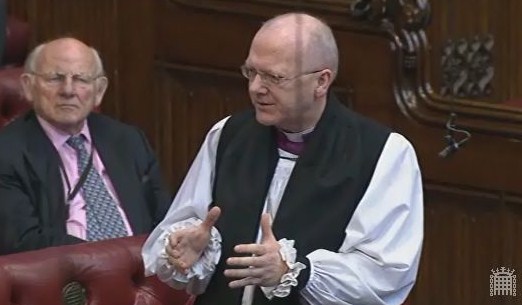 The Lord Bishop of St Albans: My Lords, the terrible reality of the effects of mental health could not have been more powerfully illustrated than by the story reported in the press last week of 18 year-old Edward Mallen. He was not one of “those unfortunates”—he had 12 A* GCSEs and was predicted to achieve three A* A-levels; he had got grade 8 piano and a place at Girton to read geography—but he rapidly descended, over quite a short time, into depression and died under a train. Not only is it an affront to think of that young life, with all its potential and opportunities, suddenly being lost with his death, but the scars will stay with all the members of his family for the rest of their lives.
Recently published ONS figures show a worrying rise in the number of suicides in the UK, particularly among men. There were 6,233 suicides of over-15 year-olds registered in 2013, 252 more than in 2012, with the male suicide rate three times that for women. In the UK, suicide is the main cause of death of young people under the age of 35—more than 1,600 every year. Hundreds more attempt suicide and thousands more self-harm.
Much more needs to be done, perhaps drawing on research such as that provided by the National Confidential Inquiry into Suicide and Homicide by People with Mental Illness. In last year’s annual report, it identified various key points at which there was much greater risk. For example, the first three months after a patient’s discharge remain a time of particularly high suicide risk, especially in the first two weeks. Between 2002 and 2012 there were 3,225 suicides in the UK by mental health patients in the post-discharge period, 18% of all suicides. The report also pointed to suicide by patients receiving care under crisis resolution or home treatment teams. Such people are much more likely to commit suicide than those in in-patient care. It also pointed to living alone as a common antecedent of suicide by patients receiving care under crisis resolution and home treatment teams.
I welcome the Government’s initiatives in the area of suicide prevention. Indeed, I applaud the Government’s ambition to achieve zero suicides through the NHS adopting the approach pioneered by the Henry Ford Medical Group in Detroit. The dramatic improvements in Detroit will give hope that those who feel such desperation and so little hope in our society can also be reached. They point to the need for rapid and thorough expert assessment of patients who are having suicidal thoughts; for improvement in the care of those who present with self-harm injuries at A&E units; for better education for the families of people deemed to be at risk; and for improvement of data collection on patients to get a better understanding of how and where patients are most at risk of suicide and then to target resources at them.
The charity PAPYRUS has highlighted the need to ensure that children, young people and vulnerable adults receive due attention under this new strategy. It is imperative that the provision of resources is sustainable and adequate to facilitate a wider understanding of people with mental health problems as well as to enable the necessary preventive training and aftercare. I therefore applaud the good work that is going on, not least in organisations such as the Samaritans and the churches. I also ask the Minister whether the Government will respond to the campaign by Mind to guarantee referrals to talking strategies, which have clear benefits for those who receive them, within 28 days.
The Parliamentary Under-Secretary of State, Department of Health (Earl Howe): …The noble Earl asked how specialist mental health services for looked-after children, including psychotherapy, can be protected and, indeed, expanded. Rather than mandating mental health services targeted at specific groups such as care leavers, our aim is to ensure that everyone has timely access to evidence-based services when they need them. That is why—as mentioned by the right reverend Prelate—we have invested £54 million over the last five years in the Children and Young People’s Improving Access to Psychological Therapies Programme. This has transformed children’s mental health services throughout the country through the use of evidence-based therapies alongside session-by-session outcome monitoring, so that both therapist and patient know how well therapy is working toward a goal. We are strengthening the statutory guidance to make it clear that service commissioners must make sure that services provide targeted and dedicated mental health support to looked-after children, according to need. How they do that is for local determination, but it could include a dedicated team or seconding a CAMHS professional into a looked-after children multi-agency team…
The right reverend Prelate the Bishop of St Albans spoke very powerfully about young people who self-harm and who commit suicide. Indeed, in January this year we issued a call to every part of the NHS to commit to a zero suicide ambition. In addition, the Government announced £150 million over the next five years to improve services for eating disorders and self-harm. He will know, I am sure, that preventing suicide in children and young people is a central part of the cross-government suicide prevention strategy published in 2012. That is backed by £1.5 billion of funding for research on suicide and self-harm.
(via Parliament.uk)
 The Church of England in Parliament
You must be logged in to post a comment.