
The Archbishop of York took part in a debate on housing strategy and the Archbishops’ Commission report on Housing, Church, and Community on 24th March 2021, stressing the need for a reset on how housing is approached:
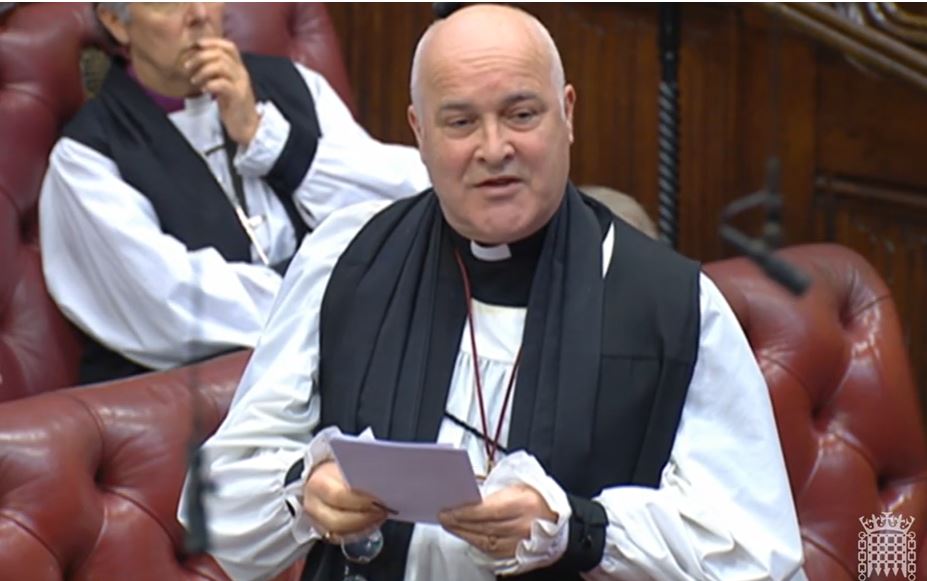
The Lord Archbishop of York [V]: My Lords, it is always a great pleasure to follow the noble Lord, Lord Best, whose work and witness in housing has been such an inspiration to many of us. I pay particular tribute to the work that he has done as a Church Commissioner in recent years. It is an honour to speak in this debate and support my dear brother, the most reverend Primate the Archbishop of Canterbury, whose visionary leadership in this and other issues of social policy draws people of faith and good will together in developing a narrative of hope. I am also grateful to the noble Lord, Lord Shipley, for his reference, as this is the first speech I have made since returning to the House of Lords as the 98th Archbishop of York.
We need to reset our compass. As we emerge from the horrors and sorrows of Covid, we have all become much more aware of our interdependence. Just as Covid cannot be dealt with anywhere until it is dealt with everywhere, so it is with other challenges facing our common life. When we cheered the NHS last summer, we were also cheering a set of ideas that are precious to our national life—namely, that we belong to each other. There are some things, like health, that are so basic that we cherish the fact that they are available to everyone at the point of need and regardless of one’s ability to pay. Should not this principle apply to other things as well, such as food on everyone’s table and a roof over everyone’s head?
Unfortunately, part of the housing challenge facing our nation is that we have not approached this in a sufficiently joined-up way; we tend first to think of homeless people on our streets and the human tragedy and political, policy and social failures that this represents. However, as we know, this is just the visible misery on the surface of a larger and far more extensive set of challenges. Behind those who literally have nowhere to live are the hidden homeless, who move from place to place and sofa to sofa, in temporary and insecure accommodation. There are also those who are forced into inadequate and unsatisfactory housing because nothing else is available. Then there are those who cannot afford to live in the communities where they grew up—and the concomitant damage to morale and social cohesion. As we know, this is a big and complicated challenge—but it affects millions of people, not just the homeless, though they must always remain our most immediate concern. In this debate, may we then also take the opportunity to thank the amazing charities, up and down our land, who minister to the needs of those who currently live on our streets, with whom churches, faith groups and others are so involved?
The other visible sign of the problem we face is, however, less obviously a problem at first: the vast new estates that we are building. The housing may be very nice if you can afford it, but so much of the motivation is profit, and the infrastructure needed to make houses into homes and homes into communities is often lacking. There are of course marvellous exceptions to this—we must build on them, literally. That is what the Coming Home report is all about: establishing the values and finding the political will to tackle the housing challenge together with long-term, joined-up solutions. This requires a reset in our attitude to housing and how we approach what so often appear to be intractable problems.
The key word in this discourse, as with so many of the political challenges facing us at the moment, is “together”. We are unlikely to make significant progress until all parts of our society and all parts of government cohere around a common vision and, as this report identifies, a common set of values that can drive policy over a longer period of time, transcending the short-term fixes that are often dictated by short election cycles.
Yes, this is a challenge to all of us—national, local and regional government, landlords and landowners—but there can be exciting ways forward and practical steps that we can take, when we move together.
As my most reverend friend the Archbishop of Canterbury said, the Church must lead by example and face these challenges itself, which is why the speech of the noble Lord, Lord Best, about the changes that may be needed in the Church’s use of land and that of other charitable bodies is so important. Working together will be helped by cross-party recognition of the sorts of values and approaches outlined here. At the very least, we should start by adopting a definition of affordable housing that is linked to income, as others have said.
Of the five values identified here as being fundamental to our vision for homes and community, I will, in the few minutes left to me, focus on the last one: satisfying. It would be possible to build sustainable, safe, stable and sociable houses, but they would not necessarily be things of beauty or a source of joy. I am delighted that this fifth element, which could so easily be seen as an optional extra, is kept in the mix, because it will encourage architects, builders, interior designers, artists, craftspeople and those at the cutting edge of developing the new technology we need for our homes to be sustainable to think and imagine how this can be achieved with beauty as well as simplicity and economy. We need to draw again on some of the great architectural visions of our history and European history to raise our expectations.
While being interviewed on the radio a few years ago—it was not a very hard-hitting interview; it was not Jeremy Paxman—I was asked about my likes and dislikes, foibles and peccadillos, of which there are many. I was asked about my favourite journey. I replied that I really liked driving round the M25 and up the A12. The interviewer looked at me askance—this was not the expected answer—but this was my favourite journey, of course, because it was my journey home. Now, having moved, I would say how much I love the A64.
However, my experience of joy and expectation when I turn the corner to arrive home is not the experience of many of our citizens, either because they have no home or because their home is not what it should be. During this past year, we know that inequalities in housing have callously accelerated the spread of Covid, where cramped conditions and lack of access to outside space have meant that those without good homes are also those without good health. This must change. Asking for such a change is not naive optimism; it is a vision of hope that can lift our spirits and stiffen our resolve. To do it is within our grasp. It is a matter of policy and political will. It is the right thing to do, but it will also save us money through improved health, social cohesion and well-being.
This report is called Coming Home. It aims for nothing less than ensuring that everyone can come home—and find joy and stability in that home. To build homes is to build community. To build community is to build stability. To build stability is to build peace—and is that not the first responsibility of government?
 The Church of England in Parliament
You must be logged in to post a comment.