
The Bishop of Gloucester took part in a debate on building an inclusive society in a post-pandemic world on 14th April 2021, speaking on the topics of children, faith communities, and the marginalised:
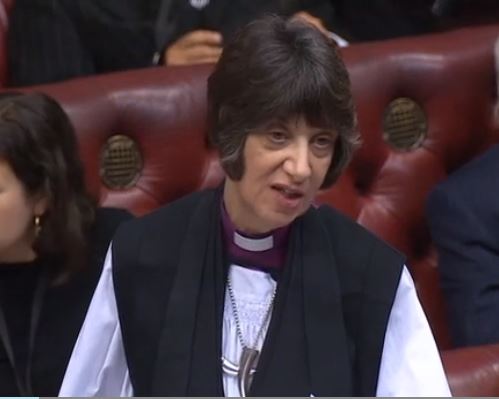
The Lord Bishop of Gloucester: I am grateful to the noble Baroness, Lady Lister, for moving this Motion. I want briefly to touch on three areas: children and young people; churches and faith communities; and those living in the shadows.
First, I turn to children and young people. Last month, I hosted an online youth forum in the diocese of Gloucester, bringing together more than 100 people so that adults in different spheres of influence, including our MPs, had the opportunity to listen to young people. Prior to that event, I spent many hours listening to young people speak about the impact of Covid-19 on their lives and I will share a few quotes. “Lockdown’s been so isolating.” “I feel like there should be more knowledge about mental health, not just depression and anxiety, and we should be taught how to deal with them.” “There’s been no direction. We don’t know what’s going to happen next. It’s hard for us to try and adapt to all these different situations.” “We haven’t had the chance to say how we feel about things.” “I really hope that sometimes we can be taken more seriously, and that our views can be put across.” “I just want people with influence to understand that there’s a wider range of issues than just the small subsection that they look at.”
There are, of course, many stories of resilience and creativity, but we cannot ignore the unseen pandemic of poor mental health and anxiety and the impact of loss of so many different sorts. My challenge would be to keep listening to children and young people and to include them in the decision-making. One way to do this is to have a dedicated Cabinet role for children and I stand with those in your Lordships’ House and the other place who are calling for that.
Secondly, there is the role of churches and other faith communities. They have certainly not been the sole distributors of hope in this crisis, but as well as chaplains in places such as hospitals and prisons, people supporting the dying and conducting funerals, there have been many worshiping communities, Christian and of other faiths, co-ordinating and accommodating community initiatives and continuing to create social capital, and indeed spiritual capital, which will be much needed as we emerge into the next season. How can central and local government help and not hinder these connections? One thing that I hope for is that there might be a vision for true partnership between the public sector and the third sector as needs and hopes are addressed.
Lastly, I turn to those living in the shadows. As a Christian, I am passionate about an inclusive society. I
believe that this pandemic has heightened awareness of exclusion and inclusion—and I am not simply talking about different people’s experiences of Zoom. Perhaps this pandemic has made us more aware of the issue of many people being hidden—yes, those on their own behind locked doors, but also the abused, the unemployed, those with mental health issues, those in poverty, those in prison et cetera. Who has been seen and heard and who has been hidden and silent? We need to be asking those questions intentionally. Some of the big awakenings in our country over the past year have been around exclusion diminishing and the sort of world we want to be. Black lives matter. Violence against women and girls is to be challenged. It is for those of us with some influence to keep returning to those shadowy places to shine a light into the darkness.
There is much more that I could say, but I leave noble Lords with the three headings of children and young people, churches and faith communities and those hidden living in the shadows.
Extracts from the speeches the followed:
Baroness Brinton (LD) [V]: The right reverend Prelate the Bishop of Gloucester rightly set out the important role that faith communities have played in this pandemic. They are key to helping to strengthen the third sector as we come out of the pandemic. As someone who normally sits in a church pew, I have been delighted with the streaming of services online and the many steps that different faith organisations have taken to bring their services and activities into people’s homes, such as talking to elderly people who have seen virtually no one face to face for months with telephone trees to make sure that that contact is made regularly. At one church, the audio-visual team copies the services on to discs and hand delivers them to the elderly members of the congregation for whom YouTube is a step too far.
Lord Greenhalgh (Con, DHCLG): The right reverend Prelate the Bishop of Gloucester, the noble Baronesses, Lady Lister and Lady Tyler, and a number of other noble Lords raised the issue of children. As a Government, we are investing £84 million in the strengthening families, protecting children programme and £17 million in the investing in practice programme. Since 2014, our innovation programme has invested almost £200 million in 98 projects that are enabling local authorities to test new approaches to supporting children in the social care system. We have provided an additional £12.4 million in 2021 to support 14 innovation programme projects to continue delivery and extend their evaluations to capture further learning.
(…)
I agree with the right reverend Prelate the Bishop of Gloucester on the importance of our faith communities. We cannot expect to make progress on fostering an inclusive society without them. They represent fundamental pillars of civil society engagement. Throughout the pandemic, faith communities and places of worship have provided solace to many people, not only for spiritual well-being but also by offering a multitude of support services, often in partnership with local authorities. These are collaborative efforts that I want to see continue in the post-pandemic landscape.
 The Church of England in Parliament
You must be logged in to post a comment.