
During a debate on Commons Reasons and Amendments to the Domestic Abuse Bill on 21st April 2021, the Bishop of Gloucester tabled an amendment aimed at securing support services for migrant victims of domestic abuse:
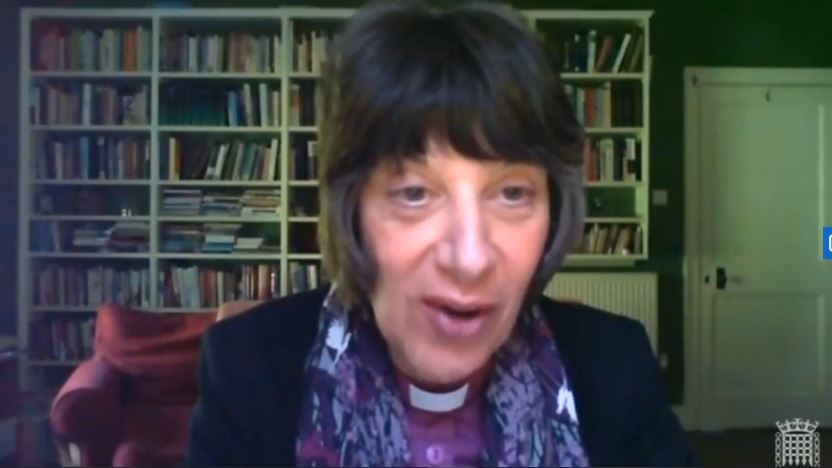
The Lord Bishop of Gloucester [V]: My Lords, I will listen carefully to what the Government say in response but, as things stand, I am minded to test the opinion of the House. I draw attention to my interests as stated in the register. I thank the Minister for her work and thank the team of Ministers who have remained so committed to this Bill and have listened deeply. I am grateful for all the time that I have been given to discuss this, but I remain hugely frustrated.
I listened very carefully last week as the other place considered the amendments that we made to the Bill. The Government’s solution to this issue, as we have just heard, is the pilot support for migrant victims scheme. This is insufficient. Although the Minister has just spoken warmly of what it will provide, it is for a limited number of people only. It is estimated that the pilot project will not be able to provide the holistic wraparound support needed to aid recovery, even by those women who access it. It is likely that organisations will need to provide extra support, using donations and other funds, to cover services such as counselling and therapeutic support and medical, travel and legal costs. The pilot project will therefore remain an inadequate means to assess needs.
I remain committed, as I know others do, to ensuring that the Bill is as good as it can be for all victims of domestic abuse. Amid all the debate and discussion, I return again and again to the people—the men, women and children—behind the words and policies. No person should be subject to the horrors of domestic violence, coercion and control. The degradation of humanity in this manner is an evil, and we must do all that we can to stamp it out.
I know even as I say this that the Minister and the Government will agree with me on this, for which I am thankful. However, the Government’s answer regarding the rejection of the original amendment is the solution of the pilot project. I want to stress again how woefully inadequate that is. It was my sincere hope that the other place would retain the addition to extend access to support services for the small but vulnerable group of migrant victims of abuse, mainly women. Without it, the Bill will not be all that it could be.
As I said, I am delighted that the pilot support for migrant victims scheme has been awarded to Southall Black Sisters, which has assisted me with this amendment. Organisations such as this have extensive experience in supporting victims of domestic abuse, restoring dignity and giving hope. Having undertaken a great deal of research already, they know the extent of the problem regarding migrant victims who have no recourse to public funds and who, when refused services such as accommodation, will in all likelihood return to abusive partners or find themselves at the mercy of those who exploit their vulnerability.
Mindful that financial privilege has been applied, the provisions proposed in this revised amendment are time-limited to 12 months, the duration of the pilot support for migrant victims scheme, so will run for the length of the pilot. This greatly reduces the cost implications and has the added benefit of ensuring that no person who needs support is excluded. It will also allow really informative data to be collected.
If the Government truly believe the game-changing pilot will meet the needs of the current eligible population, it stands to reason that the cost implications are not high at all. If the Government’s projection is that the pilot will be insufficient to such a degree that the amendment would create serious additional costs, the pilot is clearly inadequate. It cannot logically be true that the pilot is sufficient and game-changing and that the amendment would create significant extra costs. In addition, this amendment seeks agreement from the Government that the domestic abuse commissioner and specialist organisations will be consulted at the end of the pilot scheme. It asks for agreement to publish a strategy for the long-term provision of support for victims of domestic abuse who do not have leave to remain or have leave to remain subject to a condition.
I will take a few moments to draw attention to a contradiction in the Government’s reasoning. During the passage of the Bill, we have heard about the devastating impact of revenge porn. The Law Commission is currently reviewing the law on intimate image abuse, while at the same time the Government have recognised the need for immediate action. We ask that the same logic be applied to migrant victims of abuse. We know that the pilot scheme, although arguably insufficient, will report on the extent of this issue. At the same time, we hear that vulnerable migrant victims of abuse will be left out. We ask simply that support be offered to these victims for the duration of the scheme and that a thorough review is undertaken on its completion.
I will make one last point. The New Plan for Immigration states as follows for victims of modern slavery:
“We will make clear, for the first time in legislation, that confirmed victims with long-term recovery needs linked to their modern slavery exploitation may be eligible for a grant of temporary leave to remain (subject to any public order exemption) to assist their recovery, building on our end-to-end needs-based approach to supporting victims. We will also make clear that temporary leave to remain may be available to victims who are helping the police with prosecutions and bringing their exploiters to justice.”
While I welcome this approach, I am interested to hear from the Minister why a route to leave to remain to assist recovery is possible in the case of one set of victims of serious crime, but not in another. I am interested to hear all that will be discussed today, and I am very grateful to noble Lords who support this amendment. I beg to move.
Extracts from the speeches that followed:
Baroness Helic (Con) [V]: My Lords, it is a pleasure to follow the right reverend Prelate the Bishop of Gloucester. I know how hard she and the other noble Lords who have backed amendments on support for migrant victims have been working on this issue. I am particularly grateful to the noble Baroness, Lady Hamwee, for her support on Report. I am also tremendously grateful to End Violence Against Women for its assistance; I would like to take one last opportunity to praise it and organisations such as Southall Black Sisters and the Latin American Women’s Rights Service for the extremely important work they do.
My noble friend the Minister has been generous with her time and has worked tremendously hard on this Bill, and I recognise that the Government have made some very important concessions elsewhere. I am sorry that we have not yet been able to put in better protection and support for the migrant victims who so desperately need it. However, I am grateful for the Minister’s commitment on the statutory guidance just offered.
Of the various amendments relating to migrant victims, the original Amendment 43 passed with the largest majority in your Lordships’ House. I believe that this in part reflects the strength of feeling around the Istanbul convention. Since we last debated this amendment on Report, Turkey has withdrawn from the convention—a serious backward step for millions of women. It is one that makes our own failure, or inability, to ratify almost nine years after we signed all the less excusable. We should be leading the charge for women’s rights around the world, yet we cannot get our own house in order.
Lord Rosser (Lab) [V]: As we have heard, Lords Amendments 41 and 43 were both disagreed by the Commons because they would involve a charge on public funds. The Commons did not offer any further reason. The right reverend Prelate the Bishop of Gloucester and the noble Baroness, Lady Helic, have now tabled Amendments F1 and F2. The amendment from the noble Baroness, Lady Helic, provides that local authorities “must have regard” to Article 4(3) of the Istanbul convention when they are preparing their strategy for accommodation-based services under the Bill. Article 4(3) of the convention provides that protection for victims must be secured without discrimination based on any ground such as race, religion or migrant status. We support the aim of this amendment, which also serves to remind the Government of their commitment to ratify the vital Istanbul convention, for which they have not yet set a timeframe. Perhaps we will hear something definite on this point in the Government’s response to this amendment.
We cannot claim to be seriously tackling domestic abuse unless we are tackling it for every victim. That means providing support to anyone living with this awful crime. Abuse does not stop because of a person’s immigration status, and potentially life-saving support should not be stopped because of a person’s immigration status.
The Motion moved by the right reverend Prelate the Bishop of Gloucester simply asks that no recourse to public funds be lifted for all migrant victims of domestic abuse for the duration of the Government’s pilot programme, titled Support for Migrant Victims. The pilot programme covers migrant victims of domestic abuse on, for example, student, visitor or work visas,
or who are here without authority, who are not eligible for existing support schemes. It is intended to provide access to safe accommodation and specialist services for these victims. The Government have accepted that there is a need for the pilot and for victims of domestic abuse to have access to services for a 12-month period. If they have accepted this for some victims, how can it not be right to ensure that all victims have access to support for that short timeframe?
(…)
This amendment is a significantly reduced ask from the previous amendment on this issue, with which the Commons disagreed but which had the support of the Victims’ Commissioner and the designate domestic abuse commissioner. In the Commons, when debating the previous amendment on this issue passed on Report in this House, the government Minister said:
“We accept that not all migrant victims have access to the necessary support and we need to address that … we want to help such victims to recover and escape such relationships.”—[Official Report, Commons, 15/4/21; col. 521.]
Accepting Motion F1 will help to achieve those objectives, at least during the pilot scheme. Opposing it will not. We will support it if the right reverend Prelate the Bishop of Gloucester decides to test the opinion of the House. It is one last ask on access to Support for Migrant Victims. It is only short term for the duration of the pilot exercise but it could save lives.
Baroness Williams of Trafford (Con, Home Office): We all agree that all victims of domestic abuse should be treated first and foremost as victims and have access to the support that they need. I welcome the fact that the right reverend Prelate’s revised amendment now seeks to draw a distinction between the issue of leave to remain and the provision of support. As I said, her Amendment 41B does not quite achieve that, in that the no recourse to public funds condition is intrinsically bound up with a person’s immigration status. In any event, we continue to believe that the Support for Migrant Victims scheme, together with other existing arrangements such as the destitute domestic violence concession, are the right mechanisms to ensure that victims of domestic abuse who are subject to immigration control get the support they need.
On costs, the revised amendment lifts the no recourse to public funds conditions for the duration of the scheme—that is, for 12 months. Even under the DDVC, leave is granted for three months, so waiving the NRPF condition for a year incurs significant new costs. My noble friend Lady Helic and the noble Lord, Lord Rosser, talked about progress towards ratifying the Istanbul convention. We are already under a statutory duty to report annually on that progress towards ratification and the next report is due in October.
In conclusion, I welcome this constructive debate and the efforts of the right reverend Prelate and my noble friend to find alternative legislative solutions. However, Amendment 43B will still result in a significant call on public funds and I suspect will invite the same response from the Commons as Amendment 43. In the context of Part 4 of the Bill, my noble friend’s Amendment 43B is unnecessary, as the duty in Part 4 will operate in respect of all victims of domestic abuse and their children. As I have indicated, we remain firmly of the view that the Support for Migrant Victims scheme is the way forward. It will provide access to safe accommodation for migrant victims who need it and the evidence that we need to take decisions for the long term about how best to support this group of victims. On that basis I invite the House to agree to Motion F.
The Lord Bishop of Gloucester: I thank the Minister for her words and I thank deeply all noble Lords who have spoken so passionately in this debate and really added extra substance to my arguments. I am left still feeling very frustrated. I hear the Minister talk about the support that is available, but I still feel that what is not being named is all the people for whom the support is not available while this pilot happens.
With all due respect, the Minister has not answered my questions about the inconsistency in the Bill regarding the sharing of intimate sexual images and the Government recognising that there is a case for immediate action there, despite the fact that there is an ongoing Law Commission review—so we already have that situation happening in a different part of the Bill.
I am very grateful to the noble Lord, Lord Rosser, for quoting Jess Phillips MP in the other House, who raised that really important question: what happens when the 501st victim comes forward? There will not be anything. There seems to be a lot of fear going on here, and a lot of assumptions. The whole point of this amendment is that it is time limited and not risking the immigration system being exploited, because it will be subject to a review at the end of 12 months.
So I do feel frustrated. I hear what is being said, but I want to seek the opinion of the House because I believe that this amendment would improve what is already a good Bill. This would make it really good. I beg leave to seek the opinion of the House.
(Motion agreed following a vote)
 The Church of England in Parliament
You must be logged in to post a comment.