
On 22nd April 2021, the Bishop of Durham moved the Church of England Cathedrals Measure in the House of Lords, asking that the measure be approved for Royal Assent. The Bishop of Oxford also spoke in support of the measure:
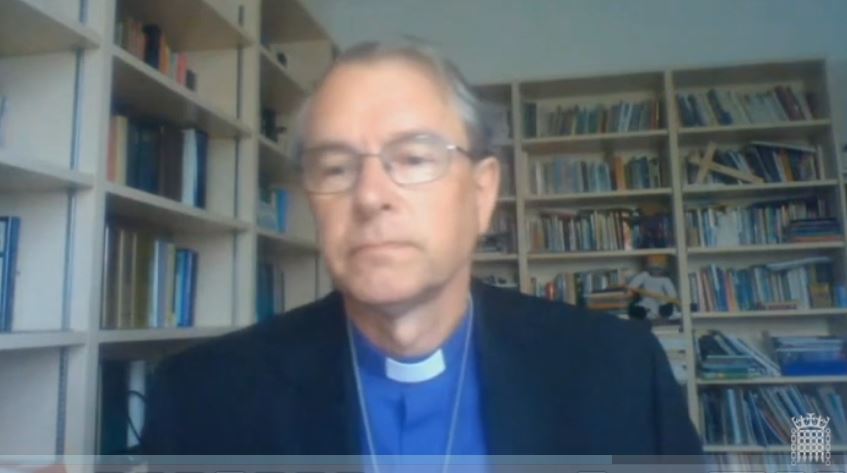
The Lord Bishop of Durham [V]: That this House do direct that, in accordance with the Church of England Assembly (Powers) Act 1919, the Cathedrals Measure be presented to Her Majesty for the Royal Assent.
My Lords, I beg to move the second Motion standing in my name on the Order Paper. The Cathedrals Measure provides a new statutory framework for the governance and regulation of 41 Church of England cathedrals and will replace the framework in the Cathedrals Measure 1999.
Our cathedrals are national treasures which it is both a privilege and a responsibility to care for. They play a key role in our national life, with some 10 million adults visiting them each year and around 330,000 children enjoying free educational visits to them. All our cathedrals are involved in work in their local community, and they contribute around £220 million annually to the UK economy, employing some 3,000 people. Above all, however, each cathedral serves its community as the mother church of its area and the seat of a bishop, and remains in use for its original purpose.
Through their presence, worship and varied work, cathedrals reach out to their local and wider communities in many ways. We have seen examples of this in recent days when cathedrals have been local centres of prayer, remembering and thanksgiving. It is, therefore, vital that the legislative framework in which our cathedrals operate facilitates and supports them in functioning in a manner that is fit for purpose in the 21st century.
As noble Lords may recall, a commission was established by the archbishops in the 1990s, chaired by Baroness Howe of Idlicote, whose work laid the foundation for the Cathedrals Measure 1999. However, best practice in charity governance, safeguarding and the heritage sector has moved on considerably since then. In January 2017 the Archbishops’ Council established the Cathedrals Working Group, partly in response to a request from the Bishop of Peterborough following a visitation at Peterborough Cathedral the previous year that had revealed a number of concerns about cathedral governance.
The Cathedrals Working Group was charged with taking a hard look at how the legislation governing cathedrals was operating and what improvements should be made. It was to have a particular focus on financial management, major building projects, safeguarding, accountability, oversight and scrutiny. In its final report in June 2018, the working group set out its recommendations for the future of cathedrals. The most significant of these related to the governance, structure and regulation of cathedrals. The General Synod endorsed the recommendation of the Cathedrals Working Group in July 2018. Legislation was introduced to give effect to the recommendations that involved legislative change. The result is this Measure.
During the progress of the legislation in the General Synod, those responsible for the Measure listened carefully to the cathedral community and consulted with the Charity Commission. A number of significant changes were made to the draft legislation during the synodical process. While the Measure before your Lordships’ House reflects the key recommendations of the Cathedrals Working Group’s report, those recommendations have been implemented in a way that is supported by those in the cathedral community. This is demonstrated by the strong support that the Measure received at final approval, with no General Synod members voting against it.
The principal changes that the measure will bring about are as follows. Cathedrals will be brought within the regulatory jurisdiction of the Charity Commission. Cathedral chapters will have a majority of non-executive members. Cathedrals will no longer be obliged to have a council undertaking certain statutory functions separate from the cathedral chapter. Instead, all trustee functions will be held in the same place and exercised by an expanded chapter. The Charity Commission was consulted on the Measure and on the amendments to it, and any points raised have been addressed. I thank the staff of the Charity Commission for their helpful comments and prompt responses, particularly given the additional pressures on them during the pandemic.
The Measure, like its predecessor, does not apply to the Cathedral Church of Christ in Oxford, because that cathedral is, uniquely, both a cathedral and a college of the University of Oxford. It is also a royal foundation, governed by an entirely different statutory regime in the form of statutes made under the Universities of Oxford and Cambridge Acts 1877 and 1923, and therefore outside the scope of this Measure. Although I am aware that some noble Lords have concerns in relation to Christ Church, I do not intend to comment on these matters, partly because they are outside the scope of the Measure.
I understand that any proceedings relating to the dean under the Clergy Discipline Measure are not technically subject to sub judice rules, but the Companion to the Standing Orders nevertheless states that
“it is recognised that Parliament should not generally intervene in matters where the decision has been delegated to others by Parliament itself.”
These matters are subject to a statutory process under the Clergy Discipline Measure, and I therefore intend to say no more about them.
This Measure is vital to provide cathedrals the governance structures that they need to support effective safeguarding, healthy finances and increased accountability going forward. The Ecclesiastical Committee considered the Measure on 23 February 2021, reported that it considers the Measure to be expedient and has issued a favourable report which it has laid before the House. I beg to move.
The Lord Bishop of Oxford: My Lords, it is a great pleasure to speak in this debate, to be here in person and to give my general support to the Cathedrals Measure, in the hope that it will be commended by your Lordships’ House as a significant step forward in improving the governance of our cathedrals.
I will take a few moments of the House’s time to respond to some of the concerns raised by the noble Lord, Lord Adonis, about the dual foundation of Christ Church in Oxford. In doing so, I declare an interest as the Bishop of the Diocese of Oxford, although I am not a member of the college or its governing body.
As has been said, Christ Church is unique as a cathedral and as a royal foundation, with many similarities in its governance and history to the royal foundations of Westminster Abbey and St George’s, Windsor. The monarch, rather than the bishop of the diocese, is the Visitor. For these reasons, it is right that it is exempt from this Cathedrals Measure. It is a matter of deep regret that the situation of Christ Church has remained unresolved for so long. I am grateful to the noble Lord, Lord Adonis, for his restraint in commenting on the details of the situation and I cannot, of course, comment myself, save only to say that the hurt and distress caused to individuals is very significant.
While the situation has continued for almost three years, which is regrettable, there have been a number of different issues such that this is not a single dispute. Throughout that period, there has been good liaison between the Church of England, Christ Church, the University of Oxford and the Charity Commission. Each party has been active in different ways in seeking to bring a resolution. I believe that the description by the noble Lord, Lord Adonis, of the governance arrangements is accurate except that the governing body now has some role in approving the appointment of the dean, but I will write to him on that subject to confirm. All of these parties and the governing body are agreed—and have been agreed for some time—that there must, indeed, be a comprehensive review of governance once a resolution has been reached. The proposals put by the noble Lord, Lord Adonis, though interesting and relevant to that debate and process, although it is likely, of course, that the different parties will argue for quite distinct reforms.
On 25 June last year, the Charity Commission issued a notice requiring the parties to the dispute in Christ Church to enter into a mediation process. We await the outcome of that process. The commission also requested that all parties refrain from public or private commentary while the mediation process takes place.
I am able to confirm that the excellent work of both college and cathedral has continued through this difficult period and through the demands of this Covid pandemic. In the cathedral, that is evidenced in the development of streamed worship services, much appreciated and widely taken up across the country and the world as well as the diocese, and in a new development with a school in east Oxford. I pay tribute to all within the foundation for working so very hard to focus on the mission of the charity: the advancement of religion, education and learning through the cathedral and the college.
Christ Church is a unique institution, with a long and distinguished history in one of the great cultural crossroads of the world. I would be very glad to continue conversations with the noble Lord, Lord Adonis, and with other Members of your Lordships’ House during this difficult period in its life. I support the Measure before us.
The Lord Bishop of Durham: My Lords, I begin by thanking all noble Lords and noble Baronesses who have taken part in the debate for all their comments. Perhaps I should have begun by explaining that my absence from presenting this in person is for exactly the same reason as that of the noble Lord, Lord Cormack: I would have been stuck in London because there are no trains out of King’s Cross from tomorrow morning until Monday morning. I am very grateful that the right reverend Prelate the Bishop of Oxford is there.
I hope that the noble Lord, Lord Adonis, feels that the right reverend Prelate the Bishop of Oxford addressed most of his points. The right reverend Prelate has also undertaken to write. If there is anything further that the noble Lord would like to pursue, I suggest that it is probably most appropriate to do it with the right reverend Prelate the Bishop of Oxford, rather than me as the one presenting this. We clearly all agree that radical reform is essential once the current situation has moved forward.
I thank the noble Baroness, Lady Harris, for saying that she would be happy for me to write. I think it is the most appropriate way of responding to the detailed comments she made about those specific things. I undertake to write to her. I note and put on the record about safeguarding work around core groups that revision work is being undertaken at present on
how the groups are constituted and how they work. That particular point is currently being addressed.
I thank the noble Lord, Lord Cormack, for his comments and his support of the Measure. It was very good to hear that Lincoln Cathedral worship is still being done so well. I would never have doubted that. On his question about the Charity Commission, yes, it will be able to cope. As the noble and learned Baroness, Lady Butler-Sloss, noted, work has been done on that. The Charity Commission is very happy that the Church Commissioners have offered some support. There is to be a memorandum of understanding between the Charity Commission and the Church Commissioners to support the co-regulation of cathedrals. It is in the process of being agreed. The heads of terms of this MoU were approved by both the Charity Commission board and the Church Commissioners’ board of governors in September 2020. The detailed MoU is now in the process of being drawn up. In addition, the Charity Commission and the Church Commissioners are expected to approve a registration protocol later this month to set out how they work in tandem to support and facilitate the cathedrals adopting new constitutions and statutes and applying to the Charity Commission for registration over the next three years.
With regard to church councils, I thank the noble Lord, Lord Wilson, for his sterling explanation of why he believes the changes are so supportive. I hope that that acted as a good response to the noble Lord, Lord Cormack. I note that cathedrals will be able to appoint an advisory body. The great advantage of that is that it will avoid the confusion that the noble Lord, Lord Wilson, pointed to around governance and management. It also means that the advisory council can be made up of key stakeholders and have functions conferred on it by the chapter, which could include non-statutory functions currently undertaken by many councils, including being the critical friend and source of advice to the chapter. The details as to the composition, functions and proceedings of any such body, including accounts, would be set out in the cathedral statutes. This means that the role of an advisory council can be tailored to meet local needs and reflect the circumstances of the cathedral that it serves. With regard to the senior non-exec, the bishop does make this appointment but must do so after conversation and consultation with the chapter, so that it is a collaborative approach.
As to speed of implementation, I happen to know that some cathedrals are chafing and are ready to roll as soon as this has Royal Assent. Indeed, the legal advisers told me earlier today that there was more concern that they were running ahead of it having consent, rather than them being slow to implement.
I thank the noble Baroness, Lady Sherlock, for her part on the Cathedrals Working Group. For the record, I am the noble Baroness’s bishop. She is not just a priest in the Church of England, she is a priest in my own diocese. To answer her questions: were all the recommendations of the Cathedrals Working Group accepted? The Archbishops’ Council commissioned the Cathedrals Working Group and asked the synod to set it up. All the recommendations in the report were accepted by the synod but because the Measure itself was subsequently amended by the synod, the
way in which some of the recommendations have been implemented are not quite as they are set out in the report. An example would be that the senior vice-chair became the senior non-executive member but, in essence, yes, they have been.
Are all the recommendations which require legislative change included in the Measure before the House? Not quite—a small number need to be implemented by amending the Ecclesiastical Offices (Terms of Service) Regulations 2009 and so could not be implemented through this Measure. These recommendations are fairly minor and relate to the terms of service of residentiary canons.
It had been intended to bring amending regulations to the General Synod in July 2020, to tee up the changes to the regulations, with final approval coming
later. However, due to the lockdown and its impact on the life of the General Synod, that has been slowed down. The amending regulations will now be brought before General Synod for consideration in July 2021. If approved by the General Synod, those amending regulations are expected to come into force for each cathedral on the date certified for the adoption of its new constitution and statutes under the new Measure. Therefore, the delay to the amending regulations being considered by synod will have no practical implications, as no cathedral will have adopted its new constitution and statutes before this summer anyway.
The noble Baroness, Lady Sherlock, asked about the plan to implement the non-legislative recommendations. They are being and will continue to be implemented through new guidance and template policies and training to support the new governance structures.
On the question about the Church moving to create an independent body to oversee its safeguarding practices in the wake of IICSA and whether this will cover the cathedral sector too—yes, absolutely. It is expected that any independent body which oversees safeguarding across the national Church will provide this function to cathedrals. Indeed, the first steps towards the creation
of an independent body are now well under way on an interim basis, ahead of a longer-term, full-scale, independent set-up.
I hope that, except where I have undertaken to write, I have responded to all the questions raised by noble Lords. I thank them all for the enthusiastic support given to the Measure. I undertake that concerns raised around the Clergy Discipline Measure and so on are well heeded. At the July synod, the equivalent of a White Paper will be presented on what future changes might be required. Then, assuming that is taken note of, we will move ahead to necessary reforms to the CDM. I note in passing, as one who has to enact the CDM—and, indeed, has been subject to it—that in most cases it works quite effectively. The difficulty is that on some specific issues, often related to safeguarding, all of us concerned recognise that reform is essential. One of the key things there is the rights and the protections of clergy themselves when they face false accusations and difficulties.
With all that, and with thanks again for the support for this Cathedrals Measure, I commend it to your Lordships’ House.
Motion agreed.
The full text of this debate is available on Hansard.
 The Church of England in Parliament
You must be logged in to post a comment.