
On 27th April 2021, the House of Lords debated amendments to the Fire Safety Bill. The Bishop of St Albans spoke in the debate, raising the difficulties faced by leaseholders struggling to meet remediation costs and to sell their properties:
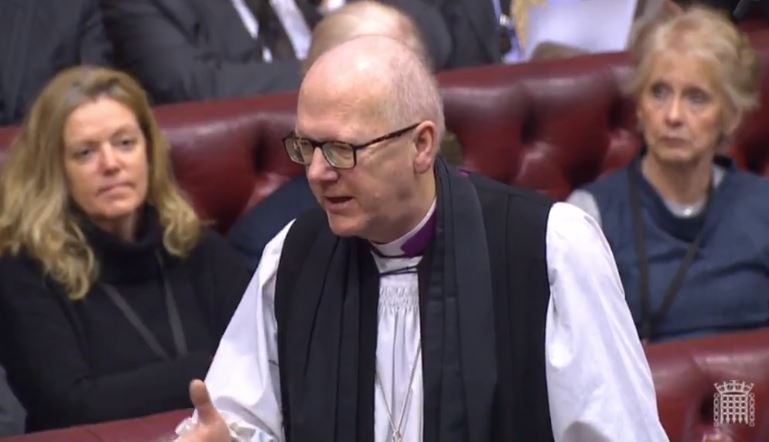
The Lord Bishop of St Albans: Well, my Lords, here we are again. I do not want to detain your Lordships’ House for too long, because everything has been said several times already, but I want to make a few comments, if I may.
I, too, want the Bill to pass. I pay tribute to Her Majesty’s Government and the money they have already found and put on the table, which is very significant. But since we last gathered here, the sheer scale of the crisis, which is in its very early stages, is slowly beginning to unfold before us and become ever clearer. I believe that is why the majority in the other place declines each time an amendment goes back, because those long-serving, seasoned campaigners in the other place realise what is going on. The stories are coming out absolutely relentlessly, and new research is being published.
At a few minutes to four this afternoon, I received an email from someone who works in Parliament. I will call her Claire; that is not her real name, but she will know who she is, because she emailed me at 3.56 pm and asked if I will speak up. She said, “Will you speak up for the leaseholders again and table an amendment? I bought a flat under the shared ownership scheme. I own a 25% share, yet I am liable for 100% of the costs. I am already paying an additional amount each month, and I know this amount will soon increase as further remediation work takes place. I simply cannot afford to pay for the remediation works, nor should I have to. The stress of this situation is becoming intolerable. My mental and physical health are approaching a state of collapse”. “Will you speak up?”, she said. I have not met her yet—I hope she will say hello to me one day, perhaps when she guesses who I am or sees me around the place. This is someone who we bump into, who works in this place and who serves us.
It is not just the many individuals. Since we last came to this provision, research by the Prudential Regulation Authority, which is assessing the building scandal, has said that it poses a systemic risk to the UK financial sector. Some of the work done since then is finding a huge number of flats and homes which are simply unsellable. For example, it has been reported that
“a one-bedroom flat at Leftbank, in Manchester, failed to sell despite being listed for half the £330,000 its owner had paid in 2017”.
What Members in the other place are realising is that, slowly, this will roll out, and it will mean that many people on whom this Bill relies to be able somehow to stump up the money to repair the buildings will not have that money. The buildings will not be repaired, because some of these people will have to walk away, probably very unwillingly.
We have not only those individual stories but some really worrying assessments coming out of the housing and financial market in our country. Some 3 million people, as we heard from the noble Baroness, Lady Pinnock, are affected. As we are paying tribute to fire and rescue officers, I have three emails from fire and rescue officers who were personally affected by this cladding. These are the people involved, along with nurses, police, teachers, care workers and many others—the House knows the sort of people we are talking about.
I believe that the intent of these amendments is the same: to accept that we have a very difficult problem and really want to see some sort of brokered agreement, whereby developers, cladding manufacturers, freeholders and leaseholders make their fair contribution. We realise that everybody will have to do that, but feel that there need to be protections for leaseholders and tenants over these coming months, before the government scheme comes in. I am minded to support this Motion if the noble Lord, Lord Kennedy, brings it to a Division, but I continue to hope and plead that Her Majesty’s Government will be able either to come up with a compromise or make some sort of formal undertaking on what the building safety Bill will offer, so that we can all get behind it and get this really important Bill through.
Extracts from the speeches that followed:
The Earl of Lytton (Con): I also commend the Government on committing their £5.1 billion to this matter, but the reality is that money alone is not the answer. It requires a plan that is co-ordinated, structured and comprehensive; to be honest, it was needed the day before yesterday and certainly not at some unspecified time in the future. The Government cannot, in all conscience, have been unaware that a situation would likely arise where a significant sector of property might be affected by the expansion of the fire safety regime, nor deaf to the observations of just about every informed observer, from, I believe, the Bank of England downwards, warning of the need for action.
The ill effects triggered by this Bill are already plain in evidence, with insolvencies and repossessions, and bills for safety works of such improbably mind-numbing sums as to make every speaker in the time-limited debate in the other place this afternoon—everyone, that is, save the Minister—voice support for the
amendment we passed last time around. These problems are only just unfolding, as the right reverend Prelate has identified. The horror story is therefore far from over. I do not accept the Government’s claim that it is a small number of properties that are affected, and I do not believe the Government have demonstrated that there is any statistical backing to that claim.
The Government’s own partial scheme, under the yet to be introduced building safety Bill, will neither offer relief to anything more than a modest proportion of those affected nor arrive in time to assist many of those in its intended target group, as matters stand at the present. I do not blame the Minister—I believe he is a person of great integrity—but I do blame the government machine he appears to be obliged to defend. I have to say that the stance of the Government here is not the coherent or considered response of any responsible Government, given the scale of the issues at stake and the market and financial perils that are the probable and natural outcome of the changes created by the Bill.
Lord Adonis (Lab): With respect to the arguments, the Minister says that it is not correct or appropriate to use the Bill to legislate on this issue. My noble friend Lord Kennedy’s Motion does not use the Bill to legislate for a solution; it requires the Government to come forward in due course with their own legislation. All it does in its various provisions is to set down timescales by which the Government must do this. The Government may say that they are not prepared to come forward with legislation but the arguments keep moving. Last time, the Minister said that legislation might not be required, as he might be able to take all these actions to protect leaseholders without it. If he is not prepared to accept my noble friend’s amendment because of the legislative components, it is incumbent on him to give a commitment and say when the Government will come forward with a scheme.
Christopher Pincher, the Minister in the House of Commons, made a lot of spurious suggestions in his reply there just a few hours ago. He said that the proposal by the right reverend Prelate the Bishop of St Albans was ineffective because it would prevent “very minor” costs, such as replacing smoke alarms, being passed on. That is a ludicrous suggestion; the Government could come forward immediately with a scheme to deal with minor costs if they were so minded, and I see that the amendment from the noble Baroness, Lady Pinnock, specifically exempts minor costs. He also said that it would absolve leaseholders from responsibility for works that might be their responsibility. There will be cases where leaseholders have responsibilities, and they should be held accountable for them, but the much bigger issue here, which we as a Parliament have a responsibility to deal with, is where the state has failed in its responsibilities, as well as developers failing in theirs.
We are absolutely right to send this matter back to the House of Commons if there is a majority to do so. Irrespective of whether the Government resolve this matter over the next few days before the end of the Session, they will be forced by public opinion and the weight of natural justice—as with the Hillsborough disaster and the Horizon disaster—to move on this issue. It is simply deplorable that this will happen at the very end of a long period of pressure, which will bring the reputation of the state for fair play to a very low ebb indeed.
Lord Greenhalgh (Con, DHCLG): I come back to Amendments 4L and 4M. I am afraid that they are unworkable, impractical and do not deliver the solutions for leaseholders. As noble Lords have heard before, it is impractical and confusing to amend the fire safety order to try to resolve the issue of who pays. These amendments seek to cover the very complicated relationship under landlord and tenant law, including financial obligations and liabilities between freeholders and leaseholders. Frankly, these matters do not sit naturally with the fire safety order.
The right reverend Prelate the Bishop of St Albans spoke very eloquently to his amendment and to the two amendments that have been proposed. None of these amendments works because, once again, they orphan the liability of works until such time that a statutory scheme is in place that pays for the work directly attributable to the Act. In answer to the noble Lord, Lord Adonis, both his amendments reference the provisions of the Act in so doing. I have talked about the difficulties of defining which works might be directly attributable to the Fire Safety Bill’s provisions. I have gone over that ground several times. Orphaning liability simply delays essential fire safety works.
Lord Kennedy of Southwark (Lab): There is a disappointing lack of understanding of the plight of the innocent victims—I repeat “innocent” —of the cladding scandal. People are really in trouble here. We have heard it tonight and we have heard it before. They need their Government to help them. The right reverend Prelate the Bishop of St Albans highlighted another case—that of Claire, who works somewhere in the Palace of Westminster. She bought a 25% share in what was probably her first property, and she is now trapped. These are innocent victims.
Why have we not had a summit at No. 10 to sort this out? I asked that last time, but I did not get an answer. We were going to have a summit about the football problems, so why not about this? If the right reverend Prelate is right, we need a meeting of COBRA to talk about the financial crisis that is on its way on the back of this. But no, there has been nothing from the Government. Why are the Government not standing up for innocent victims? Why can they not set out a route map—a pathway to say how the levelling-up agenda would help these first-time buyers, these innocent victims? We hear nothing.
I want to ask the Government to think again. There is no risk to the Bill. This is the House of Lords doing its job—asking the other place, on a matter of the utmost importance, to think again. That is really important. If the Government would spend a bit more time addressing the seriousness of the issue, we could move forward. My noble friend Lord Adonis made the point that the Government had these amendments weeks ago. They brought the Trade Bill back, but this Bill just sat there. It now turns up this week and they have said that we have to be careful because we are going to run out of time. They sat there for weeks, doing nothing with it, when they could have brought it back here.
 The Church of England in Parliament
You must be logged in to post a comment.