
On 28th April 2021, the House of Lords debated amendments to the Fire Safety Bill. The Bishop of Rochester spoke in the debate, raising concerns he and other members of the Bishops Benches had over the effects of the bill on tenants and leaseholders:
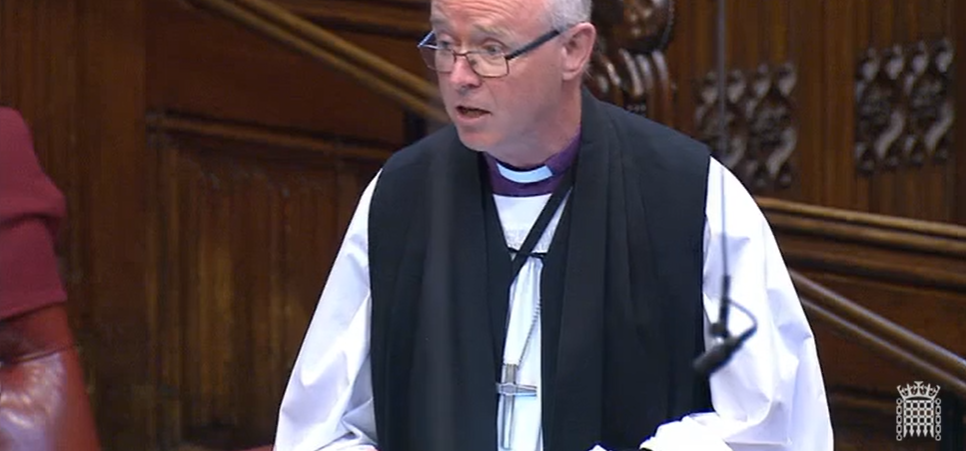
The Lord Bishop of Rochester: My Lords, the right reverend Prelates the Bishop of St Albans and the Bishop of London have both been involved in earlier stages on the Bill and, regretfully, neither is able to be in your Lordships’ House this evening. However, I come with my own background and interests, as a former board member of various housing associations over 25 years and as the former chair of the charity Housing Justice.
As noted by the noble Baroness, Lady Pinnock, the right reverend Prelate the Bishop of St Albans has been heavily involved in this matter and has been persistent. He said yesterday that none of us wanted to be in this position at this stage. But while so much of the Bill is welcome—not least the £5 billion which has been referred to—there are continuing and serious concerns, some of which have already been expressed in the debate this evening, about the position of leaseholders and tenants, and particularly certain groups of leaseholders and tenants.
Yes, remediation is a complex matter, but I am sure that it is not so complex that it cannot be worked out. I want to believe that Her Majesty’s Government are sincere in the express desire to protect leaseholders and tenants. The proposed amendments, including one here tonight, are designed to provide time for the Government to bring forward their own statutory scheme. It is the absence of clarity about that scheme and the timetable for it which is the cause of continuing regret on these Benches. Mention has been made already of the loan scheme in relation to buildings under 18 metres and the fact that that is likely to come forward in the context of another Bill. But, of course, that leaves open the questions of the detail and timescale and, as the noble Baroness, Lady Fox, has just observed, there are leaseholders facing those bills today.
We have heard many tragic stories of people with unpayable bills and crippling insurance and service charges. One concern of Members of these Benches is the effect of all that on people’s health and well-being, as well as on their financial capacity. These are important matters; they affect people’s daily lives, mental state and financial futures. While the Bill tackles a number of really important things, it leaves open some others which leave people facing uncertainty and potentially very significant liabilities.
Whatever happens this evening, I know that many in this place and elsewhere will continue to make the cause, because this issue will not go away. I dare to hope that if the Bill does pass this evening, Her Majesty’s Government will bring forward their proposals as soon as possible in the new Session to remove the uncertainty from those who are finding it really difficult to live with. These Benches continue to hold out hope for a more empathetic attitude towards leaseholders.
Extracts from the speeches that followed:
Lord Adonis (Lab): The issue then is whether the scheme that the Government have said they will introduce to implement the principles that the Minister himself has set out to the House this evening is adequate to the task. We take the Minister at his word that it will be adequate to the task. There is some disagreement about how far it needs to be legislative and how far not legislative, though the fact that he constantly refers to the building safety Bill leads us to think that it will be substantially legislative. In so far as it is not legislative, these measures could be put in a legislative form, or he could make a categoric statement about when the Government will come forward with a comprehensive scheme.
So far, so good. What happens is that the right reverend Prelate the Bishop of St Albans and his understudy who is here this evening, if I may so describe him—anyway, he seems to be maintaining the line of the right reverend Prelate the Bishop of St Albans—and other noble Lords then consistently, on now about 10 occasions during the passage of the Bill, have come forward with proposals to put into legislative form what the Government themselves have told us they want to do. What happens, because we are now back in Alice in Wonderland, is that we pass amendments saying that remediation costs should not be passed on to leaseholders which are attributable to the additional costs which have come post Grenfell, and then the Government come along and say, “Ah, but this does not take account of the following five concerns.”
These are the concerns that the noble Baroness, Lady Fox, just mentioned about small costs, concerns about defining costs, concerns about costs which might be attributable to leases which applied and which tenants willingly engaged in before there were any additional costs put forward—we had a whole list of issues that were raised. What then happens is that the ever-receptive Bishop of St Albans, and other noble Lords change the amendments to take account of the Government’s concerns. Indeed, the amendment of the noble Baroness, Lady Pinnock, this evening meets most of the concerns that have been raised by Christopher Pincher in the House of Commons and by the noble Lord, Lord Greenhalgh, here.
It is worth dwelling on this, because these are hugely important issues potentially affecting millions of people, so we ought to be clear about it. Under the noble Baroness’s amendment, proposed new subsection (1) states:
“The owner of a building may not pass the costs of any remedial work attributable to the provisions of this Act”—
so defining clearly what should and should not apply. Proposed new subsection (2) states that the prohibition on remediation costs being passed on to tenants will have effect
“only until a statutory scheme is in operation which ensures that leaseholders and tenants of dwellings are not required to pay more than £50 per month during the course of the lease”,
but it does not apply to a cost that
“is permitted under a lease or tenancy agreement that was made before this Act is passed, and … does not exceed £500, whether as a one-off cost, or in total across a 12-month period.”
This meets the concerns that the Minister has raised, unless he does not propose to bring forward a scheme that meets his commitments in due course, which is the reason why we go round in circles again.
Lord Greenhalgh (Con): In answer to the right reverend Prelate the Bishop of Rochester, it is quite clear that the ability to deliver and provide grants will be via the building safety fund, which is in operation today. If it is helpful, I can put on record that the financing scheme does not have to await any statutory passage of the building safety Bill and will be available as a very important way of protecting leaseholders in medium-rise buildings.
The only thing that would require statutory underpinning in terms of supporting leaseholders is the high-rise levy that would form part of the regime to collect a levy for those buildings that would be considered high risk at that point. That would form part of the building safety Bill. The vast majority of this does not have to wait for the building safety Bill to be passed. The building safety Bill will be helpful to strengthen redress and make it clear what charges can passed through to leaseholders to protect them from charges that they should not be paying for.
This Government always have been and will continue to be committed to delivering the recommendations of the Grenfell Tower inquiry. I respectfully urge noble Lords to reject the noble Baroness’s amendment. I reiterate that if we do not move forward with the Fire Safety Bill and get it passed tonight, it will fall and the Government will not be able to deliver the inquiry’s recommendations in relation to external walls and flat entrance doors. Ultimately, this means that the safety of residents and leaseholders could be compromised. I beg to move.
 The Church of England in Parliament
You must be logged in to post a comment.