
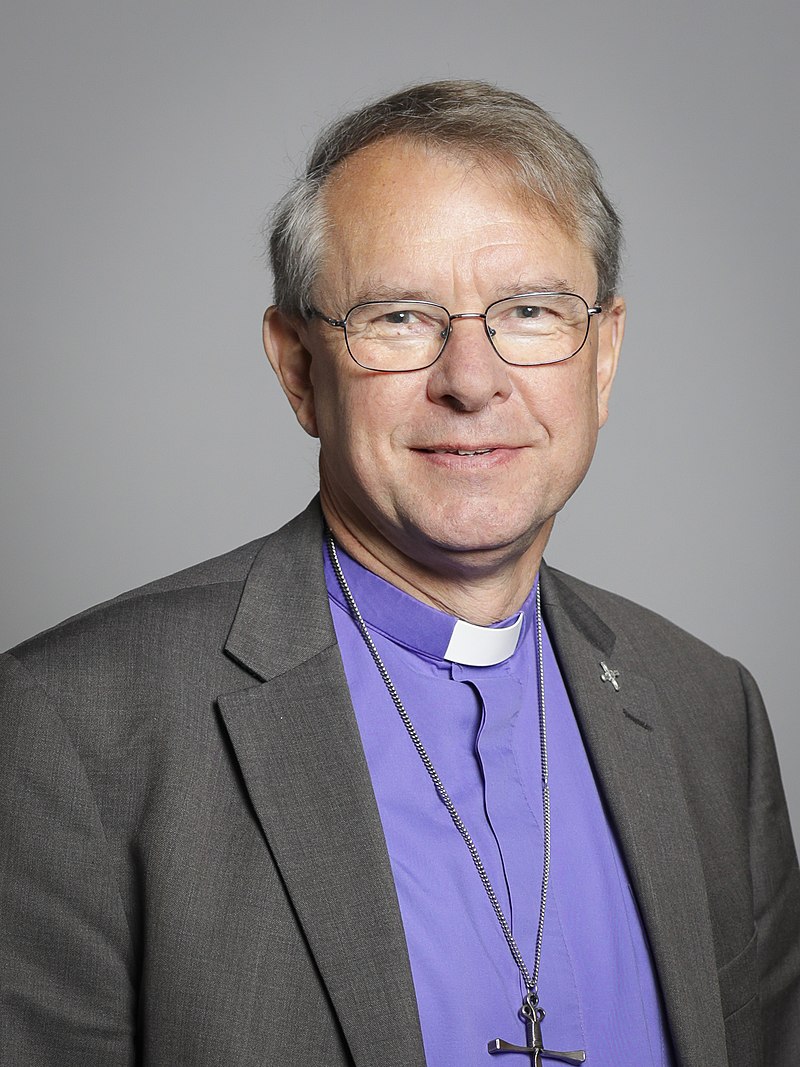
The Bishop of Durham received the following written answers on 7th June 2021:
The Lord Bishop of Durham asked her Majesty’s government, further to the report commissioned by the Treasury The Economics of Biodiversity: The Dasgupta Review, published on 2 February, what steps they are taking to ensure that all children understand how nature contributes to the UK economy.
Baroness Berridge (Con, DfE): The department is currently working with Her Majesty’s Treasury to contribute to a full response to the Dasgupta Review.
The National Curriculum is a framework which sets out the content that the department expects schools to cover in each subject, but teachers have the flexibility and freedom to determine how they deliver the content in the way that best meets the needs of their pupils. This includes choosing to cover particular topics in greater depth if they wish. Although academies and free schools are not required to teach the National Curriculum, they are expected to teach a curriculum that is similar in breadth and ambition, and this is reflected in the Ofsted school inspection handbook. This can be viewed at https://www.gov.uk/government/publications/school-inspection-handbook-eif(opens in a new tab).
Subject content related to the environment is included within the science and geography National Curriculum. At primary level (key stages 1 and 2), pupils are taught how environments can change, including positive and negative impacts of human action, weather, and climate zones. In secondary science (key stages 3 and 4), pupils are taught about the production of carbon dioxide by human activity and the effect that this has on the climate. At GCSE, pupils consider the evidence for anthropogenic causes of climate change. They also study the impact of increased levels of carbon dioxide and methane and how this can be mitigated.
Under the key stage 2 non-statutory guidance for citizenship, pupils are taught about the wider world and the interdependence of communities within it. Pupils are taught that resources can be allocated in different ways and that these economic choices affect individuals, communities and the sustainability of the environment.
In geography, at key stage 2 and 3 pupils should be taught human geography. In key stage 2, pupils are taught about types of settlement and land use, economic activity including trade links, and the distribution of natural resources including energy, food, minerals and water. In key stage 3 pupils are taught about population and urbanisation, international development, economic activity in the primary, secondary, tertiary and quaternary sectors, and the use of natural resources. These topics can be built upon in more depth at GCSE.
In 2017, the department introduced a new environmental science A level. This enables pupils to study topics that will support their understanding of climate change and how it can be tackled.
The Lord Bishop of Durham asked Her Majesty’s Government what consideration they have given to how the education system might be used to broaden public awareness about actions that individual members of the general public are able to make in line with the target to reduce the UK’s greenhouse gas emissions.
Baroness Berridge: The department recognises the contribution it can make to help create a sustainable future through education, developing the skills needed for a green economy, and supporting sectors to reach net zero targets.
Topics relating to climate change are included throughout both the science and geography curricula and in GCSEs. Through the citizenship programmes of study, pupils are taught how to explore political and social issues critically through evidence, debate, and reasoned argument. Pupils are taught that resources can be allocated in different ways and that these economic choices affect individuals, communities, and the sustainability of the environment. A new environmental science A Level was introduced in 2017, which will enable pupils to study topics that will support their understanding of climate change and how it will be tackled.
In further and technical education, the Institute for Apprenticeships and Technical Education has convened a Green Apprenticeships Advisory Panel to encourage trailblazers to align apprenticeships to net zero and wider sustainability objectives.
The Department for Education and Department for Business, Energy and Industrial Strategy launched the Green Jobs Taskforce in November 2020 to help the UK deliver the skilled workforce needed to reach net zero emissions by 2050. The taskforce, working in partnership with business, skills providers, and unions will develop an action plan to support 2 million good quality, green jobs and the skills needed by 2030, and so support the UK to transition to a net zero economy.
 The Church of England in Parliament
You must be logged in to post a comment.