
On 16th July 2021, the House of Lords debated the Organ Tourism and Cadavers on Display Bill [HL] in its second reading. The Bishop of St Albans spoke in support of the bill, bringing up the persecution of the Uighur minority in China:
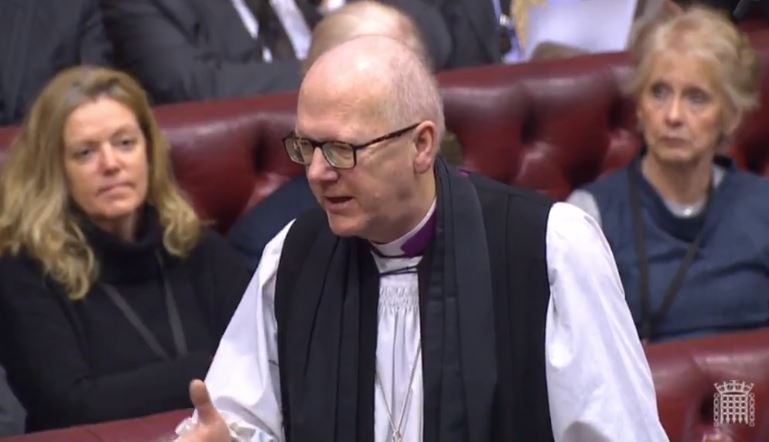
The Lord Bishop of St Albans: My Lords, I too support this Bill and welcome the very excellent speech by the noble Lord, Lord Hunt of Kings Heath, and this important priority to equalise the law so that, whether a body or an organ comes from someone in this country or some other part of this world, they will be given the same protections and treated with the same dignity.
Noble Lords have already spelled out with great and horrifying clarity some of the allegations of organ harvesting by the Chinese authorities targeting minorities. I have risen to speak today because I have been raising again and again in this House the issue of the Uighurs, and this absolutely touches on what is happening to this incredibly persecuted group of people. It is terrifying to see what is unfolding before our very eyes. In June 2021, a group of independent UN experts said that they had received information that detainees from ethnic and religious groups such as the Uighurs, Tibetans, Falun Gong and Chinese Christians were being subjected to examination without their consent, with the express intention to facilitate organ allocation.
We know that, back in 1984, harvesting organs from political prisoners was permitted in Chinese law. We know that the subsequent crackdown against the Falun Gong in 1999 meant that many of its members are likely to have been subject to forced organ harvesting. It is rumoured that, in the 1990s, prisoners of conscience of Uighur origin were the largest source of organs, before being surpassed by Falun Gong. Now, however, the Uighurs are again in the sightlines of the Chinese Communist Party, and the accounts of harvesting organs are rising. Expert estimations of the number of Uighurs killed in Xinjiang for their organs range from 20,000 to 25,000 per year. There are also stories of vast lanes to streamline the distribution of these organs, and of crematoria to dispose of the victims’ bodies and to deny the deceased a proper Islamic burial.
I had previously refrained from using the term “genocide” to describe the awful repression of the Uighur minority, but, following the House of Commons debate in April and its Motion, when it was labelled as such, it seems to me that we now have to name it and not mess around any more. A genocide is being perpetrated against Uighur minorities. I am not blind to the difficulties that our own Government have in trying to save these lives, but we must become far more robust in terms of the representations and, if necessary, the actions that we are willing to take against China. I have found Her Majesty’s Government’s response to the situation in Xinjiang disappointing over recent months. The current law allows British citizens to receive organs from unknown and possibly non-consenting sources without consequences. If that happens, British citizens are acting as accessories to genocide.
I will make one final, brief point. I am glad that this Bill extends to the treatment of the bodies of those who have been executed, but it is also for those who have died peacefully. It remains unacceptable that they should be displayed without appropriate consent. Christianity has always held that our bodies have been created by God and are temples of the Holy Spirit, and as such that we must reverence them and treat them with dignity, both in life and in death. For centuries, the Christian tradition has taught that burying the dead is one of the seven acts of corporal mercy. It is rooted in the belief that the body is sacred. This is so fundamental to us as we look to the future. I hope that Her Majesty’s Government will bring this Private Member’s Bill into law as soon as possible.
Extracts from the speeches that followed:
Baroness Brinton (LD): It is vital that the UK, whether its citizens or its NHS in treating people after transplants, is protected from the possible lack of consent from individuals into the use of their bodies for organ transplant or bodies on display. We are now behind the curve compared to many other countries that have legislated already against these practices, and that needs to be remedied as a matter of urgency. The noble Lord, Lord Ribeiro, with his expertise through his role in the Royal College of Surgeons, and the chairing role of the noble Baroness, Lady Finlay, on ethics, both spoke with authority on the medical practice of transplants and true consent. The experience of the noble Lord, Lord McColl, as a kidney transplant surgeon, of various nefarious practices in gaining consents for transplant, was very helpful. His last comments at the end about the development of plastic lenses for cataracts just shows how slowly and carefully this country has taken the progression of transplantation.
Along with the noble Baroness, Lady Finlay, my thoughts turn to Burke and Hare, and their appalling supply of bodies for profit. Our own shameful history in this area means that we must ensure that standards of consent are of the highest calibre, which is why we need absolute clarity on consent for any practice involving organ transplants and cadaver display. The noble Baroness is right to say that this Bill prevents double standards. The right reverend Prelate the Bishop of St Albans confirms the view of all speakers in this debate so far that we in the UK must be robust in ensuring that we have those right standards in our country and that we continue to push for an examination of the treatment of persecuted minorities in China. I hope that the Government, who are now taking very seriously the issue of China’s treatment of Uighur Muslims, will smooth the rapid progress of this small but vital Bill through Parliament and into legislation as soon as possible.
Lord Bethell (Con): I reassure the right reverend Prelate the Bishop of St Albans that our commitment to tackling organ trafficking is absolutely and clearly established in UK law. Under the Human Tissue Act, it is a criminal offence to give a reward in exchange for an organ, or to seek somebody who would be willing to sell organs. The Act also makes it an offence to receive a reward for supplying or offering to supply an organ. It is an offence to initiate, negotiate or even advertise any of these arrangements, and those guilty of these crimes may receive a prison sentence, a fine or both. Crucially, these provisions also serve to curtail transplant tourism. If any part of an overseas illicit transaction takes place in England, Wales or Northern Ireland, it will constitute an offence.
Lord Hunt of Kings Heath (Lab): I am very pleased to be able to respond to this debate. I thank all noble Lords for taking part and the Minister for his very careful response. We heard from the noble Lords, Lord Ribeiro and Lord Moynihan, how important the ethical basis of organ transplant and use of research in this country is. It sets the context for the debate. The noble Baronesses, Lady Finlay, Lady Brinton and Lady Northover, and the noble Lord, Lord Alton, spoke graphically about the appalling nature of the “Real Bodies” exhibition; the noble Lord, Lord Alton, who has been such a champion of human rights, expressed disappointment about the WHO’s record, which I very much share.
The noble Lord, Lord Sheikh, talked about the vulnerable people who have been targeted globally to provide organs, and I so agree with him. I echo the remarks of the right reverend Prelate the Bishop of St Albans about the appalling tragedy of the Uighurs, and I applaud the role of the Church. The noble Lord, Lord Mackenzie, supported the Bill. The noble Lord, Lord McColl, talked about the balance between the ethical basis of transplants and research in general and the need to encourage innovation, which I agree with.
 The Church of England in Parliament
You must be logged in to post a comment.