
On 10th September 2021, the House of Lords debated the Education (Assemblies) Bill at its second reading. The Bishop of Oxford spoke in response to the bill, welcoming the debate on the topic, but opposing the proposed removal of the requirement for collective worship in schools:
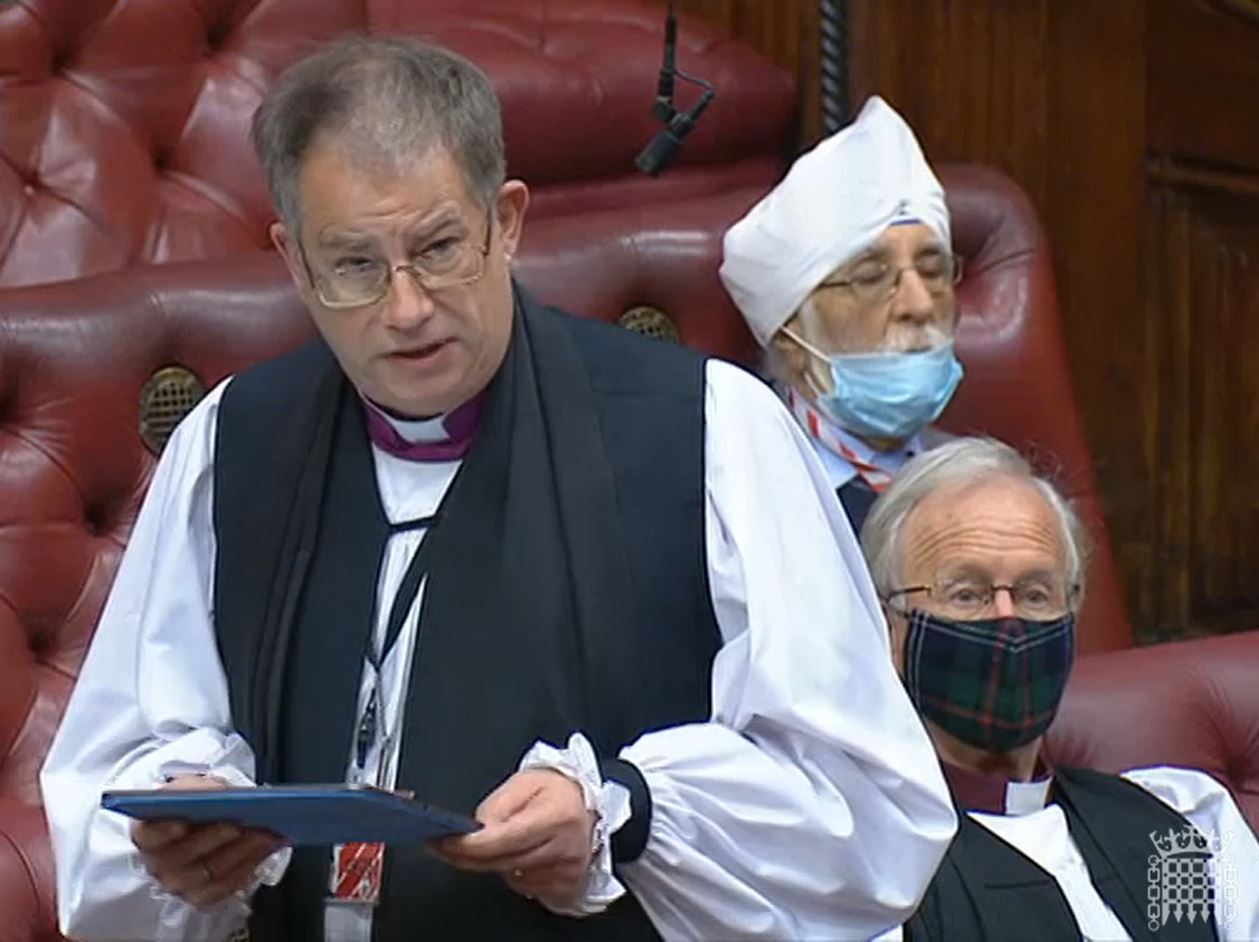
The Lord Bishop of Oxford: My Lords, I warmly welcome this debate. As others have said, it is very timely that it is raised. I thank the noble Baroness, Lady Burt, for her careful introduction, and other noble Lords and noble Baronesses who have spoken, particularly my distinguished predecessor but one, the noble and right reverend Lord, Lord Harries, with whom I think I am about to disagree.
Worship and spirituality are a vital part of what it means to be human, and it is absolutely right, for all the reasons that have been given, that it be carefully reviewed and, possibly, that some changes should be introduced. But my reason for in conscience finding this Bill difficult goes back to my experience of leading assemblies as a local parish priest many years ago in Halifax. I put a great deal of time and energy into rehearsing the parable of the good Samaritan and the stories of Joseph and Moses, only for the otherwise extremely good and gifted head teacher of the school to reinterpret my assembly with the phrase, “Of course, what the vicar really means is don’t run in the corridors, and pick up the litter in the playground.” It is the reduction, without a serious faith tradition, of the fantastic values that are being articulated, to simple practical motifs which I fear is the danger of a Bill like this.
There are many benefits to collective worship in schools, as has been said, as a time to pause and reflect, to gather in community, to mourn in times of tragedy, as we have seen recently, to foster common values, to celebrate festivals, not just Christian, and to build religious literacy, which is vital. Although there is some evidence to the contrary, there is other evidence that suggests that the present arrangement works well, as many schools and children will testify. The noble Baroness and others have argued that the Bill would liberate schools to use the valuable time gained to cover themes such as the environment, health relationships and self-esteem, but all those themes are regularly part of good school collective worship in the present pattern, within the context of the great faith traditions.
If the Bill is passed, one effect may be to make anything that is more than secular assembly not legal and contested in our schools. I fear that one risk of the Bill is that it will weaken the protection around this valuable space for reflection in the school day, that the life of our schools will move in an ever more utilitarian direction, and that children will grow up in ignorance of the possibilities and depth of the faith traditions which, as the noble Lord, Lord Lilley, has said, have formed our society and culture and the societies of the world, where faith still plays a massive role.
Is it right in a pluralist society that worship remain wholly or mainly Christian? I believe it is, and for the following reason. The alternative to rooting collective worship in the Christian tradition is to root it in a largely invented contemporary gathered syncretic tradition, which lacks depth or authority, is unconnected to any faith community and will quickly be abandoned. The effect of the Bill may be to replace a tolerant, humane and hospitable Christian faith as the main strand of worship in our schools, combined with other faith traditions, with a largely manufactured cluster of ideas with few roots in our stories or culture and varying enormously from school to school. I do not think that the majority of the nation’s children and young people should be denied the experience of spiritual, moral, social and cultural development connected to a living tradition, which research shows they value. It is right that we are having this debate, and I hope that many conversations come from it, but I urge your Lordships not to progress this Bill.
Extracts from the speeches that followed:
Lord Dubs (Lab): My Lords, it is a pleasure to follow the right reverend Prelate, even if I disagree with some of the things that he said. I should say that I am a member of the All-Party Parliamentary Humanist Group and I applaud the initiative of the noble Baroness, Lady Burt, in bringing this Bill forward.
I was not going to mention this little story, but I shall do so in the light of what the right reverend Prelate said. I was talking about refugees at an event in Yorkshire. There were schools and faith groups there—it was not part of an assembly, or anything like that—and I was introduced as a humanist. A vicar was sitting there, and after I had done my piece and done my Q&A, I went up to her and said, “I’m sure you disapprove of me being a humanist”. She said, “Not at all—you and I believe in the same things. It’s just that I believe in God as well”. Maybe the right reverend Prelate would not agree with that, but it seemed to me that it gets to the heart of it: there are important moral standards that are shared and which in my view do not need a Christian backing. I shall come on to that in a moment.
As many noble Lords have said, what happens to children who are not in assembly? They are almost excluded if their parents do not want them to be there, because there is nothing for them. One parent said, “We don’t think it is acceptable that they be left to play with an iPad because they have been withdrawn”. There has to be something to fill that gap; otherwise, it puts young people in an invidious position, which is not very proper.
Baroness Murphy (CB): My Lords, it is always a pleasure to follow the noble Lord, Lord Dubs, and I agree with every word that he and many people in the House today have said. One great advantage of speaking in the second half of a debate is that you will have heard so many good arguments.
I was going to quote another Bishop of Oxford. We have heard from the noble and right reverend Lord, Lord Harries, and the right reverend Prelate the Bishop of Oxford today. One of the successors of the noble and right reverend Lord, Lord Harries, John Pritchard, when he was head of education at Oxford, made a very clear statement that he felt that personal prayer and direct worship was inappropriate. Religious education is of course completely different, but the personal prayer from a heartfelt faith is something that should not be forced on children, particularly in a society where so many people are not religious.
The Government’s failure to get to grips with reality is pretty disgraceful. They have not bothered to upgrade the policy since 1994. The current Minister, Nick Gibb, has written to say that if people are not implementing this policy they will be dealt with on an individual basis. We know very well that SACRE, the local committees that look after religious education, have no way of collecting data and nobody gives them any data about how religious assemblies are being implemented, so there is no data that the Minister could possibly collect. I worked out that there must be at least 16,490 schools not holding collective worship in assemblies, if they hold assemblies at all. One important matter in this Bill is that it ensures that assemblies are held to address those important moral questions that are so vital.
 The Church of England in Parliament
You must be logged in to post a comment.