
The Bishop of Blackburn spoke in a debate on behaviour change and the transition to net-zero carbon emissions on 16th September 2021, urging that the government consider the issues faced by the poorest in society so that they are not left behind:
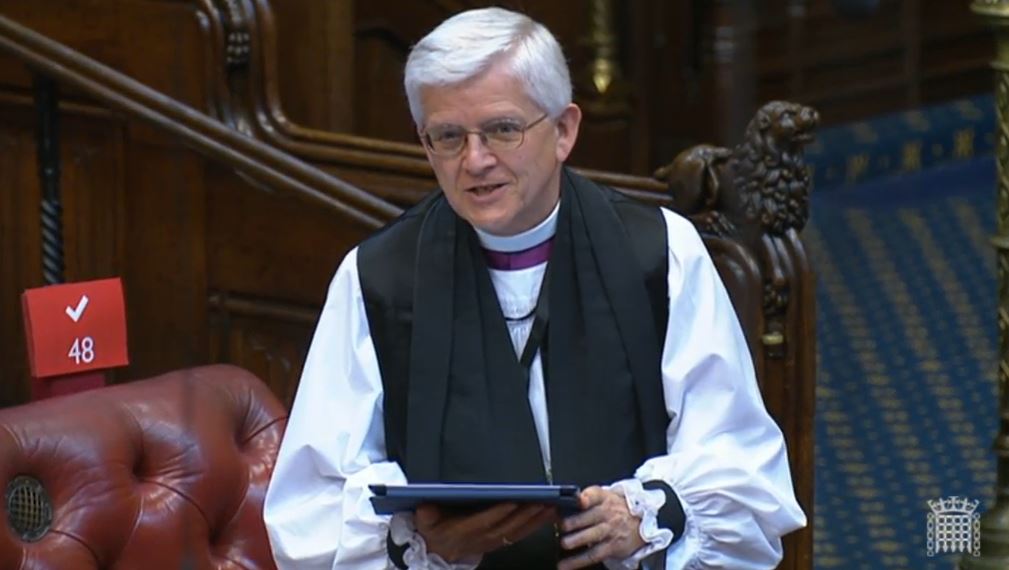
The Lord Bishop of Blackburn: My Lords, I too am grateful to the noble Baroness, Lady Blackstone, for the opportunity of this debate. I have just finished reading a book about wilding in the UK, and it is a classic story of how difficult it is to change a culture, attitudes and expectations from deeply embedded practices and convictions, in this case about how we manage our land—which was appropriate, with the Environment Bill this week. The same difficulty applies in this debate, which is less about government policy and more about how we, as citizens, choose to live.
My main point, in discussing the role behaviour change can play in helping us towards net-zero carbon emissions, is this: it is essential that our expectations are aspirational, but also realistic. They need to apply to all people. It is my fear that the poorest 10% will be left not just behind, but feeling that they are part of the problem, when they would rather be part of the solution.
So far, the behaviour changes we wish to see have been inaccessible to many on low incomes, simply because they cost much more. I believe cars that are powered without petrol or diesel are the future, and I hope to see a mix of financial incentives and legislation to encourage their uptake and so change our choices, but they remain considerably more expensive in outlay and then do not hold their value. A petrol car is cheaper and easier to sell on and, if I live in accommodation without a driveway, is considerably easier to fill with the required fuel. So it is for other goods, such as locally grown organic food, which remains more expensive than highly processed food grown out of season abroad. Similarly, I have complete sympathy with any working single parent who decides to shop for the cheapest school shirts money can buy, instead of those made of fair-trade cotton. Food, clothing, travel—all these remain prohibitively expensive for some. When we seek to change the behaviour of the whole population, we must consider how we might incentivise with price reductions or even subsidise these things to make them accessible to all.
Also, the industries that employ people on lower incomes must be those we seek to incentivise, and possibly most strongly penalise when they fail to make the necessary changes. Manufacturing, food production, aspects of the gig economy: these are all sectors that will have to put their greenhouses in order or presumably risk facing sanctions designed to force a change in behaviour. Wages could be pushed down and jobs could even be lost to pay for the necessary changes in production and carbon offsetting, and the burden will be borne by those at the bottom of the pay scale.
Finally, it feels that every time I am here I bring up the same matter. I follow the focus of the noble Baroness, Lady Randerson, which is that public transport in the north of the country remains inadequate, particularly between the big cities and most especially for those on low incomes who need it most. It is essential for the change of behaviour we seek, and for the sake of the climate, that funding per head on transport infra- structure is, to use Her Majesty’s Government’s phrase, levelled up.
One should not be surprised to find out that spending on transport infrastructure is higher in London than in any other part of the country, but that spending per head is so considerably higher in the capital than in the north of the country is less easy to comprehend. Indeed, I recently read that it is twice as much per head than in the north-west and more than three times as much as in Yorkshire and the Humber. How can people be expected to change their behaviour and choices if the opportunity is not given them to do so? Without proper and fair investment in greener ways to travel, reliance on road travel will only increase, especially after the pandemic, which still impacts the numbers who use our trains, trams and buses.
In summary, the blend of incentives and penalties I have heard suggested will be essential in helping us all change our behaviour, which is incredibly important and very possible as we seek to reach net-zero carbon emissions. However, we must do it in a way and a manner that does not leave any constituency behind. Lack of financial means should not prevent some sharing the journey to net zero. I mentioned the book I read just recently, in which the quote is given: you can’t be green if you’re in the red.
Extracts from the speeches that followed:
Lord Oates (LD): As the right reverend Prelate the Bishop of Blackburn said, we cannot just expect people to change their behaviour if we do not give them the opportunity to do so. There are so many policies that need to change if the Government are to allow people to make the changes they often want to make. You might want to change your car to an EV but you do not have off-street parking and there are no chargers on your street, or if you use a commercial charger, it costs you six times as much as if it is from your domestic electricity supply. There are all sorts of things like that that need to be fixed as well.
We all know that climate change is not waiting on our procrastination; it is taking advantage of it. We also know that public engagement and awareness campaigns cannot be effective overnight, but more often take a period of years, which underscores the urgency of action now. The Government need to get on with this, to correct their lack of strategy and to do so now. They need to show a lead in this country and a lead in the world.
Lord Grantchester (Lab): The Covid-19 pandemic has proved that decisive intervention by the Government, local authorities and agencies can achieve significant shifts in behaviour. By comparison to the pandemic, the effects of climate change have still largely to be felt to affect most people’s daily lives. Behaviour change to embrace a net-zero lifestyle will require a cultural revolution of information-driven decision-making; visible peer pressure equal to the effect experienced following the smoking ban; and strong, coherent government policies across all departments and services.
Various Climate Change Committee reports and commissions from research bodies and universities indicate that more than 40% of the abatement necessary involves some degree of consumer change, through their choices, to reduce demand and improve efficiencies. Many examples have been promoted today. The right reverend Prelate the Bishop of Blackburn is right in his analysis that people want to feel part of the solution and not the problem. The noble Baroness, Lady Jones, has identified mixed messages and confusing price signals, which can only bring delay and frustration with unintended consequences. The noble Baroness, Lady Sheehan, spoke of the unco-ordinated right and left hands of government, with its encouragement and subsidy of fossil fuels. Indeed, all of us send signals through our own consumption patterns, as expressed correctly by the noble Lord, Lord Kirkhope. For every pull forward, there arises a push back from another interest lobby.
Lord Callanan (Con, Department for Business, Energy & Industrial Strategy): The right reverend Prelate the Bishop of Blackburn referred to the importance of enabling everyone in society to contribute to achieving the net-zero target. I agree with him. We want to make it easier and more affordable for people to shift towards a more sustainable lifestyle while at the same time maintaining freedom of choice and fairness. These are two of the key principles also recommended by Climate Assembly UK. The Government are already taking steps to do exactly this.
For example, we are continuing to engage with key cycling and walking organisations to develop a behavioural change campaign aligned with our cycling and walking investment strategy action plan. We have funded digital tools that can support people in reducing their carbon footprint, including the Simple Energy Advice service, which can help people reduce energy use in their home, and the “Go Ultra Low” website, which provides information and advice on electric vehicles. We are supporting motorists buying electric vehicles through the plug-in car grant, which provides up to £2,500 for those making the switch to electric cars—I hope my noble friend Lord Kirkhope was able to take advantage of this Government’s generosity for his new purchase. As well as this, in partnership with industry we have supported the installation of nearly 25,000 publicly available charging devices in what is now one of the largest networks in Europe.
 The Church of England in Parliament
You must be logged in to post a comment.