
On 12th October 2021, the House of Lords debated the Skills and Post-16 Education Bill in the first day of the report stage. On behalf of the Bishop of Durham, the Bishop of Oxford spoke to three amendments to the bill aimed at improving provision of higher and further education to people with special educational needs and disabilities:
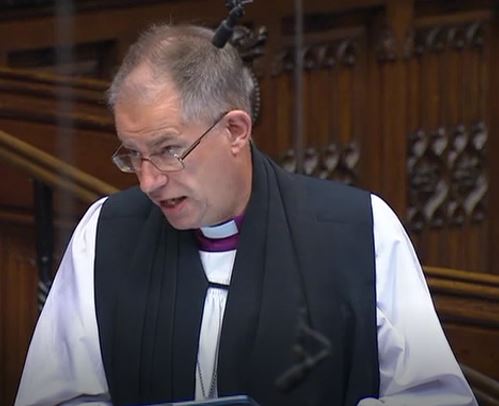
The Lord Bishop of Oxford: My Lords, I shall speak to Amendments 13, 16 and 19, tabled by the right reverend Prelate the Bishop of Durham, who is unable to be present because of his other engagements. Along with others, I welcome the Minister to her new role and join others in offering appreciation to her predecessor, the noble Baroness, Lady Berridge. I should also say, as a member of your Lordships’ Select Committee on the Environment and Climate Change, how much I welcome government Amendment 6, and I add my support to Amendment 64.
The context of my remarks is a general welcome for the Bill and recognition of its role in helping to meet the Government’s ambition on FE and skills. However, there is almost no specific reference to SEND provision in the Bill, despite the significant role that FE plays in provision for students with additional needs or disabilities. Noble Lords will know that around 202,000 students have special educational needs in further education, of whom 90% attend general FE colleges and make up almost one in six of all enrolments. Within those, almost a quarter of students are aged 16 to 18. In contrast to the school sector, there is a small number of specialist institutions. That situation makes a profound difference to the scale and range of support needed in general FE and sixth-form colleges.
During Second Reading, the Minister gave assurances that the overall legislative framework, notably the Equality Act and the Special Educational Needs and Disability Act, provided sufficiently rigorous safeguards for ensuring that the needs of SEN students were met. It was also most helpful to see the updated policy note and to hear the further assurances from the noble Baronesses, Lady Chisholm and Lady Barran, at their meeting with my right reverend friend the Bishop of Durham last week. The Government’s high aspirations for students with learning needs and disabilities is clear, and we warmly welcome that ambition.
However, the evidence from the Special Educational Consortium and Natspec, which are key voices promoting the rights of disabled children and young people, those with special educational needs and specialist further education, is that far more explicit duties should be incorporated into the Bill to ensure that high ambitions and good intentions are subsequently consistently turned into effective action.
I am sure that Ministers will acknowledge that the SEN review and its associated Green Paper, which we look forward to seeing in the near future, have already identified opportunities to create a much-needed comprehensive and integrated strategy for children and young adults with SEND. There are many points of potential synergy with the national disability strategy, the national strategy for autistic children, young people and adults and in the health and disability Green Paper. Perhaps most of all, a major issue, tackling the disability employment gap, is not yet specifically identified as one of the core tasks of the employer representative bodies and the local skills improvement plans for which they are responsible.
The amendments tabled by the right reverend Prelate the Bishop of Durham are strongly practical in scope and would not impose additional duties on the ERB. Indeed, it is clear that the Government regard them as implicit within the ERB’s responsibilities in any case. Rather, each amendment is framed so as to make explicit and much clearer how LSIPs make effective provision for students with SEND, and are much easier to evaluate.
That is the rationale for each of the three amendments. The first, requiring that the evidence used must include views of the relevant community groups, including those representing the interests of people with disabilities, ensures that a full range of robust evidence informs decisions about the LSIP. A very experienced principal in the north-east pointed out that it was vital for her college to have the views of both employers and those of the communities which the college serves in order to make the very best decisions about provision.
The second amendment picks up one of the most important indicators that provision is meeting needs: namely, that it is helping to prepare people with SEND to successfully enter and progress within the employment market and, by so doing, substantially reduce the disability employment gap. Thirdly, in order for ERBs to tackle these issues effectively, it is crucial that the LSIPs are informed by the employers among their number that have the expertise and track record to ensure their plans are genuinely inclusive in respect of disability.
At this stage in the Bill’s passage, it would be most helpful if the Minister could indicate how the review of the current trailblazer pilots could be used to inform the Government’s evolving view of how ERBs might best operate, with specific reference to the amendments I have outlined and what future discussions with the right reverend Prelate the Bishop of Durham and other interested Peers might be a fruitful way of following up these issues. We even suggest that the Government might adopt the amendments themselves, since hope is considered one of the virtues on these and, indeed, other Benches.
Extracts from the speeches that followed:
Lord Storey (LD): I end by saying how much I support Amendment 19 from the right reverend Prelate the Bishop of Durham. He is right to say that if we are to have these representative employer bodies, they must have a record of showing that they care about diversity, equality and disability and that should be an important hallmark of these bodies. If that amendment is not agreed, I am sure that if the Government saw a body set up that was not equal or concerned about diversity and disability, they would have the sense to step in.
Baroness Barran (Con, Department for Education): I turn to Amendments 13, 16 and 19 from the right reverend Prelate the Bishop of Durham on local skills improvement plans and the employment prospects of people with disabilities. The criteria for designation of employer representative bodies in the Bill are intentionally focused on the most important characteristics and capabilities required for the role. Of course we want all employers to demonstrate best practice in equality and diversity in employment, including in relation to disability, but the designation process for employer representative bodies to develop local skills improvement plans is not the best mechanism to achieve this.
The right reverend Prelate the Bishop of Oxford asked what we expected to learn from the trailblazer pilots. This is an important area in which to explore their experience and, as appropriate, include it in the statutory guidance.
The disability employment gap, while absolutely still too large, has narrowed significantly in recent years, from 33.8 percentage points in 2014 to 28.6 percentage points in 2021. However, since it is still too large, the Government’s national disability strategy, which the right reverend Prelate referred to, sets out how we will help disabled people to fulfil their potential through work and reduce this employment gap still further.
Baroness Bennet of Manor Castle (GP): My Lords, three days off my second anniversary in your Lordships’ House, I occasionally think that I am on top of procedure and am then comprehensively disabused of that fact. I thank the noble Lord the Deputy Speaker for his advance guidance on this matter; I was not aware that my modest little Amendment 9 would put me in this position, for which I feel particularly ill equipped, given the distinguished nature and level of experience of so many people contributing to this debate.
However, I shall do my best, briefly, and begin by thanking the Minister for her comprehensive wrap-up of this long group. If we look at the group’s nature, it makes some kind of sense despite its large size. Amendments 8 and 9 are addressing the gaps in the matter—the skills needed—and, as the noble Lord, Lord Ravensdale, said, we need to prioritise the jobs that need doing. Many of the other amendments—I particularly highlight those from the noble Baroness, Lady Whitaker, and the right reverend Prelate—address the need to ensure that all humans in our society are able to contribute to the fullest extent, to meet the needs of our society and develop their own human potential.
 The Church of England in Parliament
You must be logged in to post a comment.