
On 13th October 2021, the House of Lords debated the Social Security (Up-rating of Benefits) Bill in its second reading. The Bishop of Durham spoke in the debate, urging the government to do more to support those in poverty:
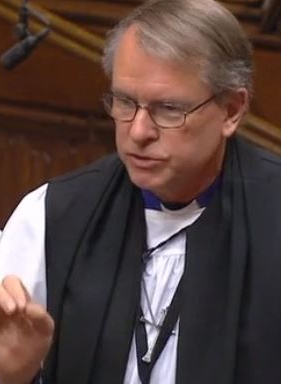
The Lord Bishop of Durham: My Lords, when I read the title of the Bill I thought, “Good: we will have before us a measure that covers the wide issues of the uprating of the wide range of social security benefits we have, most notably pensions, universal credit and perhaps the question of legacy benefits.” So I was very disappointed to discover that, actually, the scope of the content was purely to do with pensions.
In relation to pensions, I have sympathy with the proposals tackling a specific issue that appears to have emerged as something of an anomaly, given our recent experience of the pandemic. I think the triple lock was probably the right move when it was introduced and it has served pensioners well. However, I now have questions as to whether having such a lock in one part of the social security system actually prevents both the Treasury and the Department for Work and Pensions from truly looking at the system and its funding as a rounded whole—although I note with care the comprehensive and careful input of the noble Baroness, Lady Drake, and that of the noble Baroness, Lady Greengross, just now on the double lock. But this is an uprating Bill for the system, it is not about changing the system, so with some reluctance I accept the proposals in the Bill.
However, I now turn to my deep disappointment with the Bill. I join many noble Lords in raising a concern that the Bill does not address the universal credit uplift cut. I recall the debate in this Chamber back in February, in which many Peers expressed their concern that a Bill would not address what is historically one of the most significant cuts to social security benefits. The letter sent by the Minister outlining the content of this Bill began by stating:
“Every year, the Secretary of State for Work and Pensions is required to undertake a review of social security rates to consider whether benefits have kept pace with inflation or earnings increases.”
When we are considering a Bill that is so conscious of inflation and the broad economic environment, my question to the Minister is: why is this argument not being applied across the board? Why, since the Government are so consciously accounting for the economic environment for pensioners, are they not doing the same for benefit claimants, which they have stated in their letter they are obliged to do? The removal of the £20 uplift in universal credit and the quiet 0.5% increase in universal credit are tiptoeing around a serious issue affecting hundreds of thousands of lives and pushing many—including an estimated 290,000 children—back into poverty.
I have to say to the Minister that I have lost count of how many people have thanked me for speaking out on the universal credit cut. I was not going to speak in this debate; it was that public pressure that made me do so. Hence, if this House can legitimately find a way of ensuring that, through this Bill, the other place is given the opportunity to properly debate the £20 cut, I would support that. If there is no such mechanism, we might have highlighted a deficit in our polity. I also support the question asked by the noble Baroness, Lady Stowell, on the earnings taper in universal credit.
I support what is in the Bill—slightly reluctantly, as I have said—but I am deeply concerned at its massive omissions. These mean that hundreds and thousands will not be adequately supported through our social security system this winter and into the year ahead.
Extracts from the speeches that followed:
Baroness Altman (Con): This is the fourth time since 2014 that legislation for uprating of pensions is being changed, yet this time there is no impact assessment or explanation of the impact on pensioner poverty. We are being asked to approve this—the House of Commons already has—before knowing what the CPI figure that may well be used instead of the 2.5% figure will be. I echo concerns about this setting a dangerous precedent.
However, I would like to help my noble friend, her department and all in your Lordships’ House, including the right reverend Prelate the Bishop of Durham, to see that this legislation is based on a false premise and is unnecessary. It is simply not the case that this Bill is needed to avoid an 8%-plus increase in the state pension or the pension credit. Section 150A of the Social Security Administration Act 1992 requires the Secretary of State to consider “earnings”, but the law does not define this term.
The ONS has already very helpfully produced an adjusted figure to take account of the base effects from last year and the exceptional impact of the pandemic on average weekly earnings, which is the traditional measure that has been used for uprating. It has also estimated the composition effect. It has come up with an adjusted earnings figure in the range of 3.2% to 4.4%. My noble friend from the Front Bench has already suggested that the CPI figure that will be released next week could be around 3.3%.
Using the adjusted earnings figure could avoid this—draconian, in my view—legislation, which tears up years of protection for pensioners and breaks a manifesto commitment. I am sure that those of us on these Benches are particularly concerned about that. Using the adjusted earnings figure would still potentially allow significant cost savings of £3 billion or more relative to using the unadjusted earnings figure, which, as I have tried to explain, is not necessary.
Lord Freud (Con): My Lords, this Bill is designed to control pension spending and I am broadly in agreement with its direction. However, as the right reverend Prelate the Bishop of Durham has just pointed out, there is another pressing issue in social security: the removal of the £20 a week from universal credit at a time when pricing pressures on the poorest are intensifying.
There is a backstory here. Between 2010 and 2016, the Government were running two parallel welfare strategies. The first was from within DWP. The aim of the team was to transform the legacy systems that by then were falling apart, and the centrepiece of the reform was universal credit. The second policy emanated from the Chancellor, who was determined to cut the levels of benefit. With the Treasury acting as his enforcer, he aimed to take out £30 billion of welfare payments each year as part of an austerity strategy. That austerity was selectively targeted, with welfare recipients bearing a disproportionate burden. To summarise, our strategy in the DWP was to streamline and simplify while the Chancellor’s approach was to cut and complicate. So the £20-a-week uplift last year was not simply a response to Covid-19 but a way of dealing with the general erosion of the levels of benefit.
Lord Shinkwin (Con): My Lords, I fully support the primary purpose of this Bill, subject to the proviso that these measures are for one year only. The Government’s message to pensioners is clear: we support you and we will take account of your circumstances—for example, if you are on pension credit.
I echo my noble friend Lord Freud and the right reverend Prelate the Bishop of Durham in their implicit suggestion that this Bill also serves another important purpose. For me, as a disabled person, it provides the Government with the perfect opportunity to send a similar message of support to disabled people: namely, that we will support you to live your life independently and to realise your potential. My fear is that, by removing the £20 per week uplift to universal credit, or UC, the Government are sending the opposite message. We risk saying to almost half a million disabled households—according to figures from the Legatum Institute—that we do not actually care if you are plunged into poverty.
Baroness Janke (LD): My Lords, it is always a great pleasure to follow the noble Baroness, Lady Stroud, with all her knowledge and experience in this field. I very much support her arguments and hope that we can, through the Bill, create an opportunity for the Government to think again. I also pay tribute to all other noble Lords who have argued for the reinstatement of the £20 uplift: the noble Lords, Lord Freud, Lord Desai and Lord Shinkwin, the noble Baroness, Lady Lister, and, of course, the right reverend Prelate the Bishop of Durham, who has long campaigned for changes to benefits. All have eloquently stated the case, and we on this side will give our full support to them in seeking to restore this.
Baroness Sherlock (Lab): While we are on the subject of working-age incomes, we have to talk about universal credit. I am sure the Minister did not really expect to get through the Bill talking only about pensions; if she did, she will have been disappointed. She will have heard the extraordinary concerns expressed around the House. I know that I have been banging on about the 20 quid for a long time, but it is not just me—this is coming from every Bench in this House. It is coming from the right reverend Prelate the Bishop of Durham. Everywhere I go, people raise it with me and talk about it all the time. That is because nearly 6 million people are losing a lot of money. Everybody has heard about it and people know that they cannot afford to do that.
It was a delight to welcome back the noble Lord, Lord Freud. In a fashion, the band is getting back together again. I have missed disagreeing so dramatically with him over so many years, but now he comes back and I am agreeing with him. It really is not fair. The noble Lord absolutely hit the nail on the head. As I said at the beginning, the welfare state is there to support people, for example, when they lose their jobs, but the only reason why the Government had to stick extra money into it when the pandemic hit was that they knew that it was not enough to live on. If it had been enough to live on, presumably it would have done its job perfectly well—that is what the automatic stabilisers in the economy are for. The point is that the Government knew that so much money had been taken out of the system that it was not enough to live on, and they had to do it. I do hope that George Osborne reads today’s Hansard—I think I might send it to him. Where is he now? Is he at the Standard? I will send him a copy just in case he misses it—I would hate that. But it really is a powerful point.
The Economist says this week:
“The loss of £1,040 a year is the biggest single cut to social security since the foundation of the modern welfare state.”
Baroness Stedman-Scott (Con, DWP): Now we come on to the £20 uplift. Virtually all noble Lords made reference to this. To start with, I must confess and confirm again—I know that this will rankle—that this was a temporary measure. People knew when it started that it would end. We extended it for six months, and it was an important measure to help people facing the greatest financial disruption to get the support they needed. In line with other emergency support that we rolled out at pace, the uplift helped protect livelihoods through the worst of the pandemic. The support we put in place did what it was intended to do, despite the biggest recession in 300 years. It is worth noting that unemployment is much lower than feared, at 4.6%, and for some, household savings are £197 billion higher. The poorest working households were supported the most.
 The Church of England in Parliament
You must be logged in to post a comment.