
The Bishop of St Albans tabled a question for short debate on the topic of the recently published Gambling Related Harms Evidence Review on 14th October 2021:
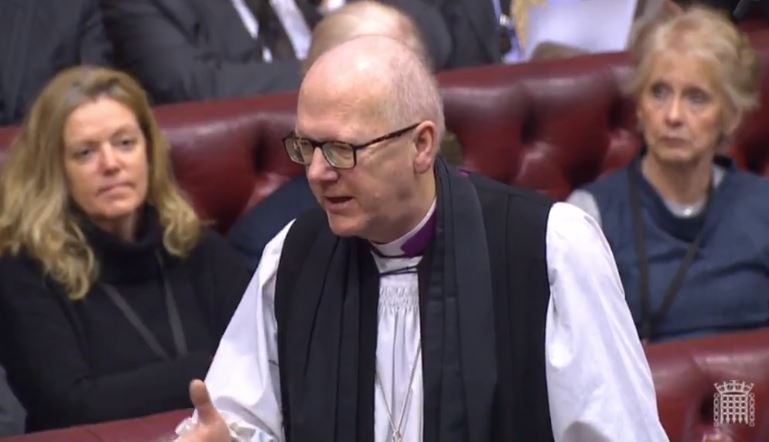
The Lord Bishop of St Albans: To ask Her Majesty’s Government what assessment they have made of the report by Public Health England Gambling-related harms evidence review, published on 30 September.
My Lords, I declare my interests as a vice-chair of Peers for Gambling Reform. I thank Public Health England and all those who worked on this review, which sheds light on the health impacts of gambling-related harms and quantifies the direct cost of gambling harms to the Government. The review concluded that 0.5% of our population were considered problem gamblers and 7% of the population of the UK are negatively affected by gambling. This is over 4 million people in England and over 5 million people across the UK as a whole, which is one in 12 people either directly or indirectly affected by gambling-related harms. This is a significant social problem.
One of the striking things are the regional discrepancies, with the north-west and north-east having the highest percentage of at-risk gamblers and the south-west having the lowest percentage. The north hosts some of England’s poorest and most deprived communities and, as a 2021 study from the Standard Life Foundation found, the UK’s most deprived areas have 10 times more betting shops than the more affluent parts of the country. Therefore, I hope that Her Majesty’s Government will not view the current gambling review as a mechanism simply to strike a new status quo compromise between themselves and gambling operators. Instead, it needs to be built into the levelling-up agenda.
This report shows that the current status quo between the Government and gambling operators is a rotten deal for taxpayers. When the gambling review was launched in December 2020, the then Commons Minister Nigel Huddleston set the tone by mentioning the £3 billion a year tax contribution from the industry. The harms caused by gambling, however, were quietly skated over, including the financial costs and suicides. I was absolutely astonished that the Government would laud the tax contributions from the industry without any recognition that gambling was simultaneously costing the Government huge sums and creating huge social damage.
Over 20% of contributions from the gambling industry, equivalent to around £647 million, can be costed directly to the Treasury for gambling-related harms. That is on top of an estimated £619 million in intangible costs stemming from an estimated 409 gambling-related suicides every year. I therefore hope the Government will support my Private Member’s Bill so that more accurate data can be collected on the number of gambling-related suicides.
Based on the polluter pays principle, the gambling industry should pay for the harms it causes. Currently, the Government rely on the good will of gambling companies in the form of a voluntary levy to help fund research, education and treatment. However, rather than the £100 million spread over five years promised by the industry, we need a mandatory levy set at 1% of gross gambling yield, which would bring in about £150 million annually according to the economic research undertaken by NERA. Furthermore, it would remove the industry’s control over the disbursement of funds for research, treatment and education and break the link that makes many academics unwilling to accept funding because their research will not be taken seriously.
At a time when there are such massive calls on the public purse, efforts to reduce gambling-related harm would in turn reduce the direct costs to the Government of criminal activity, unemployment and financial harms associated with problem gambling. Public Health England identified gambling-related debt as a key factor in many other areas as well, including relationship breakdown, mental health problems, crime, bankruptcy and homelessness. Indeed, in the media hardly a week goes by without stories of people being convicted of stealing to fund an addiction. In financial harms and criminal activity, we have an associated direct cost to the Government of about £225 million a year.
Anyone who happened to catch Paul Merson’s BBC documentary on gambling addiction on Monday evening will have heard not only the story of how his life has been dominated by the scourge of this addiction but the tragic story of Joshua, whose parents I met, who in the last three years of his life gambled away his salary, each time on the very day he received it. We do not know how many of those 409 gambling-related suicides, as estimated by Public Health England, were associated with financial debt, but certainly all the anecdotal evidence indicates that it was the vast majority.
A fascinating aspect of this research was the difference in approach identified by Public Health England between commercial and non-commercial stakeholders. Commercial stakeholders thought the focus should be on intervention and treatment rather than on creating a safer gambling environment. They wanted to blame a small group of weak individuals, whom we should pity and give a bit of support to, instead of acknowledging that many of these products are designed to be addictive right from the start when they are put together.
It is significant that, in many instances of gambling-related suicide, gambling operators, far from attempting to intervene on behalf of a gambler’s welfare, are still actively encouraging the person to gamble right up to their death—indeed, sometimes after the person has died they receive calls and offers of free gambling. There is virtually no incentive for operator intervention. The attitude of the operators, as captured by Professor Rebecca Cassidy, highlights the ambiguity of the industry’s position. When one individual attempted to set up a data-sharing network to identify customers of concern, the response was, “Why on earth should we share anything about our best customers with you?” There was not even a tacit admission that problem gamblers bring in the vast majority of income for gambling companies. Interventions need to occur before an individual reaches the point where they gamble away their entire income. Even then, the fact that current regulations allow someone to gamble all their income, bank balance or savings in one session highlights the seriousness of the problem we still face.
Public Health England admits that the evidence suggests that gambling should be considered a public health issue, which in my mind implies that we need a public health approach. This will not be achieved by relying on the good will of profit-driven gambling operators to intervene. A firm line on affordability checks is required to prevent individuals susceptible to harm from depositing unaffordable amounts, alongside a comprehensive network of intervention and treatment.
Any effective affordability mechanism will require some form of data sharing and greater co-operation between the FCA, the PRA and the Gambling Commission. I hope the Government will review the affordability recommendations made by the Centre for Social Justice in its May 2021 report Not a Game.
The Betting and Gaming Council often falls back on the mantra that loads of people enjoy a flutter in a safe and responsible way. There is some element of truth in that, but anyone who takes the trouble to scroll through the Gambling with Lives “Remembering” page will see countless faces of young men and women for whom a flutter became the start of something that eventually proved fatal. These are the victims of gambling-related harm. As the Government study Public Health England’s excellent evidence review, their mind should be focused on how best to prevent future tragedies, rather than on placating an industry that is complacent or, worse still, almost encourages problem gambling.
Finally, will the Minister give me an assurance that the findings of this review will be taken into account in the Government’s White Paper on gambling reform, which I gather is now to be published next year?
Extracts from the speeches that followed:
Lord Foster of Bath (LD): My Lords, I refer to my interests as set out in the register. I congratulate the right reverend Prelate not only on securing this debate but on his very powerful speech.
The landmark evidence review by Public Health England clearly highlights the wide range of gambling-related harms, including homelessness, unemployment, imprisonment, depression and alcohol dependency—and most seriously, as we have heard, suicide. However, the review also highlights the magnitude and long-lasting impacts of these gambling harms. There are more than 400,000 problem gamblers—of whom, staggeringly, 60,000 are children—and millions of others are at risk or impacted by other people’s gambling. On average, there is more than one gambling-related suicide every day. It is a grim picture of the impact gambling has on our society.
Some argue that it is even grimmer, but, as the review acknowledges, there are clear research gaps in the evidence base, so I hope that the Minister—whom I welcome to his new role—will tell us what plans the Government have to fill them. I am sure he will acknowledge that such research requires researchers to have access to data, not least data currently held by gambling companies about their customers. I was delighted that the ICO agreed with the Gambling Commission very recently that gambling companies can share that data with each other without breaching GDPR. However, does the Minister acknowledge that gambling companies should be required also to share such data, in anonymised form, with authorised researchers? What steps will be undertaken to ensure that this happens?
Lord Sikka (Lab): My Lords, it is a pleasure to follow the noble Lord, Lord Foster, and I am grateful to the right reverend Prelate the Bishop of St Albans for facilitating this debate.
The harms caused by gambling have been raised on a number of occasions, but this review is very helpful because it brings together lots of studies and information. For example, 13 studies looked at gambling harm resulting in underperformance or poor performance in employment and education. It notes that, from the age of 17 and perhaps even lower, those engaged in gambling underperformed in their academic studies, which has a knock-on effect on their subsequent employment and related capacities. Gambling was also found to be linked to loss of concentration at work, lateness and poor work performance, resulting perhaps in loss of employment or lack of opportunities for promotion and so on.
Child gamblers had considerable difficulties in learning at school. It is illegal for children to gamble, but many websites permit it. I tried one of them and it said: “Are you above 18?” I said no. Click, and I was still in—whether I said yes or no made absolutely no difference. Although such sites say they will monitor it, the software does not care. Children of gamblers also have difficulties at school, because of the chaotic home life associated with gambling parents. Again, it would be helpful to know whether the Government have any proposals for dealing with this.
Lord Smith of Hindhead (Con): My Lords, I thank the right reverend Prelate the Bishop of St Albans for initiating this important debate and declare my interests as set out in the register. I congratulate my noble friend the Minister on his recent promotion and wish him every success in his new role.
I think we all want to minimise or, better still, eradicate the harm caused by gambling, but I hope we can achieve this while not hampering those who are able to gamble happily and without harm, and without demonising an industry which, certainly in recent years, has taken the role of intervention and social responsibility a little more seriously than in the past. We know that much more than money is lost when a person is negatively affected by gambling: a person’s mental health is at stake; indeed, in some cases, their life is at stake. The mental health of those around them is adversely affected and it is particularly tragic when we hear reports of children suffering from either their own gambling addictions or those of their caregivers.
Lord Robathan (Con): I have only one point to make. I am not in favour of banning things; I prefer to rely on individual responsibility. But I urge the Government to look very closely at online casinos and slot machine sites, where people sitting at home are pouring money down the drain—money which they can often ill afford. I particularly mention the ghastly adverts that are seen on television—and, I am sure, on social media, which I do not see so much—that encourage people, with any number of gimmicks, to lose money. The All British Casino gives you, it says, “Always 10% Cashback!”. That is interesting. Betway gives you £10 in free bets, and Paddy Power gives you £50 in free bets and 100 free spins, et cetera, et cetera. These are all financed by organisations that make £14.2 billion out of losses—losses that, very often, ill-advised punters like me have made. Will the Government please look at banning these advertisements, which can only be described as misleading and are designed to encourage people, often fairly poor people, to become poorer?
Baroness Bennet of Manor Castle (GP): I want to build on the comments of the noble Lords, Lord Foster of Bath and Lord Sikka, who talked about the impacts on children and young people. The review tells us that the rates for gambling, which is often technically illegal, are higher than those for using e-cigarettes, smoking tobacco cigarettes or taking illegal drugs. In some cases, we have very tight legal restrictions on those three activities, which are harmful to young people, so surely our controls on gambling, particularly as it affects young people, should be on a similar scale.
Talking about young people, I raise the issue of loot boxes. We have talked about this quite a bit in your Lordships’ House, but we have failed to see any government action. I looked at some figures on the FIFA Ultimate Team games. Research has shown a robustly verified link between loot boxes and problem gambling. A UK consumer survey which looked at the players of this game suggests that 31% of 13 to 15 year- olds had played the title. This really is a public health issue, particularly for children and young people.
Finally, I mention a comment made by the right reverend Prelate the Bishop of St Albans about how this ties in with the levelling-up agenda. There are reasons why problem gambling and poorer areas are associated. Many people in our society cannot see a way forward for themselves financially. They are trapped in low-wage jobs or on zero-hours contracts. They look for hope—a tiny spark to suggest that things might get better. They know that the odds are terrible but cannot see anything better. We need many more changes to address the issues which sit behind those covered in this debate.
Baroness Merron (Lab): The evidence sets out that harmful gambling is a public health issue. There is no movement away from that; it is absolutely clear that this needs addressing on many fronts. The emphasis must be on preventing these harms occurring, as well as having help readily available for those directly and indirectly affected by the wide-ranging and long-lasting negative impacts of gambling, a point very clearly made by the right reverend Prelate.
The review also shows that people at risk from gambling harms are concentrated in areas of higher deprivation, who may already be experiencing greater health inequalities. As we have heard, if levelling up is to mean anything, it has to take account of this. I would be grateful if the Minister could address this crucial aspect.
A significant proportion of the population engages in one or more forms of gambling and for many it is an enjoyable and occasional hobby. However, for a worrying number of people, it can lead to harm. The data in the report shows that, while overall participation levels are broadly stable, some significant changes are occurring. First, online gambling, which many researchers believe carries a higher risk of harm, was on the up even before the Covid pandemic and the lockdowns that it brought, which then created circumstances for increased online gambling.
Secondly, while gambling by children and young people appears to be decreasing, it is important to note that it remains too high. That is a real point of vulnerability. My noble friend Lord Sikka spoke about the impact on achievement at school and the issue of those who are underage having access to gambling sites, which should not be the case.
Lord Parkinson of Whitley Bay (Con, DCMS): My Lords, it has been a pleasure to listen to the debate this afternoon. I thank the right reverend Prelate the Bishop of St Albans for securing it. One of the first things I did when I joined your Lordships’ House was join the Select Committee on the Social and Economic Impact of the Gambling Industry, along with him, the noble Lord, Lord Foster of Bath, and my noble friends Lord Smith of Hindhead and Lord Mancroft. I am pleased to have the opportunity early on in my new role to debate this issue, which I know continues to interest a great number of people in your Lordships’ House.
Public Health England’s review is a valuable contribution to our understanding of gambling-related harm and the forms it can take. It is also especially timely. It was an important commitment made following the last gambling review in 2018, and I am happy to assure the right reverend Prelate that its findings will be carefully considered in the Government’s ongoing review of the Gambling Act.
(…)
The right reverend Prelate mentioned the troubling estimate of over 400 gambling-related suicides per year in the PHE studies. Of course, any suicide is a tragedy. It is important to note that the figure in the PHE report is an estimate based on two overseas studies; we do not know how many suicides in the United Kingdom are linked to gambling. The Department of Health and Social Care is working to improve our data collection and address other evidence gaps on this most important of issues. NHS England is also investing £57 million in suicide prevention through the NHS long-term plan. Investment in all areas of England by 2023-24 will support suicide prevention plans locally and establish bereavement support services. We know how serious these impacts can be.
While the gambling review is ongoing, the Government and the Gambling Commission are not waiting for it to end to take action where it is needed to make gambling safer. In the last 18 months, we have: banned gambling on credit cards; tightened restrictions on VIP schemes; raised expectations of online operators during the Covid pandemic, with increased monitoring and intervention throughout; introduced new rules to limit the intensity of online slot games; and launched a consultation on new rules for customer interaction to protect people who gamble online. The Public Health England review is therefore a timely contribution to our ongoing efforts to prevent gambling harm. It will be considered very carefully as part of our thorough review of the Gambling Act, together with all the other evidence we continue to receive. We will publish a White Paper setting out any proposals for reform and our vision for the sector in the digital age in due course.
I give my thanks again to the right reverend Prelate and all noble Lords who have spoken in today’s debate. I know they will continue to contribute to the debate in this important area.
 The Church of England in Parliament
You must be logged in to post a comment.