
The Bishop of Bristol spoke in a debate on the Overseas Development Aid Budget on 27th October 2021, emphasising the importance of overseas aid in helping countries manage crises, climate initiatives, and public health measures:
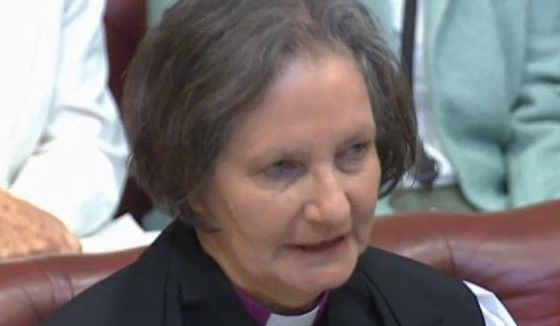
The Lord Bishop of Bristol: My Lords, I am grateful to the noble Baroness, Lady Ritchie of Downpatrick, for initiating this short debate. Cuts to overseas aid continue to be of great concern to the Churches, which set the target of 0.7% at a meeting of the World Council of Churches in 1958. The target was then taken up by the United Nations in 1970.
The Government have now walked away from their own manifesto commitment to the 0.7% target and there are considerable concerns, as we have heard, that it may never be regained, despite the Chancellor’s announcement in today’s Budget. Meanwhile, as we have also heard, there are increasing needs for aid, not least because of Covid and climate change. As the most reverend Primate the Archbishop of Canterbury said in response to recent cuts:
“Reducing our overseas aid commitment at this critical time is morally wrong, politically foolish and an act of national self-harm.”
In my own diocese, there is considerable concern about the implication of cuts for our partner dioceses in Uganda, where Covid and climate change are threatening lives, livelihoods and lands. In recent months, the diocese raised £40,000, much of which came from the poorest communities in the diocese, knowing that, because of Covid, our friends were without food and aid-funded projects were at risk. It was a tiny commitment compared to lost aid funding, but it was received as a sign of hope.
I want to focus my remarks today, in the run-up to COP 26, on a recent initiative by the IMF to enable member countries to have finance available in a crisis. As the noble Baroness said, special drawing rights enable nations to boost global efforts in vaccinating their populations, tackling climate change and supporting global recovery by creating additional reserve assets. The vast majority of the rights issued, worth about $400 billion, has gone to richer countries. Poorer countries have gained just $21 billion.
The UK and other G7 countries have said they are exploring how they could use their SDRs to further support health needs, including vaccinations, and to enable greener and more robust recoveries in the most affected countries. However, at present, no G7 country has begun to redistribute its SDRs. It is likely that the US, France and the UK will lend some of their SDRs to the IMF’s Poverty Reduction and Growth Trust to support low or zero-interest loans and/or to the future IMF resilience and sustainability trust.
Some 250 civil society organisations from around the world have called for such SDRs to follow the principles of zero or close to zero interest rates, to avoid additional indebtedness; limited economic conditionality—for example, limiting austerity measures; and transparency. The need is great, particularly for COVAX, as we have heard, with its £12 billion estimated shortfall in funding for vaccinations, and for the Green Climate Fund, crucial to COP 26 implementation.
I have concerns about both the apparent lack of progress in the use of SDRs to boost vaccines and climate finance and it appearing that the Government are seeking to count any use of SDRs to reduce even further the aid budget—already shamefully reduced. As a professed global leader in overseas aid, the UK Government have this opportunity to use the £20 billion in special drawing rights that they have just received from the IMF, which really are windfall funds, to offer additional aid for the world’s poorest communities and regain at least some of the moral ground they have lost.
Extracts from the speeches that followed:
Baroness D’Souza (CB): My Lords, I, too, thank the noble Baroness, Lady Ritchie, for introducing this important topic. The drop in the money available for ODA, together with the IMF special drawing rights windfall, raises questions again about a strategic approach to development programmes, as the right reverend Prelate the Bishop of Bristol has already pointed out. This is a useful moment to ask ourselves what are the most likely trends that will cause severe hardship to local communities and ourselves in the near future?
There are at least two major trends: first, the impact of climate change and its relation to food availability and, second, the massive outpouring of people from drought or flood-stricken regions to more temperate developed nations, including the UK. The emigration is already apparent, but it is likely to become unmanageable within the next few years. Surely this calls for a combined effort to use the moneys available to shore up programmes to deal with these two related crises. The temptation—already a rumour, as has been pointed out—is to use some of the 20 billion of these SDRs as additional ODA, thereby silencing, or hopefully silencing, critics of the reduction to 0.5% of GNI and juggling the continuation of many existing programmes.
However, there is much more at stake. The world is facing almost unimaginable catastrophes. I cite just one, which was mentioned by the noble Baroness, Lady Hodgson. How is the international community going to feed most of Afghanistan this winter, which begins next month—less than a week away? How is Europe going to cope humanely with the potential onslaught of environmental refugees? Are our current ODA theories and practice fit for purpose, or do we need radically to rethink what kind of assistance, for what, to whom and how will help to alleviate the disasters that we inevitably face?
Viscount Younger of Leckie (Con, DWP): The noble Baroness, Lady Ritchie, asked about the world’s poorest, and the right reverend Prelate the Bishop of Bristol indicated that we might be turning our backs on the poorest. We have a difficult balance to make, but I do not believe that that is what we are doing, because, by spending 0.5% of GNI, we will be spending over £10 billion this year, making us one of the largest ODA donors in the world and the second highest in the G7. We are committed to leading the global fight against poverty.
 The Church of England in Parliament
You must be logged in to post a comment.