
On 2nd November 2021, the House of Lords debated the Armed Forces Bill in committee. The Bishop of St Albans tabled an amendment to the bill which would require that the Ministry of Defence conduct research into gambling related harm in the military, and stood as part of a group of amendments focused on mental health and wellbeing in the armed forces:
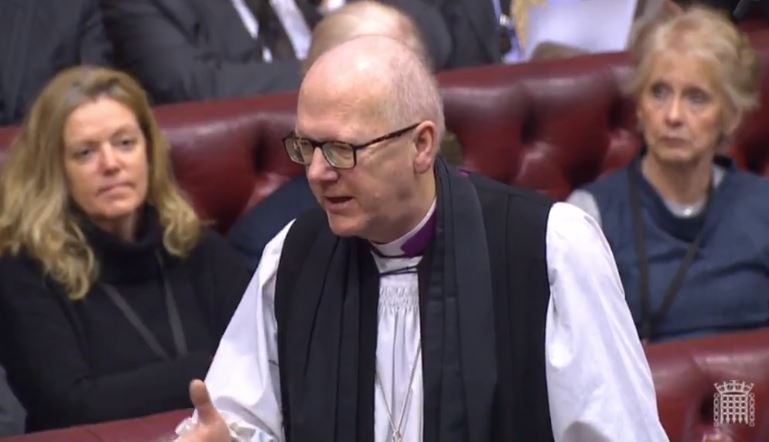
The Lord Bishop of St Albans: My Lords, I declare my interest as a vice-chair of Peers for Gambling Reform. I rise to speak to Amendment 60 in my name. I tabled it because I am concerned that the Ministry of Defence is not taking gambling-related harm in the military community sufficiently seriously. On two occasions in response to my concerns in this area, the Ministry of Defence has stated that it has seen no evidence, or does not hold information, suggesting that serving personnel are more prone to problem gambling than any other group in society.
At the same time, it was disappointing to hear that evidence from the United States that suggested that serving personnel were more prone to problem gambling did not constitute an evidence base for the UK Armed Forces. This leaves us with a clear impasse, where the Government refuse to accept research from abroad but, at the same time, do not commit to researching whether there is a problem.
I suggest that the Government’s position contradicts that of the Army Headquarters Regional Command, whose 14th transition to civilian life individual planning and personal development sheet, titled Gambling—A Serious Risk to Military Personnel, contained a section entitled, “Why are soldiers more vulnerable to gambling?” Some of the reasons listed included, first, “Personality traits”, whereby soldiers’ personality characteristics, such as
“decisiveness, enjoying risk taking, … single-mindedness, … competitiveness and being unaccepting of failure”,
though invaluable in a military environment, crossed over with the characteristics of many problem gamblers.
The second reason was “Motivation to gamble”, whereby the transition from
“high tempo … operations … can seem unfulfilling”
and lead some to seek a similar “buzz” in gambling, as an escape from the routine of the barracks.
The third reason was “Opportunity to gamble”, whereby, since
“Off duty hours in barracks can be boring, lonely and are largely unsupervised”,
the secluded single-living accommodation can provide a “secure and private place” for serving personnel to gamble, particularly online.
Even if the UK lacks studies specifically relating to serving personnel, the position of the Army Headquarters Regional Command seems to chime with the research from the Unites States of America, which the Government argue is not relevant. A 2021 US study, titled Gambling and Military Service: Characteristics, Comorbidity, and Problem Severity in an Epidemiological Sample, found that the rate of moderate or higher problem risk among military service members was double that of the comparative general population sample. The 2008 US study Gambling and Health Risk-Taking Behavior in a Military Sample reviewed the gambling habits of a cohort of US Air Force recruits and again found higher reported rates of levels 2 and 3 problem gambling, compared with the adult lifetime gambling rate.
Efforts are being made in the UK to build up an evidence base on gambling-related harm in the veteran community. I personally thank the charity Forces in Mind Trust and the research team from Swansea University for their work on the United Kingdom Armed Forces Veterans’ Health and Gambling Study, which was published in September this year. Aside from the headline figure from their research that the veterans in their sample were “ten times more likely” to experience problem gambling than non-veterans, which was very similar to the same research team’s earlier finding that they were eight times more likely, perhaps the most interesting thing was that their study represented, for the first time, the fact that
“problem gambling and … PTSD have been found to co-occur”.
It is important to point out that PTSD does not begin once a soldier leaves active service and becomes a veteran but afflicts those currently within the military.
Unlike the UK, where research is, admittedly, limited, the USA, with its greater history of academic research in this area, responded by legislating, in Section 733 of the National Defense Authorization Act 2019, to mandate screening for gambling-related harm in the military and for annual research to be conducted into how gambling-related harm affects the military. Seeing as the UK is significantly behind the USA in its evidence base on gambling-related harm in the military, screening does not form part of Amendment 60. However, it is important to mention that the MoD is not against screening in principle. In 2016, the AUDIT-C questionnaire for alcohol screening was introduced as part of routine dental appointments for serving personnel.
Amendment 60 seeks to mandate the MoD to include research on gambling-related harm in the military in current initiatives reviewing the mental health of the Armed Forces. Each year, the Ministry of Defence publishes its UK Armed Forces mental health annual statistics and summarises those findings in the UK Armed Forces Mental Health: Annual Summary and Trends Over Time reports. Already contained in this research are reported rates of substance misuse, including alcohol misuse. In fact, since the introduction of the AUDIT-C questionnaire, reported rates of alcohol misuse have fallen. That aside, there is a need for the MoD to include rates of gambling-related harm in this research programme.
Problem gambling and alcohol misuse differ in that problem gambling is very difficult to identify, as pointed out by the Transition IPPD Information Sheet 14, which speaks about gambling as an activity that can occur largely unsupervised, often online, in secluded single-living accommodation. As we have been reminded in respect of Covid mask mandates, not all exemptions are visible. Likewise, not all addictions are visible, but that does not mean that individuals do not need intervention. Unlike the MoD, I think there is sufficient evidence to suggest that serving personnel may suffer gambling-related harm at higher rates compared with other groups. I certainly think there is enough evidence to warrant the MoD including gambling-related harm in its existing research on the mental health of the Armed Forces.
I hope that the Minister might be able to outline her specific objections to including rates of gambling-related harm as part of the MoD’s existing research on UK Armed Forces mental health, beyond the argument that the department does not view it as a problem. Many people who are intimately involved with this, and in particular with veterans, do believe that it is a huge problem that deserves attention equal to that given to other mental health harms.
Extracts from the speeches that followed:
Lord Browne of Ladyton (Lab): The proposals before the Committee in this group have the same objective: they are aimed at safeguarding and improving the mental health and welfare of service personnel. I support Amendments 48 and 66A but have added my name to Amendment 60, and I thank the right reverend Prelate the Bishop of St Albans for tabling it. I agree with the arguments that he put forward and begin my remarks in support of his amendment by referring the Committee to his Oral Question in your Lordships’ House on 13 September, on the prevalence of gambling disorder in the Armed Forces. In my supplementary question then, I drew attention to the Army Headquarters Regional Command IPPD information sheet, Gambling—A Serious Risk to Military Personnel, which he has drawn from today. If the Committee will allow me, I wish to do the same for part of my argument.
In the preamble—this is the Army talking—it is stated that
“service personnel … are potentially more vulnerable and at greater risk to the harm that can result from gambling than the general public”.
As has been pointed out, it goes on to assert specifically that:
“Military veterans are 8 times more likely to become problem gamblers than the general population”.
This is not an historic document. Examination of it reveals in its last footnote a reference to 30 April 2019, which I understand to be its publication date, so it is a relatively modern view of the Army.
Lord Foster of Bath (LD): I am delighted to support Amendment 60 and, in so doing, declare my interest as chairman of Peers for Gambling Reform. I suggest to your Lordships that, just as we have become used to dealing with the issues of alcohol and drug addiction, we should now be equally concerned about the addiction that can be caused by gambling.
As we have heard already, much research has been done in many other countries on this issue. Australia, New Zealand, Canada and the United States have all found that military service personnel and military veterans are more likely to gamble than other people and are more likely to become problem gamblers. In some of those countries the research findings have led to action. For example, in 2019 in America moves were taken that are very similar to—and in fact go far further than—what is proposed in Amendment 60 today.
Research in the UK has of course been limited, and Ministers in the MoD have simply not been persuaded that, just because problem gambling exists among personnel and veterans in other countries, that will be the same here. It is almost as if the MoD is turning a blind eye to it. So far, Ministers have also not been interested in finding out whether the situation in other countries might be replicated, or even whether the current rules that they have, which prohibit gambling on MoD properties, are being adhered to.
Over a year ago, the right reverend Prelate made a freedom of information request, asking whether gambling machines were present on just one military base: Catterick. That FoI request was rejected, with the bizarre argument that contacting the base individually would incur disproportionate costs. Could the Minister explain how a single phone call, letter or email would have incurred disproportionate cost? Why, if gambling is not permitted on military bases, does she seem unable to say with confidence that there are no gaming machines on any military base, especially when some military personnel have suggested otherwise?
Lord Browne of Belmont (DUP): My Lords, I am pleased to support Amendment 60 in the name of the right reverend Prelate the Bishop of St Albans. There is no doubt that problem gambling is a debilitating condition that takes over people’s lives and, in some cases, destroys them. Since the Gambling Act 2005, the opportunities to gamble have increased significantly. As we have heard, the recent report from Swansea University and the Armed Forces veterans’ health and gambling study clearly indicate that, in the United Kingdom, serving personnel and veterans in particular are significantly more likely to struggle with problem gambling than non-veterans.
I was privileged to meet many problem gamblers, some from the Armed Forces, when the GAMSTOP exclusion from online gambling was being debated in your Lordships’ House. One of those gamblers was a retired Army major, Justyn Larcombe, whose case is well documented. He lost more than £750,000 over three years through taking part in online sports books. As a result, he lost his home, his family and his wife. However, I am glad to say that he has now been reunited with his wife and family, and has become actively involved in helping others obtain help for their gambling addiction. Indeed, he was the co-investigator on the United Kingdom Armed Forces Veterans’ Health and Gambling Study 2021 report, which provided a useful survey of gambling, mental health and associated costs among a sample of UK veterans.
The findings of that report back up the fact that members of the Armed Forces are much more likely to develop gambling problems, especially if they have experienced post-traumatic stress. Also, the transition from active military service to civilian life can be extremely challenging, leading, as we have heard, to many veterans engaging in high-risk behaviour, such as alcohol and substance abuse, and having behavioural problems. As I have said, there is growing evidence indicating a specific vulnerability to gambling-related harm.
(…)
Over a year ago, the right reverend Prelate made a freedom of information request, asking whether gambling machines were present on just one military base: Catterick. That FoI request was rejected, with the bizarre argument that contacting the base individually would incur disproportionate costs. Could the Minister explain how a single phone call, letter or email would have incurred disproportionate cost? Why, if gambling is not permitted on military bases, does she seem unable to say with confidence that there are no gaming machines on any military base, especially when some military personnel have suggested otherwise?
While the Government appear to want to ignore the possibility that UK military personnel and veterans may be more prone to gambling harm than the rest of the population, as we have already heard, very senior people in the military are alert to the issue. As the right reverend Prelate said, the Army Headquarters Regional Command information sheet on the transition to public life claims that
“service personnel … are potentially more vulnerable and at greater risk to the harm that can result from gambling than the general public.”
More recently, some research in the UK backed up the concerns. The research by the Forces in Mind Trust and Swansea University, which has been mentioned, reports that 43% of veterans have experienced problem gambling in the last year—far more than the general population—and were
“ten times more likely than non-veterans to experience gambling harms and to gamble as a way of coping with distress.”
The Government cannot therefore now continue to claim that we have no evidence. Just over a month ago, following the publication of that research, I wrote to Leo Docherty MP, the Minister for Defence People and Veterans, seeking a meeting to discuss the report. I still await a reply, and I would be grateful if the Minister could give him a nudge and see if we can make that happen.
Baroness Goldie (Con, Ministry of Defence): I also extend my gratitude to the right reverend Prelate the Bishop of St Albans, whose Amendment 60 highlights the potential harmful impact that addictive gambling could have on our service personnel. His amendment is supported by the noble Lords, Lord Browne of Ladyton and Lord Foster of Bath. The right reverend Prelate’s determined pursuit of the potential harm of addictive gambling is acknowledged and admired. I assure him that I have looked at the research he referred to, which I shall refer to when I address his amendment.
(…)
Finally, the right reverend Prelate the Bishop of St Albans has written to me. I read the letter with care but have not had time to respond to it. I thank him for his committed interest in these matters, and I undertake to respond to his letter. I hope that, following these assurances, the right reverend Prelate will agree to withdraw his amendment.
 The Church of England in Parliament
You must be logged in to post a comment.