
The Bishop of London spoke in a debate following a motion to take note: “That this House takes note of the situation of leaseholders who are facing substantial bills for fire and building safety remediation work; and of the need for safe, green and affordable housing” tabled on 4th November 2021, arguing for greater protection to leaseholders:
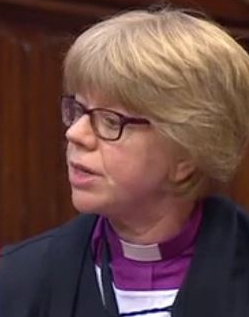
The Lord Bishop of London: My Lords, I, too, thank the noble Lord, Lord Stunell, for securing this debate, and I thank the noble Lord who will speak after me. It has been four years, four months and 20 days since the Grenfell Tower fire. On the 14th day of every month, Grenfell survivors and their loved ones walk around the remains of Grenfell Tower to signal that they are yet to receive justice for what has happened.
Many in the other place allowed the Fire Safety Bill to pass on the promise that the issues relating to the remediation of unsafe buildings would be dealt with comprehensively and thoroughly in the Building Safety Bill. However, the Bill has just completed Committee in the other place and the Government have yet to set out how they intend to deal with the unaffordable costs faced by leaseholders for interim safety measures and the remediation of unsafe buildings.
The Government’s reannouncement of £5 billion for the removal of unsafe cladding only raised concerns for those affected. The Red Book notes that £3 billion will be spent over the spending review period up to the end of March 2025. Can the Minister tell the House when he expects all dangerous cladding will have been removed?
The residential property developer tax provides little comfort for leaseholders. Rather than helping those struggling to pay for interim safety measures and non-cladding remedial costs, the Government have chosen to use the £2 billion as a funding source for the building safety fund. As we have heard already in this debate, unless more funding is found, leaseholders will be forced to pay bills running into tens of thousands, if not hundreds of thousands, of pounds for non-cladding remedial costs. In many cases leaseholders cannot raise these sorts of sums and will therefore lose their homes and be forced into bankruptcy. Of course, this is already impacting on their health and well-being through no fault of their own and will continue to do so.
I understand the Government’s reluctance to commit additional taxpayer funding to resolve this crisis. The taxpayer should not be required to pay for the failures of an industry that has paid out billions in dividends over the past decade. I am also aware that there are multiple efforts to develop a feasible solution to this, but the issues around housing and inequality in this country are a state of emergency. As it stands, the only comprehensive solution I am aware of is the “polluter pays” amendment, already mentioned by the noble Lord, Lord Young. As he said, it would require developers and builders who constructed blocks of flats that did not comply with building regulations in force at the time of construction to pay for their remediation. This amendment is supported by a range of UK stakeholders and has also attracted international attention. Ted Baillieu, the former Premier of Victoria, Australia, and co-chair of the Victoria cladding task force, sees it as a way of ensuring that those responsible for the crisis pay, and as an opportunity to restore trust. It would be an opportunity to serve as a model for other jurisdictions across the world. Other noble Lords will be better qualified than I am to comment on this.
If the Government are not satisfied that the polluter pays Bill represents a solution, I know that many in this House will be eager-eared to hear the Government’s own solution that will deliver us from this crisis. I know that the Minister is entirely well intentioned and that he is committed to navigating a way out of this issue, but it is true that Members of your Lordships’ House are becoming impatient at the lack of action, and I hope that next time this matter is discussed in the House, the Minister will have something new to present.
We are gathered here today on 4 November 2021. In the next 10 days, Grenfell survivors, sympathisers and their loved ones will walk again. Let us find a response that is sufficient enough to not be complicit in the prolonged injustice and eyesore that this issue and housing standards in this country have become.
Extracts from the speeches that followed:
Lord Shipley (LD): My Lords, I agree with the right reverend Prelate the Bishop of London that those responsible for the cladding crisis should pay for the remediation. I found the proposal made by the noble Lord, Lord Young of Cookham, for an extra levy and a Treasury grant to be particularly convincing, and I hope it will command broad support in your Lordships’ House.
I congratulate my noble friend Lord Stunell on his wide-ranging and forensic examination of the key issues in relation to the cladding crisis, the need for fire and building safety remediation, and the desperate position of so many leaseholders who are being asked to pay large sums of money, when they were not responsible, for cladding on their properties having to be replaced or for other essential fire safety work. I subscribe to all that he has said.
Baroness Pinnock (LD): As the noble Earl, Lord Lytton, has explained, the “polluter pays” approach has much to recommend it. This well-developed proposal has also been supported by several other noble Lords, including the noble Lord, Lord Young of Cookham, my noble friend Lord Stunell and the right reverend Prelate the Bishop of London. I too add my support to their plea for the Minister to respond positively to this proposal.
Baroness Blake of Leeds (Lab): As we have heard, the emotional and financial toll on the people affected is off the scale. We are talking about blameless victims who should not bear the responsibility or the costs for working this out. We know that safety is paramount and that the properties were bought in good faith.
So, what do we say to those facing bankruptcy? What do we say to the couple I know in Leeds who purchased their property with a view to it being a stepping-stone to a family house and starting a family, and who have heart-breaking stories about being unable even to contemplate going down that path, with no end in sight to their problems? As we heard from the right reverend Prelate the Bishop of London, housing inequality in this country is in a state of emergency, so let us make sure that the principle of fairness runs through everything we do from here on in.
We have learned today from the many experts who have contributed to this debate that there is no shortage of ideas or will to move this forward. I think we are all hoping that the Minister can give us a clear statement of the Government’s intention to restore confidence and hope to the families who have lost everything and who are caught up in this terrifying nightmare.
Lord Greenhalgh (Con, Department for Levelling-up, Housing & Communities): The right reverend Prelate the Bishop of London wanted to know when all non-ACM cladding would be removed. The Government acknowledges that the remediation of unsafe cladding is complex. We still expect remedial works to progress at pace and for building owners to take seriously their responsibilities for making their buildings safe. That is not exactly giving noble Lords a timeframe, but we have already committed through the building safety fund to 689 buildings that are eligible for funding, and to what equates to about £2.7 billion of funding. That will take some years, and probably go beyond the spending review period. We will make considerable progress in the next two to three years, but we should have an expectation that it could take longer, just because of the sheer number of buildings involved. But already, with those 689 registrations that are eligible for funding, we are talking about 65,000 homes and properties in high-rises, which will have their cladding remediation funded. That is in addition to the 16,500 homes that have been funded to remove the very same cladding—the ACM—that Grenfell Tower had.
We are seeing considerable progress. I do not think it is happening at a snail’s pace, if you are going through a pandemic, to have nearly 5,000 homes clad in ACM remediated in the last year—4,700 in the last year alone, which is up to 16,500 homes, with an expectation that around 95% of high-rises with ACM cladding will be already remediated or having work under way by the end of this year.
I credit Steve Day for his tireless efforts to promote the polluter pays amendment, and I thank the right reverend Prelate the Bishop of London, the noble Earl, Lord Lytton, the noble Lord, Lord Thurlow, and my noble friend Lord Young for discussing that issue. We are well aware of it—in fact, I am almost in touch with Steve Day in real time. Our officials in the department are working closely to see whether we can work with the principle that he has worked up. We are looking for all ideas that can bring about a strengthening of redress and ensure that the polluter does pay.
 The Church of England in Parliament
You must be logged in to post a comment.