
The Bishop of St Albans spoke in a debate on the issue of invasive grey squirrels and the need for woodland cover protection on 25th May 2023:
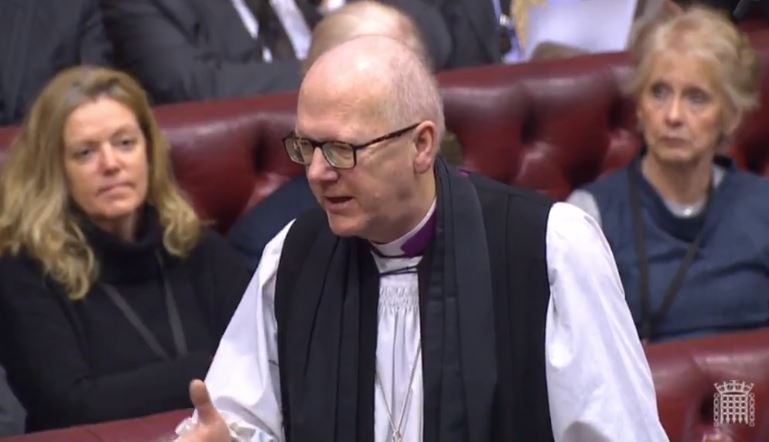
My Lords, I declare my interest as president of the Rural Coalition, although I am not speaking on its behalf today. I, too, thank the noble Lord, Lord Redesdale. I seem to remember that we have debated these issues before and I have always been grateful for his contributions.
There are many reasons why increasing our woodland cover is important. For example, being able to walk in woodlands is associated with mental health, at a time when this is a huge issue for us as a society; it is clearly deeply bedded into the issues of net zero; and it is intimately associated with the need to increase again our biodiversity. It is of inestimable importance.
The threat posed by grey squirrels is therefore an issue that exercises many of us, along with the longing that we might one day be able to reintroduce red squirrels. I have to say that the problem is not just grey squirrels; in North Hertfordshire we have black squirrels. I do not know if the Committee has come across them but they are breeding across both North Hertfordshire and South Cambridgeshire, and are a feature of our local area in my diocese. Sadly, there are now only a few conservation areas for red squirrels left, as we have heard, following the introduction of the grey squirrel in the 18th century and indeed the wider issue of the reduction in woodland.
The damage caused by grey squirrels is huge. According to government statistics, the total cost of grey squirrels and other invasive species to the UK is about £1.8 billion a year. That figure perhaps puts into perspective some of the pleas about whether we may be able to find some modest funding to help with this important work.
Stripping off the bark of broadleaf trees means that we lose much of our woodland. A recent report by the Royal Forestry Society on the damage caused by grey squirrels estimates that they cost about £37 million a year to forestry, and they are identified as the greatest single threat to broadleaf trees in the UK. I have been grateful to hear about the project—others know more about this than I do—by the Animal and Plant Health Agency to develop an oral contraceptive to target the grey squirrel, and about the work that the Government have been doing with the Roslin Institute and the European Squirrel Initiative to breed infertility into the female grey squirrel population. Can Minister give us an update on those projects, particularly what the prospects are for rolling them out more widely and an indication of the timeframe?
The need to increase our woodland cover, in the light of the falls over recent centuries, is clear. There are other reasons too. Increasing biodiversity is really important, and I find that that now overlaps with some other areas that I have worked in. We are trying to deal with some very difficult problems of bat infestations in churches, partly because so many of our farm buildings have been put out of action for bats but also because much of the tree cover where some of them have lived in the past has been lost. That is causing irreparable damage to many of our historic churches and their contents. We need to find a number of solutions, of which increasing woodland cover is a very long-term aim but part of the solution.
Extracts from the speeches that followed:
Lord Benyon (Con, DEFRA): Your Lordships are aware that our tree-planting ambitions are to have 16.5% of England under tree cover by 2050. That is a target in the Environment Act. We want to increase our tree cover by an area the size of Cheshire. That is 7,000 hectares a year by the end of this Parliament, as mentioned by the noble Baroness, Lady Anderson. In answer to the point raised by the noble Lord, Lord Carrington, we want to cut in half the time it takes to put in place the relevant permissions and grants to plant trees. We want to give land managers more understanding about where they will be allowed to plant trees. As my noble friend Lord Caithness said, we do not want to see trees planted on areas where rare waders are nesting, but it is really important to help people make those decisions.
The England Trees Action Plan 2021 to 2024 and the Environmental Improvement Plan 2023 contain this desire to boost tree planting, improve woodland management and support a thriving green economy in our trees and woodlands. All this will be done mainly through our £650 million nature for climate fund. Today, around 42% of our woods are not actively managed, a point made by my noble friend Lord Colgrain. Many of the Government’s actions to plant new woodlands need to be balanced by action to improve existing woodlands, because that is where we are locking up carbon, helping our target to reverse species loss and improving our timber security as we bring those woodlands into production. It is there that we are providing more space for people to be close to nature to heal us, as the right reverend Prelate so eloquently put it, and to enhance our landscapes. We get a spiritual uplift from being in and close to nature.
 The Church of England in Parliament
You must be logged in to post a comment.