
On 7th June 2023, the Bishop of Oxford spoke in a debate on a report from the Environment and Climate Change Committee, stressing the need for a coordinated response to the challenges presented by climate change:
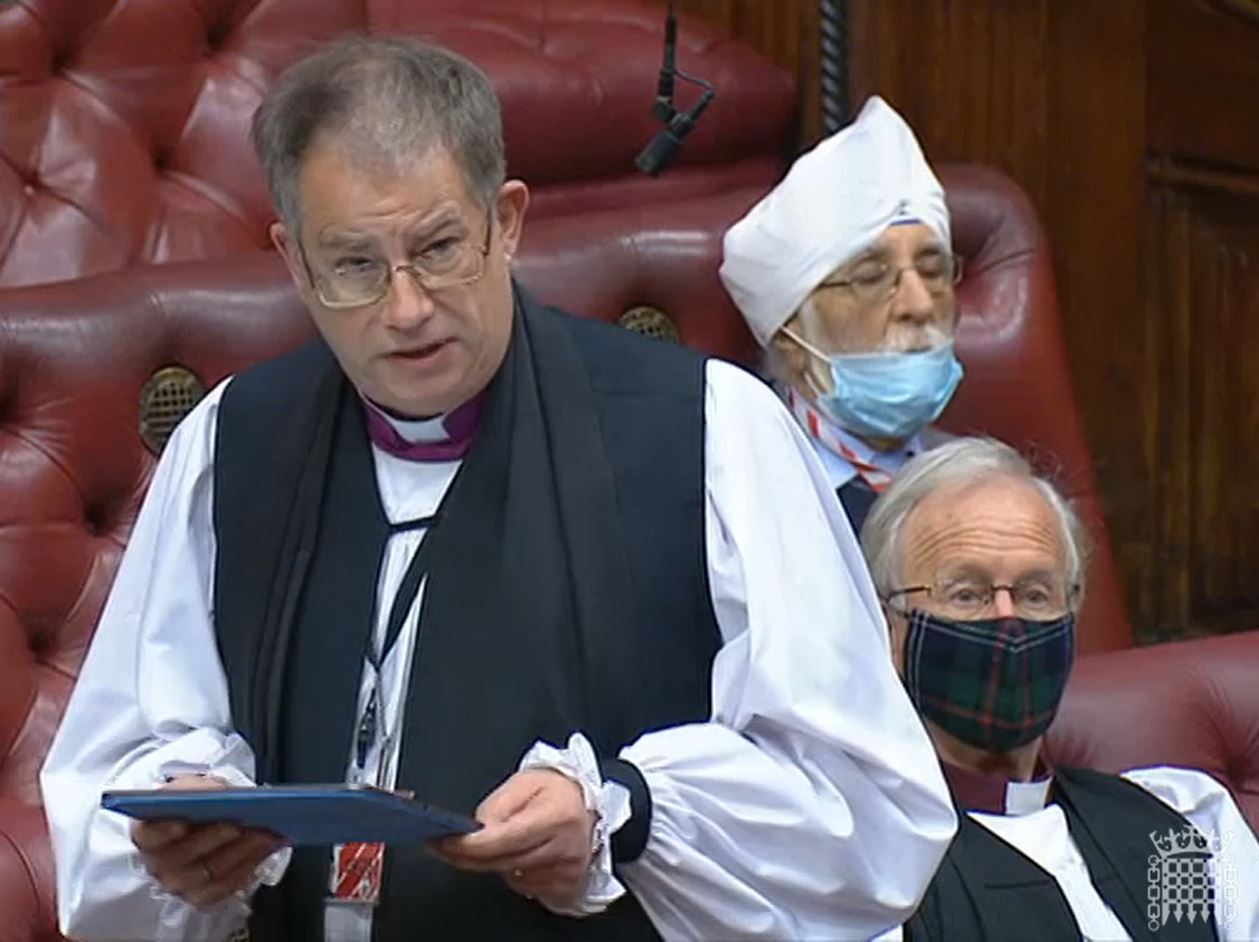
The Lord Bishop of Oxford: My Lords, it is a pleasure to be part of your Lordships’ committee under the excellent leadership of the noble Baroness, Lady Parminter, and to present this report and debate it today. Many in your Lordships’ House will have seen the 2021 Hollywood film “Don’t Look Up”, which was written and directed by Adam McKay. It explores the world’s response to climate change through the metaphor of an asteroid hurtling towards the earth bringing destruction in its wake. The scientists and world leaders in the film have a way through the crisis, but only if the scientific facts are acknowledged and the world works together. As noble Lords may know, in the film the world fails that test spectacularly.
Each year brings fresh reminders of the reality of global heating in floods, fires, extreme weather events, natural disasters and rising sea levels. The IPCC continues to publish ever more solemn warnings to the world, including most recently that we are likely to see a 1.5 degree rise in average temperature in at least one year in this decade. The human consequences of climate change are seen in wars, migration, changing crop patterns and the loss of islands and coastal areas. The burden falls most on the poorest and those who have historically used the least in terms of carbon, yet still we do not listen.
Our inquiry confirmed that public concern about climate change is rising. We confirmed that the population is looking for guidance on how best to respond in the key areas of diet, travel, home heating and transport, but we also confirmed that the tools are not in place, the leadership is uncertain and co-ordination is lacking, so our report calls for a serious, committed and joined-up campaign of public engagement and information to create the appetite for and support behaviour change. We have not yet seen a convincing response. This is a relatively small step forward, but something only government can do to encourage the whole sector.
The United Kingdom has become in some areas a world leader in combating climate change with ground-breaking legislation and policies. I appreciate and welcome all that the Government are doing across a range of fields. There are many other actors in this space. My diocese of Oxford has set aside a very large sum to engage with net-zero work on more than 400 vicarages. We have more than 800 church buildings and almost 300 schools. We are on a pathway to net zero by 2035, and we have a vision that every local congregation will be an agent of change in its own community.
However, this report demonstrates very clearly that this is a battle which must be waged on a number of fronts in a co-ordinated way. To use the title of another recent film, we need to be doing everything, everywhere, all at once.
We now have a very narrow window to respond to this emergency. In 10 years’ time, the choices facing the world and our successors in this House will be very different from those we face today if we do not act. The Government’s review, conducted by Chris Skidmore, reached very similar conclusions to our behaviour change report on public engagement and leadership and policy to support behaviour change, yet we still have seen very little action. Will the Minister say when the Government’s energy and leadership in this area of behaviour change will match the scale of the crisis which we face?
Extracts from the speeches that followed:
Baroness Young of Old Scone (Lab): My Lords, I have sympathy with my noble friend Lord Browne and hope he does not feel that he drew the short straw in his place on the speakers’ list. I am at risk of endangering my four minutes but, to carry on the film analogies that the right reverend Prelate the Bishop of Oxford began, the noble Lord, Lord Lilley, reminds me of “Last Tango in Paris”.
For those of us who have not seen this film, it is very lewd, with a particularly interesting scene involving butter. I would suggest that, if noble Lords are of a nervous disposition, they do not watch it. I saw it in Edinburgh many moons ago and, halfway through the butter scene, the lady in the front row, who had a pearls and twinset look about her, leapt to her feet and shouted, “Filth, pure filth!” Then she sat down and watched the rest of the film right through to the end. The noble Lord, Lord Lilley, is a bit like that, but he is still with us, and we very much value him on the committee.
I absolutely believe that the noble Lord, Lord Browne, is right that behaviour change includes technology adoption. If we do not get the mood music right for the public in adopting new technologies, anything that deters them in terms of ease or price signals will stop them doing the right thing.
Baroness Northover (LD): My Lords, I, too, thank my noble friend for her very patient and expert steering of this vital new select committee through its first major inquiry and for introducing this debate so effectively. The science on climate change is very clear, and staying below 1.5 degrees looks almost impossible already. The need for action is urgent, as the right reverend Prelate the Bishop of Oxford has said. The Climate Change Committee has made it clear that we will not reach net zero unless everyone plays their part with changes in the way we all live—behaviour changes. The noble Lord, Lord Lilley, has a rather surprisingly limited view of what behaviour change is—it is about how we live, which includes using different technology.
Given the crisis, the Government seem distracted, unable to focus with sustained attention, clarity or resources on what needs to be done. They say they want to reach net zero but are not putting in place what is required. I am glad to see the new department for net zero—DECC never should have been disbanded— but where are the game-changing policies in this area, in the way that China and now the US, with the Inflation Reduction Act to which the noble Lord, Lord St John, referred, and the EU are taking forward?
Lord Harries of Pentegrath (CB): In that connection, I wonder whether the Government, in their public engagement strategy, should not be making more of the role that the different major religions in our country could play on this issue. Although religion is not fashionable in the media, there are large and significant Muslim, Hindu and Sikh denominations, in addition to the Christian denominations. I was very glad to listen to the right reverend Prelate the Bishop of Oxford about what is going on his diocese. I believe that, in their different ways, all religions could play an even more prominent role, not just in achieving a particular goal but, behind that, in giving people a spiritual vision of what it is to be human in relation to the rest of the earth and in shaping an attitude of respect for the environment. There is one brief reference to faith groups in the recommendations, but I should like to see more being done by the Government—perhaps a behind-the-scenes initiative by the departments for business and local communities. I believe that faith groups could have a greater role in fostering that attitude of respect and co-operation with nature, which is so essential for the future and which lies behind particular goals as an overall vision.
Lord Callanan (Con): The right reverend Prelate the Bishop of Oxford asked how the Government’s energy and leadership on behaviour change match the scale of the crisis—I think that was how he put it. The noble Baroness, Lady Young of Old Scone, also asked about our strategy on behaviour change. I point both noble Lords to our net-zero growth plan and our environmental improvement plan, where we set out clear principles about how we will empower the public to make those green choices by making them significantly easier, clearer, and, crucially, more affordable, and we continue to work with industry to remove some of those barriers. The plans set out a consistent and co-ordinated approach for engaging the public across net zero and the environment, in both communicating the challenge and giving people a say in shaping future policies.
 The Church of England in Parliament
You must be logged in to post a comment.