
On 7th June 2023, the House of Lords debated the Illegal Migration Bill in committee. The Bishop of Durham spoke in support of amendments to the bill tabled by Baroness Lister of Burtersett which would set out regulations for financial and accommodation support available to people deemed “inadmissible” but still resident in the UK:
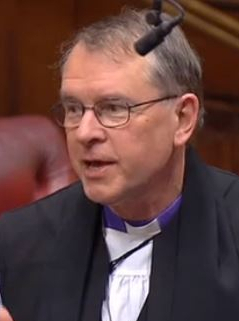
The Lord Bishop of Durham: My Lords, I refer to the register of interests and my involvement with the RAMP project and Reset.
I thank the noble Baroness, Lady Lister, for tabling Amendments 57C to 57G to provide us with the opportunity to discuss issues relating to the level of support that will be provided for those declared inadmissible but who are unable to be removed from the country. I too am highly grateful to the Refugee Council for supporting us to probe this area of policy well, especially in the absence of an impact assessment.
Before I outline questions for the Minister, it is important to note that those deemed inadmissible will include not just those whose asylum cases would likely have been found valid but individuals who would not have qualified. In the absence of any return deals, this could leave the Government in the absurd position of needing to support at public expense those who could be appropriately returned to their own country.
The Government will also need to support those excluded from the asylum system, who of course could support themselves and their families through employment after gaining refugee status. Let us remember again that more than three-quarters of asylum cases assessed last year were found to be valid. Support will need to be indefinitely provided to these families, and every year this group will increase in number. I hope that these amendments, while raising technical issues, will also help us to understand the rationale behind this and the costs associated with this approach.
My noble friend excellently laid out the grave mental health impacts of being confined to a life of permanent precarity and inescapable destitution. I remarked at Second Reading that this amounts to the continuation of detention simply without walls. It is therefore vital to understand what level of financial and accommodation support will be provided to those living in this state-sanctioned situation. I will try to add complementary questions to those already posed, but there will inevitably be some overlap.
Currently, far more people are supported under Section 95 of the Immigration and Asylum Act 1999 than under Section 4. According to Home Office statistics, in the first quarter of this year, there were 11,662 applications for Section 95 support, compared with 642 under Section 4. The Bill before us will change that, as those people whose claims are declared inadmissible will, in most cases, not be eligible for Section 95 support and instead will need to rely on Section 4 to avoid destitution.
I will ask the Minister some questions. First, how will someone who is, in effect, banned from claiming asylum be able to apply for Section 4 support? It is not clear, as the current guidance for Section 4 states that those deemed inadmissible cannot apply on the grounds that there is no viable route of return to their own country as they are due to be removed to a third country. Individuals will also not be able to judicially review the inadmissibility decision and cannot demonstrate that they are taking reasonable steps to leave the UK, given that their country of origin may be unsafe, and they will not have permission to enter another jurisdiction. How will applications from those with inadmissible asylum claims therefore be treated when they apply for support?
Secondly, what will happen to those who have arrived since 7 March and are currently in receipt of Section 95 support—a number already in the several thousands? Will their asylum claims be immediately declared inadmissible, removing eligibility to Section 95 support in one fell swoop? Can the Minister clarify what assistance this group will be given to apply for Section 4 support, or will he commit to automatically transferring people to Section 4 support without requiring a further application? Finally, what assessment has the Home Office made of how many people will be supported under Section 4 in the months and years after the Bill has come into effect? I stress that, to support the effective scrutiny of the Bill, we must know how many families with children will be left solely reliant on Section 4 support.
This set of amendments highlights major questions which remain unanswered about how the Bill is intended to work in practice, beyond the mantra that people will be “swiftly detained and removed”. These are not needlessly prosaic questions to frustrate the passage of the Bill, but a genuine attempt to help those on the front line plan their operational response, which we heard the Minister say earlier was well under way in its planning.
As the Government know, the asylum support system plays a vital role in ensuring that those who would otherwise be homeless and destitute, and who are unable to work and support themselves, have access to basic accommodation and financial support. There is a debate to be had about what form that accommodation should take and how much the financial support should be, but that debate is meaningless if the system is inaccessible. If the system is not adapted to respond to the circumstances created by the Bill, tens of thousands of people could find themselves with no support. On top of the intolerable consequences that this will have for individuals and families, it will inevitably lead to local authorities, faith groups, communities and voluntary groups picking up the pieces.
We often find ourselves in moments of our lives needing to console ourselves and our loved ones that this stage is only temporary and that hope remains. I am constantly in awe of refugees who live with such instability but retain that sense of a brighter future. It is therefore only right that I close my comments by stating the obvious: there is a different way, where asylum seekers have their applications processed in an effective and timely manner so that hope, not desolation, remains a possibility.
This is my week for making apologies. I have to be in Durham very early tomorrow and trains up north are limited, so after dinner break business I will not be able to contribute on those things that I said I would. However, I expect my good friend the right reverend Prelate the Bishop of Southwark to be present and to speak, in his name, on those matters.
Extracts from the speeches that followed:
Lord Ponsonby of Shulbrede (Lab): Given the questions about the Government’s ability to actually remove people given the lack of returns agreements, what assessment have the Government made of the support that will be needed? We read in the newspapers that the Government are renting two more barges. Of course, the numbers the barges can accommodate will not touch the sides of the amount of accommodation that will be needed.
My noble friend Lady Lister and the noble Lord, Lord German, asked a number of detailed questions, as did the right reverend Prelate the Bishop of Durham, who I suspect is getting his train as we speak. As the right reverend Prelate said, in practice it will be local authorities, faith groups and voluntary organisations which will be picking up the pieces if there is not adequate government support for people who find themselves in this position. I will listen to the Minister’s response with interest.
Lord Murray of Blidworth (Con, Home Office): Finally, Amendment 57G seeks to amend uncommenced provisions in the Immigration Act 2016 and, in so doing, alter the long-standing position that Section 4 support would be available only to people who face a genuine obstacle in leaving the UK. The Government have no plans to implement the 2016 Act provisions in the immediate future; even if we were to do so, we see no need to alter the existing approach to eligibility under Section 4 for this group of people. Eligibility for Section 4 support is a long-standing position. As long as individuals whom we support pending their removal co-operate with the process, they will remain eligible for support.
The noble Baroness, Lady Lister, the noble Lord, Lord German, and the train-bound right reverend Prelate the Bishop of Durham asked about the Section 4 application form. We are working on the arrangements for implementing these provisions. As part of that, we will consider what changes, if any, are required to the Section 4 application form.
Where necessary, the Government will provide accommodation and basic support for those who are subject to the duty to make arrangements for removal and who are not being detained pending their removal. In answer to the right reverend Prelate, I can assure him that, with the changes made by Clause 8, we consider that there is sufficient legislative cover to provide such support where a person would otherwise be left destitute. On that basis, I invite the noble Baroness, Lady Lister, to withdraw her amendment.
Baroness Lister of Burtersett (Lab): I finish by quoting the right reverend Prelate the Bishop of Durham, who said that this is going to be like detention without walls. That is a very telling statement. It is important that we get this right. We do not want large numbers of people destitute on our streets because they are in this permanent limbo. I look forward to seeing what the Minister has to say in any subsequent letters but, for now, I beg leave to withdraw the amendment.
 The Church of England in Parliament
You must be logged in to post a comment.