
The Bishop of Durham tabled an amendment to the Illegal Migration Bill during the fourth day of the committee stage on 12th June 2023. The amendment would reinstate the right of appeal against age assessments for putative children affected by these under the bill:
121: Clause 55, page 56, line 21, leave out subsection (2).
Member’s explanatory statement:
This amendment reinstates the right of appeal against age assessments in respect of putative children whom there is a duty to remove under the Bill.
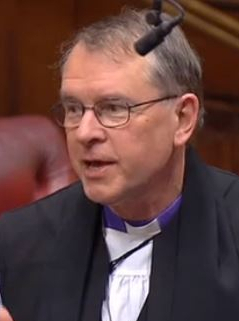
The Lord Bishop of Durham: My Lords, in moving Amendment 121 I shall speak to Amendments 122 and 126 in my name. I am grateful to the noble Baronesses, Lady Lister and Lady Neuberger, for their support. My comments will also be in support of Amendments 124 and 125, which were tabled by the noble Baroness, Lady Lister.
Before I get going, I note that on the Nationality and Borders Bill the debate on age assessment took place at 2.30 am on 9 February last year. We now find ourselves at 12:25 am discussing age assessments once again. Age assessments are serious matters. I know that it was not designed that this has happened again but it is extremely unfortunate, and since we have more time on Wednesday, I think we could have moved this to Wednesday. However, we have not, so I will carry on.
I believe strongly that these changes need to be made to Clauses 55 and 56 if we are to ensure that the welfare and best interests of children are protected. I will try to be brief, but they are critical amendments that are worthy of full consideration. It is vital that we adequately scrutinise the impact this Bill will have on children; it is therefore a failure in their safeguarding responsibility for the Government not even to have produced a child rights impact assessment. They are asking this Chamber to agree to these additional clauses on age assessments, added on Report in the other place, which on their own admission are more likely than not to be incompatible with conventions under the ECHR—not on the rights of anyone here today but on the rights of children. We have a duty to ensure that their voices are heard. Will the Minister guarantee that an assessment will be published before Report?
The Home Secretary’s duty to detain and remove all those who meet the conditions laid out in Clause 2 does not apply to unaccompanied minors before they reach the age of 18. Therefore, it is clear that if the Home Office inaccurately assesses the age of a child and deems them to be an adult when this is not the case, and they are subsequently removed, the consequences would be irreversible. Can the Minister confirm that the removal of a child in these circumstances would be unlawful?
I was going to follow up by asking whether, in these circumstances, steps would be made to retrieve the child and bring them back under the child protection system in the UK, but the Bill also introduces no right of appeal for a child to challenge an age assessment and places significant limitations on judicial review, so we may not know whether a child has been deported unlawfully. I therefore ask the Minister: when a judicial review is ongoing and the claim is continued out of country and is successful, will arrangements be made for this child to be returned to the UK?
The lack of data required adequately to scrutinise this legislation has been a common theme throughout the Bill and is a prevalent issue for age assessments. The Government currently do not share how many age dispute cases are of children who have initially been sent into the adult system after a flawed decision on their age. However, even based on the incomplete data published by the Home Office, we can see that last year nearly two-thirds of all age dispute cases were found to be children—that was 1,042 children who, if this Bill had been in operation, would have been eligible for removal to a third country.
Numbers are important. The Minister of State justified the inclusion of Clauses 55 and 56 in the Bill by saying that
“around 50% of those people who are assessed are ultimately determined to be adults”.—[Official Report, Commons, 26/4/23; col. 777.]
Can the Minister confirm that this figure is misleading, given that it includes individuals subsequently found to be children after referral to a local authority? A detailed report by the Helen Bamber Foundation found that, of the 1,386 individuals referred to local authorities in 2022, 867 were found to be children and had therefore been placed at risk of significant harm when in adult-based accommodation.
It is not surprising that visual-age assessments by immigration officers can lead to inaccurate judgments. The Home Office’s own guidance for the National Age Assessment Board states clearly that
“physical appearance is a notoriously unreliable basis for assessment of chronological age”
and
“demeanour can also be notoriously unreliable and by itself constitutes only somewhat fragile material”.
Given this acknowledgement, can the Minister confirm that when an individual’s age is disputed, they will not be subject to removal before having met with a social worker and child protection team for a more comprehensive age-assessment process?
As of March 2023, the Home Office’s policy was not to use scientific methods in age assessments, even though it has the power to do so. The wealth of evidence collated over the years by medical experts is undeniable in its conclusion: there is no scientific method that currently exists which can determine accurately and consistently whether a person is a child. This includes a recent report, commissioned by the Home Office, which confirmed that scientific methods provide an age range rather than a precise age.
It is therefore understandable that errors may occur in age assessments, given that they are based on subjective judgment and imprecise methods. What is unconscionable, however, is not allowing judicial review on these grounds. Can the Minister say why disqualifying a potential child from judicially reviewing whether the age decision was wrong as a matter of fact was deemed an acceptable risk?
I thank the noble Baroness, Lady Lister, who will address the regulations that the Bill permits to automatically assume adulthood for those who do not consent to medical procedures, given that time is against us. Amendment 126 would prevent a child being presumed to be an adult if their refusal to consent was reasonable in all the circumstances. The other two amendments I bring forward do not relate directly to the age-assessment process, understanding that it is fraught with difficulty and must be undertaken with careful child-centred sensitivity. But, because of this fact, they propose to reintroduce basic legal safeguards for putative children to be given a right of appeal against an age assessment, and so that a judicial review can serve as a barrier to a child’s removal. I do not think it is unreasonable to expect these matters to be resolved before a potential child is removed from not only child support services but the UK entirely.
Let us be clear: if these clauses are left unamended then, taken alongside the removal of all constraints on the detention of unaccompanied children, a child may be detained and, on the basis of an unreliable visual Home Office age assessment, could be removed from the United Kingdom having not even had the chance to challenge the decision. The determination that an individual may be a child and therefore could deserve all the rights of a child should, and must, be reason enough to prevent their removal. The situation must not be allowed to stand and it is for this reason that I beg to move.
Extracts from the speeches that followed:
Lord Hope of Craighead (CB): My Lords, I will speak to Amendments 123 and 140, following on the points made by the right reverend Prelate and the noble Baroness, Lady Lister of Burtersett. Amendment 123 in the name of my noble friend Lord Anderson, and to which I have added my name, is directed to the provision about judicial review in Clause 55(5), to which the right reverend Prelate drew our attention. His amendments ask for subsections (2) and (4) to be taken out, while this amendment asks for subsection (5) to be taken out, so I am building on the very impressive speech he made earlier.
The provision we seek to have removed states that a court “may quash the decision” relating to a person’s age only on the basis that it was wrong in law, not because
“the court considers the decision … wrong as a matter of fact”.
That is a very considerable restriction. As the Constitution Committee pointed out in its report on the Bill, errors are normally made in this context,
“not because of an error as to the definition of ‘a child’”,
which should be an issue of law, but
“because of problems with evidence to prove that an individual is under 18”.
Indeed, it is very hard to think of any error of law, in the proper sense of that phrase, that might arise in the context of age assessment. The effect of this restriction is to exclude judicial review, even in a case where there is an error of fact which no reasonable decision-taker, taking reasonable care, would have made. That is quite an extraordinary situation to be created by a provision in a Bill of this kind.
Baroness Neuberger (CB): My Lords, I thank the right reverend Prelate the Bishop of Durham and the noble Baroness, Lady Lister of Burtersett, for what they said—they said most of what I wanted to say. I declare an interest as chair of University College Hospital’s foundation trust and the Whittington Hospital NHS trust, because it is relevant to what I will say.
When we debated, rather later than this, the Nationality and Borders Bill in February 2022, as the right reverend Prelate observed, we debated something that allowed the Government to introduce regulations that specified scientific methods that could be used to assess age, including examining or measuring parts of a person’s body and analysing saliva, cell or other samples and the DNA within them. As we heard, the use of scientific methods to assess age has long been the subject of debate, and professional medical bodies have been unequivocal in rejecting the use of dental X-rays, bone age and genital examination as extremely imprecise as methods for assessing age, quite apart from being singularly unpleasant. I have not yet met a health professional who thinks that we should use these methods to assess the age of children or young people.
Lord Coaker (Lab): I remind your Lordships that Clause 55 is new, as it was introduced during Report in the House of Commons. It provides that a decision on the age of a person who meets the full conditions of Clause 2 is made under Sections 50 or 51 of the Nationality and Borders Act 2022. The person cannot appeal the decision, hence the crucial Amendment 121, proposed by my noble friend Lady Lister along with the right reverend Prelate the Bishop of Durham and the noble Baroness, Lady Neuberger. It is an essential change to Clause 55(2) and (3). Indeed, the noble and learned Lord, Lord Hope, tabled Amendment 123 to deal with a problem with Clause 55(5). These are essential changes to how Clause 55 will operate, in order to protect the interests of children. I hope the Minister will listen to what has been said and respond to it.
This lack of an appeal is the case, even if the age assessment is made for purposes other than removal. I also point out that any judicial review, under Clause 55(3), will not prevent or suspend the Home
Secretary from exercising a power or duty to remove a person under this Bill. Therefore, if removed, the person whose age is disputed would have to continue their judicial review from overseas and may struggle to find the appropriate support and facilities effectively to participate in it. A court may only quash the decision, as we heard from the noble and learned Lord, Lord Hope, on the basis of Clause 55.
In the ECHR memorandum, issued alongside the new amendments to the Bill, the Government have stated that, although the new clause was capable of being applied consistently with Article 6 of the ECHR, the noble Lord, Lord Murray of Blidworth, would be unable to make a statement under Section 19(1)(a) of the Human Rights Act in respect of Clause 55. Therefore, it is clear that there are substantial problems with the clause and with the Home Office’s method for age assessments.
Lord Murray of Blidworth (Con, Home Office): Amendments 121 to 123, tabled by the right reverend Prelate the Bishop of Durham, and the noble and learned Lord, Lord Hope, seek to negate these provisions by omitting Clause 55(2), (4) and (5). They are not amendments which I can commend to the Committee. The right reverend Prelate the Bishop of Durham asked whether a person would be returned to the UK if a judicial review was successful. This would depend on the nature of the court’s judgment and any associated order. We will, of course, comply with any order of the court.
Amendments 124 to 126, tabled by the noble Baroness, Lady Lister, and the right reverend Prelate the Bishop of Durham, would similarly have the effect of neutering Clause 56. Clause 56 again seeks to disincentivise adults from knowingly misrepresenting themselves as children by making use of scientific age-assessment methods already employed in many other European countries, including the Netherlands, Luxembourg, Poland, Slovakia and the Czech Republic. Specifically, Clause 56 will enable us to bring forward regulations to provide that a person is to be treated as an adult if they refuse to consent to specified scientific methods for the purpose of age assessment, and the clause already provides that this would be the case only if the refusal was without good reason. I assure the noble Baronesses, Lady Lister and Lady Brinton, and other noble Lords that the regulation-making power will not be exercised until the science is sufficiently accurate to support providing for an automatic assumption of adulthood.
Given this, it would be premature to provide draft regulations as to the level of parliamentary scrutiny to apply to those regulations. We note the Constitution Committee’s recommendation that the affirmative procedure should apply—a point raised by the noble and learned Lord, Lord Hope—and we will respond in advance of the next stage.
(…)
Government Amendment 123C is a clarificatory amendment that simply ensures that Clause 55 applies to any decisions following the regulations made under Clause 56, which automatically assumes someone to be an adult as a result of their refusal to consent to a scientific age assessment. It includes a decision as to whether an individual has reasonable grounds to refuse consent to a scientific age assessment.
We cannot escape the fact that almost half of asylum seekers claiming to be children were found to be adults. Those seeking to game the system in this way create clear safeguarding risks to genuine children and delay their removal. Clauses 55 and 56 are a necessary part of the framework of the Bill to ensure that we can swiftly remove those subject to the duty in Clause 2. I therefore invite the right reverend Prelate to withdraw his amendment.
The Lord Bishop of Durham: I thank all noble Lords for contributing to the debate and for interjecting during the Minister’s response with many of the questions that I noted. I repeat what I said earlier: the Minister of State justified the inclusion of Clauses 55 and 56 in the Bill by saying that
“around 50% of those people who are assessed are ultimately determined to be adults”.—[Official Report, Commons, 26/4/23; col. 777.]
To be fair, the noble Lord, Lord Murray, said just under 50%, which is a slight change.
However, I went on to ask whether the Minister could confirm that this figure is misleading, given that it includes individuals subsequently found to be children after referral to a local authority. He has not answered that question, but please do not try to do so now; please write. The Helen Bamber Foundation found that 1,386 individuals were referred to local authorities in 2022, of whom 867 were found to be children. That is about 62% to 63%. Clearly, several of us are going to read Hansard very carefully and we would like the Minister to go away and reflect on the figures a bit further.
For all the reasons that have been raised by colleagues, who I thank for all their support—I also thank the noble and learned Lord, Lord Hope, for his additional proposal, which makes complete sense—the Minister will not be surprised that we are likely to return to this on Report, because we think these things matter enormously.
I think there is an assumption made by the Home Office that it is adults pretending to be children; most of us come at it the other way round, and are worried about children who are deemed to be adults and are therefore placed in unsafe places. Somewhere, the two have got to meet and talk with each other and consider each other. I suggest that the Home Office has some very good conversations with the DfE, social workers and health professionals about how to understand children and how they work, including children who are 16 and 17 years old, because they are still not adults. However, I beg leave to withdraw my amendment.
Amendment 121 withdrawn.
 The Church of England in Parliament
You must be logged in to post a comment.