
On 14th June 2023, the House of Lords debated the Illegal Migration Bill in the fifth day of committee. The Bishop of Durham moved his amendment 128B to the bill, which would “exclude the schemes for those displaced from Ukraine, the Afghan Relocations and Assistance Policy (ARAP) and the Hong Kong BN(O) routes from the safe and legal routes cap.”
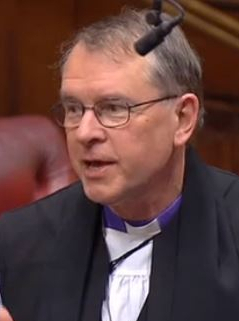
The Lord Bishop of Durham: My Lords, I remind the Committee of my interests with the RAMP project and as a trustee of Reset, as laid out in the register. In moving Amendment 128B, I am grateful to the noble Baronesses, Lady Stroud and Lady Lister, and the noble Lord, Lord Purvis of Tweed, for their support, which, in itself, I hope demonstrates that this whole business of safe and legal routes is a matter about which there is common mind across the House and that we all agree that we need safe and legal routes. I am therefore looking forward to the next couple of hours—as I anticipate it might be—as we explore these issues, because this is really a debate about what is the best, how and when.
This amendment is a straightforward and well-intentioned addition to ensure that any cap placed on safe and legal routes excludes current named schemes already in operation. I hope, therefore, that it is a simple amendment that the Government will be able to accept to help provide clarity. Before I explain the rationale behind the amendment, I should like to comment on the importance of safe and legal routes. Since the pandemic, and following the end of the vulnerable persons resettlement scheme, I have despaired as I have witnessed the breakdown of our contribution to global efforts to support refugees to find sanctuary.
I believe that the strength of shared opinion across different sides of this Chamber on the need for safe and legal routes is, in part, due to the global reputation we once held on resettlement. Central government led with great conviction and leadership in supporting communities up and down the breadth of this country to welcome over 20,000 Syrians who could then start to rebuild their lives. However, we now find ourselves in the absurd position that in order to deter asylum seekers from travelling to the UK irregularly, we are being asked to sanction the possibility that the Government will deliberately break international law to ban the right of men, women and children to claim asylum on arrival—and this is while providing no alternatives for vulnerable people to travel here safely.
In the absence of safe and legal routes, families are left with the impossible choice to travel informally to claim sanctuary in the UK and are thus at the mercy of smugglers taking criminal advantage. We often forget that, to claim asylum in the UK, a person has to be physically present here but, for those most likely to be in need of protection, there is no visa available for this and there are no UK consulates on European soil to claim asylum before making a dangerous journey. The UNHCR has also needed to reiterate—following government comments to the contrary—that there is no mechanism through which refugees can simply approach the UNHCR itself to apply for asylum in the UK.
The Government cannot deny that it is a choice to require refugees who wish to seek asylum here to rely on dangerous journeys if we do not provide safe alternatives. It is a difficult choice, but a choice it is. The Bill provides an opportunity to demonstrate real leadership and make a different choice.
Afghans, Iranians, Syrians, Eritreans and Sudanese are among those currently crossing the channel in higher numbers, making up over half the boat crossings in the first quarter of this year: 2,086, to be precise. Although all these countries have an asylum grant rate at initial decision of over 80%, only 146 people from those same countries were resettled. Taking one country as an example from 2022, we can see that 5,642 Iranians crossed the channel but only 10 were resettled here:10 out of 5,642. Let us not forget the most vulnerable group—children—who attempt to reach safety. Between 2010 and 2020, over 12,000 unaccompanied children were granted protection in the UK, but only 700 of those were able to arrive through official schemes. How many children could have been spared the trauma of a dangerous journey with better safe and legal routes?
I find the situation perverse, and I think we can, and must, do better. Yet currently the Bill does not propose any new protection pathways to help change this; in fact, it proposes a cap on such schemes and does not place any obligation on the Government to facilitate any such safe routes, preferring simply to consult local authorities. It is also important to note that every safe route will disrupt the smugglers’ ability to continue to capitalise on human misery. I therefore fully support the amendment tabled by the noble Baroness, Lady Stroud, which would place a duty on the Home Secretary to specify additional safe and legal routes. The Prime Minister has promised that the Government will create more safe and legal routes.
Although these would not dispense with the need for a functioning system of territorial asylum, I will take him at face value, otherwise the intention behind the Bill would appear needlessly pernicious and unjustly punitive.
Last year, resettlement figures decreased by 39% and family reunion decreased by 23%. Amendment 128C appears simply to provide the opportunity for the Government to turn this decline around by placing the Prime Minister’s welcome commitment in the Bill. I appreciate the unprecedented magnitude of forced displacement across the globe. The latest figure, from yesterday, says that there are 10 million more, so it is now 110 million. Therefore, any long-term strategy for safe and legal routes must be formulated collaboratively with our international partners and wider refugee organisations, rather than simply in a Home Office vacuum. Protection routes must be informed by the refugee experience and explore innovative and sustainable solutions with human dignity at their hearts. I know that the most revered Primate the Archbishop of Canterbury will share further on this in later groupings.
I will leave others to expand more fully on the safe and sanctioned routes that could be explored, although I note that, on previous occasions, I have spoken in favour of all three outlined in the amendments in this group. I expect the Government to bring forth details on the potential expansion of family reunion, including the ability of refugee children to be joined by their closest family members, and refugee visas, which would grant people permission to travel to the UK to claim asylum. There is also the potential capacity to welcome more people through community sponsorship, which would not necessarily be captured by a consultative cap with local councils.
I previously had the privilege of working with Talent Beyond Boundaries with the Minister’s predecessor. We worked very collaboratively with the Home Office to launch a world-leading displaced talent pathway, so complementary routes can be created and should be explored. Will the Minister commit to working with the UNHCR, the relevant refugee agencies and Members of this House so that safe and legal routes can be co-created, not created in the vacuum of the Home Office?
The Bill does not currently include a definition of safe and legal routes. Amendment 128B would put it beyond doubt that current named schemes, such as Homes for Ukraine, Hong Kong BNO visas and the Afghan relocations and assistance policy would not be included in a proposed cap. We can discuss the merits of a cap and whether it portrays the level of ambition required for effective global responsibility-sharing, but if it includes the schemes I have mentioned, there would be limited, if any, room for additional safe routes.
In the first quarter of this year, 14,100 Ukrainians were given permission to come to the UK, alongside 8,300 people from Hong Kong. This would leave negligible remaining capacity. When including the Afghan policy, through which 3,167 were settled to the UK over the last year, the Government’s work on safe and legal routes would stop before it even got started if these numbers were included in the cap. These schemes do not grant refugee status, so can the Minister confirm that they will be excluded?
Most of us here will never know the pain of having to take the unfathomable decision to risk everything to reach safety and the courage it must take to leave home in hope of sanctuary. The Government have the opportunity to offer accessible and safe routes that will provide hope for some of the world’s most vulnerable and, ultimately, save lives, and to do so alongside international partners offering similar routes in their nations. It is a privilege and a responsibility that we should never choose to abdicate. For this reason, I beg to move.
Extracts from the speeches that followed:
Baroness Ludford (LD): My Lords, I wish to speak to my Amendment 129 on refugee family reunion. I am grateful for the support of my noble friend Lord Paddick, the noble Lord, Lord Kerr of Kinlochard, and the noble Baroness, Lady Bennett of Manor Castle.
Refugee family reunion does exist as a safe and legal route but it needs to be expanded. I was proud to steer a Private Member’s Bill on that subject; it passed through this House and is currently in the other place. I picked up the baton from my noble friend Lady Hamwee, who has worked on this issue for many years.
The problem at the moment is not only that the safe routes available to refugees are extremely limited; last year, refugee settlement provided in collaboration with the UNHCR decreased by 39% and the issuing of refugee family reunion visas decreased by nearly a quarter—the right reverend Prelate the Bishop of Durham referred to this. In the year ending March 2022, 6,000 family reunion visas were issued. In the year ending March 2023, there were only 4,600—a reduction of 23%. The Bill misses an opportunity for the UK to curb the number of irregular arrivals by creating more routes to safety and—I would like it to fulfil this opportunity—to allow more family members to join those who have reached safety in this country, including by letting separated refugee children be joined by their closest family members.
Lord Paddick (LD): My Lords, we support all the amendments in this group. The issue of the millions displaced by war and persecution requires international co-operation, including the UK taking its fair share of genuine refugees. As the right reverend Prelate the Bishop of Durham said, there are no safe, or deliverable, and legal routes for many, or most, genuine refugees. The Bill seeks to imprison and remove any genuine refugee who arrives in the UK other than by safe and legal routes that do not exist. We need humanitarian visas, as my noble friend Lord Purvis of Tweed has said.
Placing a cap on the numbers arriving by safe and legal routes at the whim of the Secretary of State is not acceptable, as the noble Baroness, Lady Chakrabarti, has said. Any cap needs to be debated and set by Parliament. Rather than the Secretary of State being exempt from the need to consult if the number needs to be changed as a matter of urgency, it is exactly in times of emergency that we need debate and consultation.
Baroness Stroud (Con): My Lords, in speaking to Amendment 128C in my name, I shall also lend support to many of the amendments in this group, particularly Amendment 128B in the name of the right reverend Prelate, which he has just outlined and to which I have added my name.
Amendment 128C is very simple. It places a duty on the Government to do what they say they want to do and are going to do anyway. This amendment imposes a duty on the Home Secretary to create additional—I emphasise “additional”—safe and legal routes by 31 January 2024, six months after the anticipated passage of the Bill, under which refugees and others in need of international protection may come to the UK lawfully from abroad.
The whole purpose of the Illegal Migration Bill is to shut down unsafe and illegal routes and its whole narrative is to ensure that genuine asylum seekers and refugees can then come via safe and legal routes. If that is the motive for the Bill, as the Government have repeatedly communicated, this amendment will not be difficult for the Minister to accept.
Baroness Lister of Burtersett (Lab): Of course, safe and legal routes are part of the answer, and here I support in particular Amendment 128B, to which I have added my name, and Amendment 128C. Personally, I am unhappy with the idea of a fixed cap on the numbers entitled to enter on safe and legal routes if it is what the JCHR describes as a “hard” cap. The right reverend Prelate makes an important point in excluding the listed schemes from the cap, on the grounds that these schemes are not currently capped. I also support the Children’s Commissioner’s recommendation that children should be excluded from the cap. I would be grateful to know the Government’s response to that. It should also be noted that she emphasises that
“safe and legal routes must be agreed in parallel to the passage of the Bill”,
which is relevant to Amendment 128C.
But however generous the safe and legal routes option is, the UNHCR makes it clear that it is not a substitute for the right to claim asylum under the refugee convention. As my honourable friend Olivia Blake said when she spoke to a similar amendment in the Commons,
“as it stands … there is no way for the many thousands of people who have already started their journey to get on to a safe and legal route … You cannot reduce the number of boats if the people who are going to try to make that journey are already on their journey and have no alternatives to come to the UK”.—[Official Report, Commons, 27/3/23; col. 754.]
Lord Purvis of Tweed (LD): I am very happy to support Amendment 128B and the way in which the right reverend Prelate opened this debate so clearly today, making the case, which I believe is unanswerable, that the current schemes should not be included within any hard cap mechanism. In debates, many of my noble friends and colleagues around the House have raised the difficulties in getting some of these schemes up and running and, as the right reverend Prelate indicated, the limited scope of some of them. It would have been a tragic loss for many people if we had wrapped up these schemes in a hard cap, because Clause 58, which I argue should not be in the Bill, leaves enormous discretion for the Government. As the Refugee Council indicated, the Government could establish a cap of, say, 10,000 people and would comply with it if just 10 entered. Even a cap, an upper limit, is not a commitment to provide support and refuge for the individuals within that overall cap number.
Lord Hannay of Chiswick (CB): My Lords, I support Amendments 128B, 128C and 131, which all deal with an issue which is crucial to any overall approach by this country to remake its broken asylum policy. Without that, you do not have an overall approach; you just have a piece-by-piece approach. All that was spelled out during the debate tabled by the most reverend Primate in December last year, and many Members of the House spoke in support of these safe and legal routes as one part of an overall solution. That is what I am doing today by supporting these amendments. At the time, the Minister who replied to that debate did not respond on the point of safe and legal routes, nor did the Government respond in the legislation we are discussing today, which they tabled quite soon after that debate. That was a pity: it was an opportunity missed.
Now, in the course of the proceedings in another place, the Government have put in the Bill some language about safe and legal routes. I welcome that—it is a shift of policy, as the noble Lord, Lord Kirkhope, said, back to policy which we practised before 2011—but I am sorry to say that the drafting currently in the Bill is really quite inadequate, not only because of the cap, which is arbitrary and is liable to frustrate the objective being pursued, but because actually there is no obligation on the Government, if the Bill passes in its current form, with some reference to safe and legal routes, to arrive at the implementation of such safe and legal routes. Amendments 128B, 128C and 131 are all aimed to arrive at that point: where there is an obligation on the Government. The Bill imposes a lot of obligations on the Government, many of which I and others in this House have said are contrary to our international obligations. This would be in total conformity to our international obligations, and I therefore argue that it needs to be mandatory now, not awaiting some mythical moment when the last boat has been stopped. That is not going to work; it is simply not going to happen. The wording in the Bill at the moment leaves enormous opportunities for a Government who do not wish to proceed to give effect to safe and legal routes to escape. That is why I support the amendments.
Baroness Brinton (LD): My Lords, I will speak in support of the right reverend Prelate the Bishop of Durham’s Amendment 128B, in particular the reference to removing BNO nationals from the safe and legal routes. I do so because the Government’s own document on safe and legal routes, in its description of Hong Kong British national (overseas) visas, says that the scheme
“was developed following concerns about erosion of human rights protections in Hong Kong, but it is not an explicitly protection-based scheme. Eligibility is not based on the person’s risk of persecution in Hong Kong. Rather, it is a way of making it easier for Hong Kong BN(O) status holders to migrate to the UK compared to the general work, study, and family visa rules”.
As we discussed on Monday night—I will not rehearse those points again—BNO holders of course have rights under the British Nationality Act 1981, in that they can arrive and move to settlement without having to seek the discretion of the Home Secretary to make them a British citizen; it comes with the package of holding a BNO status. That then means that they and their dependants, after they have been here for the right amount of time, can move straight to that status.
Baroness Sugg (Con): My Lords, I welcome the Government’s commitment to deliver safe and legal routes and I support Amendments 128B and 128C, which help deliver that commitment.
There are numerous details and duties in the Bill on how illegal and unsafe routes will be stopped, but little on how safe and legal routes will be opened—so how and when? The number will be decided by the elected Parliament, but I would welcome clarity from my noble friend on whether country-specific, at House of Commons or listed schemes will be included, as I do not really understand how the system will work if that is the case. So I support Amendment 128B.
Lord Coaker (Lab): To move on to general points, in the Government’s safe and legal routes scheme as proposed, do they intend to have any sort of prioritisation, or will it be just on an individual case basis? I am interested whether the Government are going to talk about family reunion and high-grant countries and what their view is of any of that. How will the Government deal with the emergencies that may arise? I have read the clause, but could the Minister spell that out a little bit more? It has got slightly lost, so I also emphasise one of the points that the right reverend Prelate the Bishop of Durham made—the issue of children in all this, whether they are unaccompanied or not. We would be interested to hear what the Government have to say on that issue.
I have nothing much more to add to the many excellent points made by many noble Lords during this very important debate. I am really interested in the process with respect to the regulations, because in that will be everything. I am concerned that we do not just have a repeat of what has happened before, whereby the regulations are just put and there is no ability to debate or amend them. Any regulations being published well in advance so that we can at least debate and discuss them and try to change the Government’s mind would be extremely helpful.
Lord Murray of Blidworth (Con): Clause 58 provides for the Home Secretary to consult local authorities, and any other organisation or person deemed suitable, to understand their capacity. The cap figure, and by extension the routes to be covered by the cap, will be considered and voted on in Parliament
through a draft affirmative statutory instrument. The cap will not automatically apply to all current and new safe and legal routes that we offer or will introduce in the future. The policy intention is to manage the accommodation burden on local authorities, and my officials are currently considering which routes are most suitable to be included within the cap.
Alongside the cap on safe and legal routes, Clause 59 further requires the Home Secretary to publish a report on existing and any proposed new safe and legal routes. In response to the right reverend Prelate, we will continue to work with the UNHCR and other organisations as the Secretary of State considers appropriate in devising proposed additional safe and legal routes.
The Lord Bishop of Durham: The Minister talked about “devising” new schemes; I asked for co-creation. Is he willing to go so far as to say “co-creating”?
Lord Murray of Blidworth: The right reverend Prelate is right to point to the fact that these things are always a joint effort. The Home Secretary of the day will consult, and consider input, so yes, all those words would be applicable in my view. Clearly, ultimately the scheme has to come from the Home Office, but it will be done following appropriate consultation with and the involvement of interested parties.
Lord Murray of Blidworth: Finally, if I may, I invite the Committee to consider Amendment 128B, put forward by the right reverend Prelate the Bishop of Durham, which seeks to exclude certain existing schemes from the safe and legal routes provision in the Bill. The noble Baroness, Lady Brinton, raised a similar point in relation to persons holding BNO citizenship. My right honourable friend the Prime Minister was clear that the cap will be based on the UK’s capacity to accommodate and support those arriving through our safe and legal routes. The cap does not signify a lack of willingness to help; rather, it reflects the result of numbers we have welcomed through emergency and reactionary routes, which we were right to establish at the time.
Introducing a cap is the right way to ensure our safe and legal routes can become part of a sustainable migration system which sees the UK’s global protection offer operating in a way that gives the UNHCR, those in need of safety and our local delivery partners clarity on the UK’s capacity. Exempting routes from consideration for the cap at this stage would not be in keeping with the intention set out by the Prime Minister. I would also remind the right reverend Prelate that the provisions of Clause 58 include flexibility to revise the cap in response to a fresh humanitarian emergency.
(…)
I will return to the amendment. If, on the other hand, some numerical limit is envisaged, these schemes will not stop the boats and they are not an alternative to the Bill. Those who do not qualify for a safe passage visa will continue to be exploited by the people smugglers, all too ready to continue to take their money on the false promise of a new life in the UK.
As I have set out, we are ready to expand existing safe and legal routes as we get a grip on illegal migration, and the Bill already provides for this. That is the way forward, not amendments which exacerbate the current challenges. I commend Clauses 58 and 59 to the Committee and invite the right reverend Prelate to withdraw his amendment.
The Lord Bishop of Durham: My Lords, I thank the Minister for answering and clarifying some of the questions. My prophetic powers in saying “about two hours” were slightly wrong. The last two and a half hours will be memorable for a number of things—the noble Baroness, Lady Chakrabarti, quoting Ronald Reagan being one of them—and there were helpful reminders of no person being illegal. There were helpful alternatives to “safe and legal routes”, but I think that we will have to live with “safe and legal routes”. No one has implied that we will change the wording in the Bill. The Minister helpfully pointed out that there will be a definition in the regulations, so that helps us. I am not sure that the Minister answered the historical question asked by the noble Lord, Lord Kirkhope, about why the change happened around 2011 concerning the use of embassies, but I am not going to ask him to stand up.
Your Lordships will not be surprised to hear me say that, overall, I am disappointed that my amendment, not just about Hong Kong but particularly about Hong Kong, has not been accepted. It does not damage the Bill in any way to accept that amendment. Likewise, the amendment tabled by the noble Baroness, Lady Stroud, tries to clarify. That is the purpose, and the Minister’s response has not helped us move forward on that. I have no doubt that all of us involved will find ourselves in discussions about what we might bring back on Report. The desire is to take things forward on safe and legal routes.
At this stage, I beg leave to withdraw my amendment.
Amendment 128B withdrawn.
 The Church of England in Parliament
You must be logged in to post a comment.