
During a debate on committee amendments to the Illegal Migration Bill on 14th June 2023, the Bishop of Durham spoke in support of the Archbishop of Canterbury’s amendment to establish a long term strategy on tackling global refugee crises:
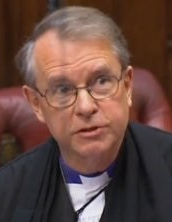
The Lord Bishop of Durham: My Lords, the most reverend Primate might be nervous—he did not know I was going to stand up and he has no clue about what I will say. But I will start by saying I fully support his amendment. I will ask the Minister about the Global Compact on Refugees. The UN has been seeking to develop a global strategy on refugees for a number of years, and it was my privilege to join the Home Office team dealing with the Syrian refugee crisis in Geneva in 2018, at its request. It asked me to make an address.
I say this partly in answer to my colleague: actually, the Home Office as well as the FCDO has been engaged in some of those discussions. But it seems to me that we have almost lost sight of the fact that we signed up to the global compact. I accept that the Minister may need to write on this, but I ask him: where are we now with our commitment to the global compact on refugees and our commitment to engage in that ongoing development of a UN strategy that responds to refugees? Are Home Office people still involved in those discussions, or has it all moved to the FCDO?
Extracts from the speeches that followed:
Lord Coaker (Lab): The most reverend Primate is not trying to say that therefore that means that the UK should just allow in anybody who wants to come—that is just trivialising the argument. Of course you have to have control and manage the situation. The point that the amendment seeks to make is that, if this is going to be sorted out—over and above the problem of the boats, which we accept needs to be dealt with—the UK is still a significant power. It is challenged at the moment through some of its attitudes to international conferences, conventions and treaties, but we are still a member of the United Nations Security Council, NATO and the Commonwealth, which we have not mentioned. When you travel, you recognise, understand and see the influence that the UK still has.
In backing the amendment proposed by the most reverend Primate, though the initiatives that the right reverend Prelate the Bishop of Durham has mentioned—with the Clewer Initiative and the Anglican community across the world—I say that in the end people are going to have to come together to sort this out. Somewhere along the line, it will need big, visionary people to stand up and say, “We’re going to do that”.
Lord Murray of Blidworth (Con, Home Office): We already take a long-term approach to tackling refugee crises. The UK has been one of the largest donors to the agencies working on the front line over many years. We have also played a key role in intergovernmental processes that have shaped the way in which the international community responds to displacement crises, such as through the development of the Global Compact on Refugees—mentioned earlier by the right reverend Prelate—which was adopted by the international community in 2018, and, before that, through the World Humanitarian Summit, as well as through our engagement with major development actors such as the World Bank. In particular, the Global Compact on Refugees provides the international community with a shared strategy for tackling refugee crises, and a shared vision and strategy for how to operationalise the principles of predictable and equitable burden and responsibility sharing—principles that underpin refugee protection.
In response to the point raised by the right reverend Prelate the Bishop of Durham, the Home Office continues to work closely with the FCDO in preparation for the next Global Refugee Forum in December.
The Government are constantly considering the longer-term drivers, impacts and policy implications of migration, alongside delivering more immediate improvements to the system. Our approach is cross-government: we work with a wide range of departments on diplomacy and development, and with law enforcement agencies, in developing this. I believe that this is the most appropriate means by which to do so.
 The Church of England in Parliament
You must be logged in to post a comment.