
On 3rd July 2023, during a debate on the Illegal Migration Bill, the Bishop of Durham tabled amendment 89, which would “limit the Secretary of State’s power to transfer a child out of local authority care and into accommodation provided by the Secretary of State, by providing that they may only do so where to do so is necessary to safeguard and promote the welfare of the child.”
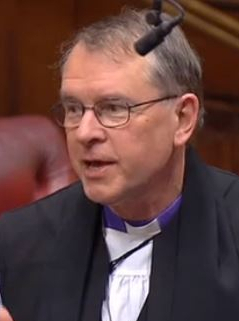
The Lord Bishop of Durham: My Lords, I declare my interests as laid out in the register. I will speak to Amendment 89, and I am grateful to my noble friends from differing Benches—the noble Lords, Lord Coaker and Lord German, and the noble Baroness, Lady Helic—for their support. It is a damning indictment that an amendment of this nature is even required, as it proposes such a basic safeguard to ensure the well-being of unaccompanied children. It requires that, if a child is to be transferred from local authority child protection systems, a justification should be provided as to why it is in their best interests to be looked after by the Home Office rather than the local authority.
It is reasonable that councils should not be mandated to follow a child transfer direction, regardless of any safeguarding or protection concerns. If the Government are unwilling to accept this point, can the Minister say how they will enable the appropriate scrutiny of a decision to move a child out of the formal child protection system and ensure the highest level of safeguarding consideration? These questions deserve full and detailed answers, since the Bill does not set any standards, safeguards or protective obligations for the Home Office when providing accommodation for children. It is even more pertinent given the Home Office’s own record on accommodating unaccompanied children.
The Minister was pleased to share, during the passage of the Bill, that no children are currently accommodated in hotels, but let us not forget that this does not mean that all unaccompanied children are therefore in the care of local authorities. Up to April this year, 186 children remained missing, and it should keep us all up at night, including Ministers, when we think about whose care those children may now be under.
Regardless of the power that the Bill gives to the Government to accommodate children, two things remain true—both of which have already been explained well. First, the Children Act applies to all children, regardless of nationality, ethnicity or immigration status, and therefore any child under the care of the Home Office should have access to the same level of care and protection as any other child in need. Secondly, as recent legal judgments have shown, the Home Office does not have the expertise, knowledge or experience to look after children.
Therefore, it is only right and just that the power to remove a child from the well-established care system should be exercised only when a child’s well-being will be served by doing so—I suspect that that would be very rare. I share the fear of the Children’s Commissioner that accommodating children outside of foster families or children’s homes will be harmful and unsafe; we have no evidence to the contrary. Fundamentally, the care of children is, first and foremost, not an immigration matter, and safeguarding cannot be allowed to be a casualty in pursuit of the objectives of the Bill. Thus, I also support Amendment 87, for all the reasons already laid out. Neither amendment should be regarded as controversial, as, frankly, a child’s life, security and future are too important for them to become collateral damage. Therefore, I support Amendment 87 and intend to test the opinion of the House on Amendment 89.
Extracts from the speeches that followed:
Baroness Meacher (CB): Clauses 15 and 16 are ill conceived and discriminatory in principle. They give the Home Secretary wide powers to house unaccompanied children of any age in any type of accommodation for any length of time—housing a one year-old or 18 month-old in great big ex-Army barracks, or whatever. The clauses direct that a local authority stops looking after an individual child irrespective, it appears, of the child’s needs, characteristics, experiences and legal status. They legitimate and potentially make lawful arrangements that hundreds of non-governmental organisations have contended are unlawful for nearly two years.
I know that Amendments 87 and 89 might help a little. However, bearing in mind the powerful comments from his own Bench from the noble Baroness, Lady Berridge, and from the right reverend Prelate the Bishop of Durham and from other parts of this House, I appeal to the Minister to seek within himself his humanity and to withdraw Clauses 15 and 16 from the Bill.
Lord Coaker (Lab): I do not want to speak for long, but the point that was made is significant, especially when one looks at Clause 16. The Secretary of State can decide on the transfer date that an unaccompanied child be moved away from the local authority. The point made by the noble and learned Baroness, Lady Butler-Sloss, goes right to the heart of the issue: the local authority acts as the parent. If you move a child away from that situation, you are effectively making them an orphan. There is nobody responsible for them by law. Is that really what we want? Is that really what we are trying to achieve? We all agree that there is a problem, but we should not make children pay the price of trying to resolve it. That is not the right way of going about it.
As the right reverend Prelate the Bishop of Durham pointed out, the Secretary of State can direct the local authority to cease providing accommodation. There is no discussion between the Secretary of State and the local authority to view what is in the best interests of the child. The Secretary of State can compel the local authority—as the parent—to cease providing accommodation for a child, which will then take them into Home Office-provided accommodation. Within that Home Office accommodation, as the right reverend Prelate pointed out, we still have 186 children lost. They are missing. We have no idea where they are. I say it time and again but if the Home Office was a human being and a parent, that human being—the parent known as the Home Office—would be prosecuted. We would not tolerate losing children. We would not say that we are doing all we can. We would ask what on earth is happening that children are being lost. The local authority provides the best solution to looking after unaccompanied children in these circumstances.
The Home Office can demand that of the local authority with no justification. It can demand it with no idea of where these children are going to go and with no idea of the standards to be provided for them. They are simply to be housed in Home Office accommodation or wherever. That is not acceptable to the people of this country, irrespective of the fact that they understand there is a problem with the boats, and irrespective of the fact they understand that something needs to be done.
Lord Murray of Blidworth (Con, Home Office): Subsection (3) of the proposed new clause brings me to the provisions in Clauses 15 and 16 which were referred to by the noble Baroness, Lady Meacher. She seeks to remove those clauses; the right reverend Prelate the Bishop of Durham seeks to amend them with Amendments 88A, 89 and 89A.
Clause 15 makes provision for the accommodation of unaccompanied migrant children in scope of this Bill. This clause confers on the Secretary of State a power to provide, or to arrange for the provision of, accommodation and other support to unaccompanied migrant children in England. While the clause contains no time limit on how long any child spends in Home Office accommodation, as I have said previously on a number of occasions, our clear intention is that their stay be a temporary one until they transfer to a local authority for a permanent placement. This is not detained accommodation, and the support that will be provided will be appropriate to the needs of these young people during their short stay.
(…)
These children will not all immediately enter the care system on arrival in a small boat, simply because the Home Office does not have the powers set out in Clauses 15 and 16. It is right that we take steps to ensure that there is clarity, and I suggest to noble Lords that it is in the best interests of these children that we put in place these measures, which recognise the reality of the current situation.
On the basis of my explanation and the assurances I have given, I hope that the noble Lord, Lord Scriven, will be content to withdraw his amendment, and if the right reverend Prelate the Bishop of Durham is minded to test the opinion of the House on Amendment 89, I invite noble Lords to reject that amendment.
Lord Scriven (LD): I listened to the Minister. I note that he did not answer my question, because it goes to the crux of what this is about. As the noble and learned Baroness, Lady Butler-Sloss, said, the local authority can be the only corporate body in the UK that is the corporate parent. If that corporate parent decides that the Home Office accommodation is not in the best interests of the child or that it is not safe, it is not clear under Clauses 15 and 16 whether the Home Secretary can put that child in the Home Office accommodation if the corporate parent disagrees. There is confusion and, as other noble Lords, such as the noble Baroness, Lady Berridge, said, clarity was not given on other questions either.
Because the wording of my amendment is not perfect, I have come to the view that I will not press it to a vote at the moment, but I reserve my right to bring it back at Third Reading unless before then the Minister can absolutely clarify the interrelationship between the Children Act and Clauses 15 and 16. However, if the right reverend Prelate the Bishop of Durham decides to move his amendment, these Benches will support him. I beg leave to withdraw.
The Lord Bishop of Durham: It is my wish to test the mind of the House because the Minister has not answered some of the questions, and my concerns remain. Some of us have not seen a copy of the letter that was circulated to some noble Lords, so can the Minister undertake to ensure that it gets circulated to those who have been involved in these debates? We really need the local authority to have the say in this, so I beg leave to test the mind of the House.
The amendment was agreed.
 The Church of England in Parliament
You must be logged in to post a comment.