
On 5th July 2023, the House of Lords debated the Illegal Migration Bill in the final day of the report stage. The Bishop of Durham spoke in support of his amendment 162, which would exclude schemes for those displaced from Ukraine, the Afghan Relocations and Assistance Policy (ARAP) and the Hong Kong BN(O) routes from the safe and legal routes cap proposed in the bill:
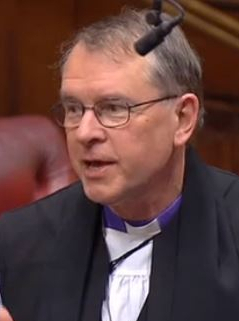
The Lord Bishop of Durham: My Lords, I again note my interests as laid out in the register. I will speak to Amendment 162. In Committee, I explained the well-intentioned nature of this amendment and hoped it would have afforded the Minister the opportunity to clarify that any cap placed on safe and legal routes would exclude current named schemes already in operation. I appreciate the Minister’s comments. He said:
“The cap will not automatically apply to all current and new safe and legal routes that we offer or will introduce in the future.”—[Official Report, 4/6/23; col. 1980.]
But, with respect, how can local authorities reflect on accommodation provision for new routes without excluding their current commitments from this assessment?
“Safe and legal routes” is not a term that is tightly defined in the Bill, so we are left, as is now unfortunately commonplace, with regulations in this area. Arguably, however, it is not unreasonable for Members to presume that “safe and legal routes” would be for those seeking protection outside existing visa schemes who would be granted refugee status. Therefore, why are the Government leaving the possibility that those who are not granted refugee status could be included within the cap? This applies to schemes such as Homes for Ukraine, which requires a visa—the people in question are not refugees—Hong Kong BNO visas, which are actually for overseas citizens, and the Afghan relocations and assistance policy, which is in recognition of all that happened in Afghanistan. As my noble friend Lady Brinton put it to the Minister in Committee, those from Hong Kong are actually British citizens. I thank the Minister for the meeting that he held with me and her on that specific question.
We still have no credible evidence on the deterrence impacts of this Bill, but we know that offering accessible and safe routes will help prevent people having to make the agonising decision to travel irregularly to reach sanctuary. However, by including current schemes in the proposed cap, we will severely restrict our ability to implement any such safe routes, as there would be limited room, if any, for additional routes. Over the first quarter of this year, 22,000 Ukrainians and British nationals from Hong Kong were resettled here. If we had a cap of 20,000 and those 22,000 were included, we would have a problem. It is to the Government’s credit that these 22,000 have come, but it cannot be used as a justification to abdicate our responsibility to do more across a wider global cohort.
If we do not provide safe routes to those who have had no choice but to uproot their lives to seek safety, we are choosing to require them to rely on dangerous journeys. Perversely, this will create a market for those smugglers determined to capitalise on others’ suffering.
The child’s rights impact assessment states:
“Anybody arriving in the UK through the methods specified in the bill presents a risk to the public due to the very nature of their arrival”.
I put it to the Minister that the vast majority do not pose a risk to our country; what is at risk is their lives. That is why they have fled. I therefore welcome that the Prime Minister has promised that the Government will create more safe and legal routes. This amendment will enable the Government to do only what they have set out to do. Without it, I fear this vital and necessary work will stop before it has even started and the world’s most vulnerable will pay the price.
I wonder whether using the word “person” in Clause 59(1) is unhelpful here and whether it should say “asylum seeker and refugee” instead. Would the Minister consider bringing that back at Third Reading? Beyond Amendment 162, I support the other safe and legal routes proposed here, in particular that in Amendment 164 in the name of the noble Baroness, Lady Stroud.
My Lords, I again note my interests as laid out in the register. I will speak to Amendment 162. In Committee, I explained the well-intentioned nature of this amendment and hoped it would have afforded the Minister the opportunity to clarify that any cap placed on safe and legal routes would exclude current named schemes already in operation. I appreciate the Minister’s comments. He said:
“The cap will not automatically apply to all current and new safe and legal routes that we offer or will introduce in the future.”—[Official Report, 4/6/23; col. 1980.]
But, with respect, how can local authorities reflect on accommodation provision for new routes without excluding their current commitments from this assessment?
“Safe and legal routes” is not a term that is tightly defined in the Bill, so we are left, as is now unfortunately commonplace, with regulations in this area. Arguably, however, it is not unreasonable for Members to presume that “safe and legal routes” would be for those seeking protection outside existing visa schemes who would be granted refugee status. Therefore, why are the Government leaving the possibility that those who are not granted refugee status could be included within the cap? This applies to schemes such as Homes for Ukraine, which requires a visa—the people in question are not refugees—Hong Kong BNO visas, which are actually for overseas citizens, and the Afghan relocations and assistance policy, which is in recognition of all that happened in Afghanistan. As my noble friend Lady Brinton put it to the Minister in Committee, those from Hong Kong are actually British citizens. I thank the Minister for the meeting that he held with me and her on that specific question.
We still have no credible evidence on the deterrence impacts of this Bill, but we know that offering accessible and safe routes will help prevent people having to make the agonising decision to travel irregularly to reach sanctuary. However, by including current schemes in the proposed cap, we will severely restrict our ability to implement any such safe routes, as there would be limited room, if any, for additional routes. Over the first quarter of this year, 22,000 Ukrainians and British nationals from Hong Kong were resettled here. If we had a cap of 20,000 and those 22,000 were included, we would have a problem. It is to the Government’s credit that these 22,000 have come, but it cannot be used as a justification to abdicate our responsibility to do more across a wider global cohort.
If we do not provide safe routes to those who have had no choice but to uproot their lives to seek safety, we are choosing to require them to rely on dangerous journeys. Perversely, this will create a market for those smugglers determined to capitalise on others’ suffering.
The child’s rights impact assessment states:
“Anybody arriving in the UK through the methods specified in the bill presents a risk to the public due to the very nature of their arrival”.
I put it to the Minister that the vast majority do not pose a risk to our country; what is at risk is their lives. That is why they have fled. I therefore welcome that the Prime Minister has promised that the Government will create more safe and legal routes. This amendment will enable the Government to do only what they have set out to do. Without it, I fear this vital and necessary work will stop before it has even started and the world’s most vulnerable will pay the price.
I wonder whether using the word “person” in Clause 59(1) is unhelpful here and whether it should say “asylum seeker and refugee” instead. Would the Minister consider bringing that back at Third Reading? Beyond Amendment 162, I support the other safe and legal routes proposed here, in particular that in Amendment 164 in the name of the noble Baroness, Lady Stroud.
Extracts from the speeches that followed:
Baroness Stroud (Con): My Lords, I thank the noble Lords, Lord Kirkhope and Lord Kerr, and the noble Baroness, Lady Helic, for adding their names to my Amendment 164. I also lend my support to the right reverend Prelate’s Amendment 162, which he has just outlined, and to Amendment 163 in the name of my noble friend Lord Alton.
I brought a variation of this amendment to the House in Committee. As I said in that debate, it is very simple. Amendment 164 is designed purely to place a duty on the Government to do what they say they intend to do anyway—introduce safe and legal routes. As I said in that debate, the moral credibility of the entire Bill depends on the creation of more safe and legal routes. The basis on which we are disestablishing illegal and unsafe routes is that we are creating legal and safe routes. The lack of a substantial commitment in primary legislation to this end is a serious omission which this amendment gives us an opportunity to address.
In the previous debate, the Minister said that the Government intend to outline new safe and legal routes in the January report and to implement them “as soon as practicable” and
“in any event by the end of 2024”.—[Official Report, 14/6/23; col. 1982.]
I am grateful to him for making this commitment. My primary motive in bringing this amendment back is to ensure that this commitment from the Government is enacted and that the commitment made from the Dispatch Box to enact safe and legal routes is in the Bill and carries as much weight as the commitment to disestablish unsafe and illegal routes.
Lord Alton of Liverpool (CB): My Lords, it is a pleasure to follow the noble Baroness, Lady Stroud, and to endorse everything she has just said; if she does decide to test the opinion of the House, I certainly will support her in the Lobbies. I support the right reverend Prelate the Bishop of Durham in his Amendment 162, and Amendment 165, in the name of the noble Lord, Lord Purvis of Tweed, and Amendment 166, in the name the noble Baroness, Lady Kennedy of The Shaws.
My own Amendment 163 takes me back to an issue I raised in Committee. It concerns the provision within the designated safe and legal route, which I warmly welcome and I applaud what the Prime Minister said about the principle of doing this. The amendment contains within it an element and a number, to be determined by the Secretary of State, for people with protected characteristics under Section 4 of the Equality Act 2010. The noble and learned Lord, Lord Stewart, who is in his place, will recall that I raised this issue on an earlier amendment on Report.
I am grateful to the noble Baroness, Lady Stroud, but also to the noble Lord, Lord Cashman, for signing this amendment. I will listen carefully to the Minister’s response. A few moments ago I heard him say that there will be a consultation process; perhaps he could flesh that out and say even that the principle in this amendment is something that could be consulted on—that would go some way to meeting my concerns.
I have raised this issue a number of times previously. I tabled an amendment to the Immigration Bill, debated in your Lordships’ House on 21 March 2016, which specifically focused on those groups of people, such as the Yazidis and Christians, persecuted and even facing genocide because of their religion or belief. I raised it again during the Nationality and Borders Bill, debated on 8 February 2022. I focused on the Yazidis, an ethno- religious group targeted by Daesh for annihilation as a clear-cut case of genocide.
Lord Hodgson of Astley Abbots (Con): The right reverend Prelate the Bishop of Durham and I have discussed this many times and agree about many things, but when he argues for excluding certain existing programmes—as he does in Amendment 162—we as a House need to remember that 60% to 70% of our fellow citizens think that this country is already crowded. Therefore, we—they—are entitled to know the overall number that this House thinks we can and should take. They are all terribly worth while and all ghastly experiences—the way people are treated will make your hair stand on end—but a number is important.
Lord Kamall (Con): One of the questions we have to ask is: where do we draw the line? I will speak specifically to some of the amendments, beginning with Amendment 162 in the name of the right reverend Prelate the Bishop of Durham and others. He is absolutely right, particularly on the Afghan relocation scheme: we have some moral obligation to the people from Afghanistan. Was it not as a result of some of our foreign policy interventions that some of these people are now in real danger for having co-operated with the British? Of course, there may well need to be a cap, but if there is a cap, I hope that the Government can explain where else some of those people can go. This highlights, once again, the need for international agreements to tackle this issue. This issue is not going away. For the reasons that people leave their homeland and want to come here or go elsewhere, we will see more and more migration, either by those fleeing persecution or for economic reasons. Therefore, we need to understand where else they can go.
Lord Murray of Blidworth (Con): My Lords, this has been an interesting debate. My noble friends Lord Hodgson and Lord Lilley and the noble Lord, Lord Green, made some powerful points, in particular on the presumed impact of some of these amendments on our ability to stop the boats. They also again highlighted the need to link the numbers admitted to the UK through safe and legal routes to our capacity to accommodate and support those who arrive through those routes.
Amendment 162, put forward by the right reverend Prelate the Bishop of Durham, seeks to exclude certain existing schemes from the safe and legal routes cap provision in this Bill. Exempting routes from the cap is not in keeping with the purpose of the policy, which is to manage the capacity on local areas of those arriving through our safe and legal routes. That said, I would remind the House that the cap does not automatically apply to all current or any future routes. Each route will be considered for inclusion on a case-by-case basis. This is due to the individual impact of the routes and the way they interact with the immigration system. This is why my officials are currently considering which routes should be within the cap and this work should not be pre-empted by excluding certain routes from the cap at this stage. I also point the noble Lord, Lord Kerr, to the power to vary the cap, set out in the Bill, in cases of emergency.
 The Church of England in Parliament
You must be logged in to post a comment.