
On 11th July 2023, the House of Lords debated the Levelling-up and Regeneration Bill in the first day of the report stage. The Bishop of Durham spoke in support of two amendments to the bill:
- Amendment 4, tabled by Baroness Lister of Burtersett, which would include a mission to reduce childhood poverty in the levelling-up missions
- Amendment 7, tabled by Baroness Finlay and supported by the Bishop of London, which would include a mission to address health disparities in the bill
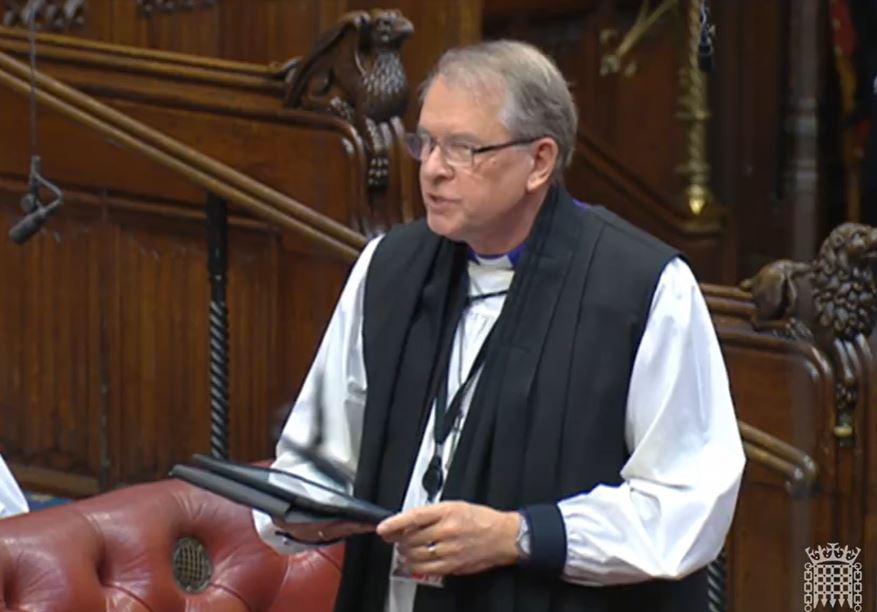
The Lord Bishop of Durham: My Lords, I will speak to Amendment 4, to which I have put my name and which I thank the noble Baroness, Lady Lister, for leading on, and to Amendment 7, to which my right reverend friend the Bishop of London has added her name. She sends her apologies that she cannot be present today.
I draw attention, as has been done already, to the latest research on the number of children living in poverty in the UK. I highlight particularly that in 2021-22 in my part of England, the north-east, more than one in three children were living below the poverty line. The number of children living in poverty in the region has seen an increase of 26% since 2014-15—the steepest rise of anywhere in the country during this period.
I too thank the Minister for the very helpful meeting we held last week. I look forward to hearing what specific commitments she might make, especially around including child poverty in the annual metrics through which the impact of the Bill will be measured, and I welcome the recognition that these metrics will bring clarity to the issue of child poverty in the UK. Nevertheless, it is vital that reducing child poverty becomes part of the solution to achieve levelling up and is not seen solely as a by-product of it. I believe it is the primary purpose that should lie behind levelling up.
How can we expect levelling up to be achieved when the number of children growing up in poverty remains so high? How can we expect opportunities to be spread equally across the country when the most deprived areas are experiencing the largest increases in child poverty, resulting in lower educational outcomes and poorer physical and mental health? The experience of poverty in childhood holds back far too many people, preventing them reaching their potential. If we do not make ending child poverty a priority, levelling up will similarly be held back. Put simply, this needs to be a foundational mission for the whole levelling-up agenda.
I turn to Amendment 7. We are all in consensus that good health is key to our flourishing and that we would like to see health inequalities narrowed. However, the health disparities White Paper was scrapped in recent memory and, while the new NHS Long Term Workforce Plan has much to commend it, it demonstrates the lack of a plan to tackle health inequalities. Meanwhile, the healthy life expectancy gap remains and disparities within regions are sometimes even starker than between them, as the noble Baroness, Lady Finlay, has explained.
The NHS was born in order to work for equitable health. I hope this amendment will ensure that that remains the case. It would ensure that a specific mission relating to health disparities is introduced, including health outcomes towards the end of life; inequalities do not vanish when a person is at the end of their life but persist in access to palliative care. The amendment is necessary because, although we are grateful for the Minister’s assurances, there is still nothing in the Bill that holds the Government to the missions set out in the White Paper, which are the substance of our work to level up. Health is vital to levelling up. It is my conviction that Amendments 4 and 7 go hand in hand and that both need to be in the Bill.
Extracts from the speeches that followed:
Baroness Taylor of Stevenage (Lab): The noble Baroness, Lady Finlay, clearly set out the reasons why tackling health inequalities, which have beleaguered the UK for generations, must be part of the mission to level up our country in order to break the cycle. My local area is home to some of the most exciting cell and gene therapy developments in the world, so it is ironic that if you live in parts of my borough, you will live 10 years less than if you live in St Albans, 12 miles away.
In the United Kingdom we have 7 million people languishing on NHS waiting lists, waiting for surgery or procedures that could be life changing, never mind life saving. We must include in the missions for this country a stated aim to harness the life sciences to reduce preventable illness, speed up access to treatments and cut health inequalities. For that reason, if the noble Baroness, Lady Finlay, chooses to test the opinion of the House on this subject, she will have our support.
Lastly, I come to the powerful words of my noble friend Lady Lister, who has been such a strong advocate for children, particularly disadvantaged children, in your Lordships’ House. It is a shameful indictment of this Government that the situation relating to child poverty has gone backwards since 2010. As the right reverend Prelate the Bishop of Durham said, it should be central to levelling up. The Child Poverty Action Group figure of 4.2 million children living in poverty, which has been widely cited in the debate, is a shameful indictment. As the noble Baroness, Lady Benjamin, said, the situation is far worse for black and ethnic-minority children, and working is not the answer for everyone, with 71% of children in poverty living in a home where at least one person works. The figure cited that between 1998 and 2003 the number of children living in poverty fell by 600,000 shows that it can be done, but the figures are now climbing rapidly again.
Baroness Scott of Bybrook (Con): We have listened to the debate on the levelling up White Paper highlighting challenges faced by children from disadvantaged backgrounds and how these vary between and within places. Several missions address factors contributing to child poverty. As I said, the Government have listened to the feedback on this issue, and I thank the noble Baroness, Lady Lister, and the right reverend Prelate the Bishop of Durham for their helpful meetings recently.
The Department for Work and Pensions currently publishes local area statistics on children in low- income families. Subject to these continuing to meet our quality standards, they will be cited as a relevant metric in the Government’s statutory reporting on levelling up. This will be reflected in the Government’s first statement of levelling-up missions following Royal Assent.
The statistics on children in low-income families show the number and proportion of children aged under 16 living in low-income families year by year. The statistics are available on both a relative and an absolute poverty basis, before housing costs. They are available for a wide range of geographical areas, including region, local authority, parliamentary constituency and even down to ward levels. The statistics will show the individual age and gender of children and the family status, giving us a really detailed local picture of poverty in particular areas. DWP has also announced plans to resume work developing an experimental measure of poverty based on the Social Metrics Commission’s innovative work. It is beginning to engage with stake- holders and will publish more information on its plans in due course.
 The Church of England in Parliament
You must be logged in to post a comment.