
The Bishop of Gloucester spoke in a debate on climate change and migration on 14th September 2023, outlining the underlying issues of poverty and the need for collaboration across Europe to address ongoing crises:
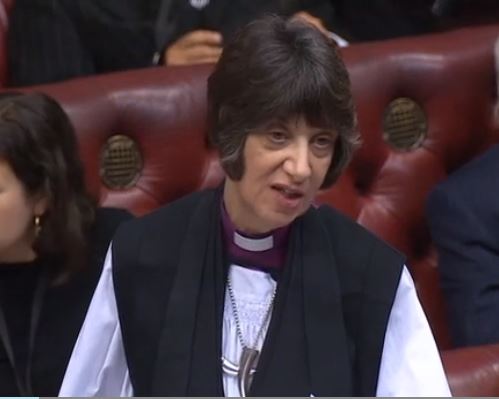
The Lord Bishop of Gloucester: My Lords, it is a delight to follow the noble Baroness, Lady Bennett of Manor Castle. I am grateful to the noble and right reverend Lord, Lord Harries, for bringing this debate and raising this important issue. It touches on two of the primary challenges that we face in the 21st century; as we have heard, they are deeply connected. We heard astounding statistics, such as that, by 2050, perhaps 200 million people will be displaced due to climate change.
I was reminded of many of the weather events of this summer in Europe. We saw about 19,000 people evacuated from Rhodes due to wildfires; there were images of holidaymakers fleeing but being given refuge and hospitality by local people. We saw temperature red alerts and the hottest June on record globally. This is the climate crisis close up and, at the most basic level, it involved the movement of people and the support of other people—a small snapshot of a much larger global issue.
Just recently, at a refugee and asylum seekers service in Gloucestershire, we had a conversation about the fact that some regions of the planet are becoming uninhabitable and simply will not be able to adapt to extreme temperatures. A recent report published by Christian Aid pointed to research that supports what we have already heard: higher temperatures will lead to greater projected asylum applications to European countries.
However, as we have also heard, we need to keep this in perspective, set against the backdrop of millions of people displaced within their own countries and across neighbouring borders. I, too, was going to talk about Somalia but we have heard about that already. What is really important is that so many people across our world are being displaced for reasons other than climate change, such as war or persecution, and then discovering that the effects of climate change are adding to their suffering. Another example concerns the Rohingya refugees in Bangladesh, who are being further impacted by adverse weather disasters due to climate change.
None of this can be separated from the issues of poverty that underlie all we are talking about. The option of air conditioning simply does not exist in many places where people live across our world and the world’s poorest are bearing the burden of the climate crisis, which is not of their making. We also know that, for a whole host of reasons, the impact of climate change is predicted to affect women and girls disproportionately; we have already heard about children. It is not surprising that people are on the move. It is simply not an option for us to pull up the drawbridge and leave others to deal with the consequences of global migration. Working with our European partners is a practical necessity to deal with a crisis that is global in scale. As we have already heard, we have a collective responsibility to work with our European partners; many of those bodies have already been named. We cannot expect other countries to pick up the tab when we hold so many of the resources.
There are practical questions that we must address. The issue of the definition of a refugee has already been mentioned. The refugee convention described a refugee as
“someone unable or unwilling to return to their country of origin owing to a well-founded fear of being persecuted”.
That reflected the realities of 1951, not 2023. We would be wise to explore a more extensive definition that takes into account the drivers of migration that have developed over the past 70 years and, in particular, reflects the way in which climate change affects migration patterns. One way of addressing this is to invest further in climate adaptation, as well as in loss and damage payments, to help people respond to the impact of climate change in the countries where they live. It would be good if the Minister could say what is being done to address this.
One day last year, at the Lambeth conference, bishops from across the world gathered in the grounds of Lambeth Palace on one of the hottest days of the year. The grass was like straw. We sat in the shade of marquees and heard stories about the effects of climate change on real lives in real places. Some of it was very hard to hear. We had food that day—extremely good food—and plenty of water as we talked and listened to one another but many of the stories I heard were about climate change devastating food production, the failure of crops and people no longer being able to survive in the places of their communities. We also heard stories of hope. For example, I heard of churches in Uganda providing seedlings for tree planting and of the church in Kenya teaching and encouraging dryland farming, but all of it requires investment so that people can stay and build strong communities where they are.
This is an issue of justice. For me, as a Christian, that really matters, so I am grateful for this debate, which has highlighted the need for us not simply to keep looking for instant solutions to a problem that is about us here in the UK endeavouring to manage the inflow of people. This is about the need to work closely with European and other partners to engage in a courageous global vision and seek long-term and often slow but persistent ways to address the push factors, as well as just ways of managing the flows of increased movement across Europe.
Extracts from the speeches that followed:
Lord Ponsonby of Shulbrede (Lab): The right reverend Prelate the Bishop of Gloucester mentioned air conditioning, which reminded me of an experience I had some 30 years ago at an oil and gas development conference where we were addressed by the Turkish Oil Minister. He said that that was the first year that Turkish people were spending more money on air conditioning than on heating their homes. It was a turning point in Turkey, but I suspect that many other countries have had that flipping in the use of their energy and an overall massive increase in their energy over the last few decades. Who are we to say that they should not turn on the air conditioning units? Nevertheless, we need to find better ways of people being able to live in the climate as it changes.
Lord Murray of Blidworth (Con, Home Office): In the Question before the House today, the noble and right reverend Lord, Lord Harries, makes the distinction between the EU and other partners. I understand why he has set out the Question in that way. His interest is in the proximity of and dialogue with near neighbours. There is value in this view. The right reverend Prelate the Bishop of Gloucester rightly noted the importance of working with our European and wider partners. However, I respectfully urge that we approach this with a wider lens. This is not to denigrate in any way the importance of our European relationships. We must also place the upstream source at the forefront of how we think about this issue. This grasp of the global situation is representative of how we, as a Government, are approaching the dialogue on this subject.
(…)
As to the question posed by the noble Baroness, Lady Bennett, and the right reverend Prelate the Bishop of Gloucester, about the concept of climate refugees, the 1951 convention, which the right reverend Prelate mentioned, does not recognise climate change and it therefore cannot be used as a justification for grant of refugee status. The UNHCR and the International Organization for Migration caution against the use of language around climate refugees. Our priority must be to focus our wider efforts on migration and climate change rather than this.
I conclude by reiterating the need for a temperate tone and for co-operation. This issue affects us all. Harmonious working is therefore vital. I reassure the House that His Majesty’s Government will continue to work with all their internal component parts—as the noble Lord, Lord Purvis, asked—and with all our international partners in Europe and beyond to ensure that our response to climate-driven migration is evidenced and effective and, as I was rightly exhorted from the Bishops’ Benches, to ensure that it is fair both to the individuals displaced and of course to the British public.
 The Church of England in Parliament
You must be logged in to post a comment.