
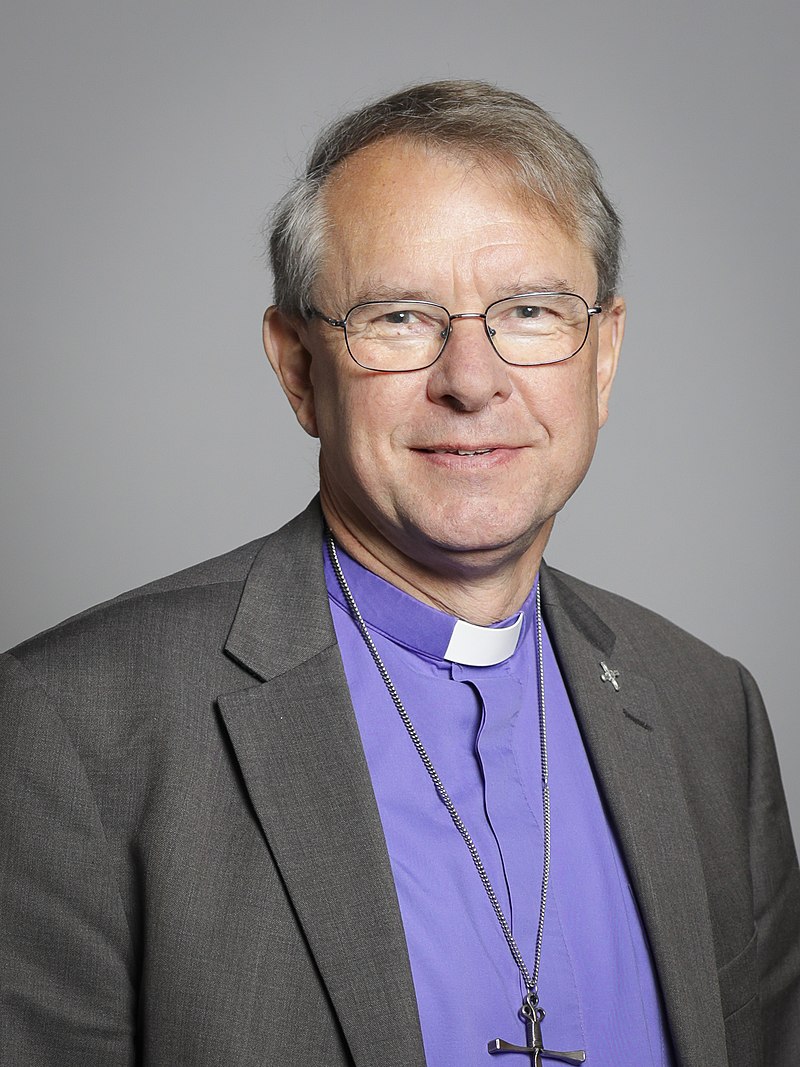
The Bishop of Durham received the following written answer on 26th October 2023:
The Lord Bishop of Durham asked His Majesty’s Government how many unaccompanied children have been held at (1) HMP Elmley, Kent, and (2) other adult prisons over the last year, including those determined to be children after local authority age assessments.
Lord Bellamy (Con, Ministry of Justice): It has not proved possible to respond to this question in the time available before Prorogation. Ministers will correspond directly with the Member.
The Lord Bishop of Durham asked His Majesty’s Government what assessment they have made of the provision of specialist foster care for unaccompanied asylum-seeking children across the UK.
Baroness Barran (Con, DfE): The department recognise that local authorities across the country want to recruit more foster carers to provide loving homes for the children in their care, including for unaccompanied asylum-seeking children (UASC). The government is investing over £27 million in this parliament in a fostering recruitment and retention programme that will support local authorities to ensure that there are more foster carers available for the children who need them, including UASC. This will include a recruitment support hub which will work alongside a regional recruitment campaign to drive interest and enquiries in fostering. This may include specialist support and targeted campaigns to recruit specialist foster carers who are able to care for UASC. The department will work with regions to look at their local data to inform where efforts need to be targeted. This could include sibling groups, teenagers and UASC.
UASC are transferred to the care of local authorities through the National Transfer Scheme, ensuring their care is distributed fairly across the UK. Local authorities have a duty to accommodate all UASC who arrive in their area and these children are entitled to the same protections and support as any other looked-after child, which includes ensuring decisions about their care and accommodation, including where UASC are placed in foster care, are made with the best interests of each individual child.
The Lord Bishop of Durham asked His Majesty’s Government:
- what impact assessment was carried out for the policy to start the 28-day move-on period from when a person receives a refugee grant letter, instead of when they receive their Biometric Residence Permit.
- for how many people has the 28-day move-on period commenced from the date they received a refugee grant letter rather than when they received a Biometric Residence Permit.
Lord Murray of Blidworth (Con, Home Office): The impact assessment which you have requested is for internal use and is not routinely published.
Following the service of an asylum decision, an individual continues to be an asylum seeker for the purpose of asylum support until the end of the relevant prescribed period, also known as the ‘grace period’ or ‘move on period’. This period is 28 calendar days from when an individual is notified of a decision to accept their asylum claim and grant them leave. This period remains as 28 days and there are no plans to change this. This means that all individuals who receive a positive decision on their asylum claim are eligible to support and accommodation for at least 28 days from when their decision is served.
Confirmation of the exact date an individual’s support and accommodation is due to end is issued in a ‘notice to quit’ (NTQ) or ‘notice to vacate’ (NTV) letter. This will either be at least 7 days from when the notice is issued, or the date on which the grace period comes to an end, whichever is the greatest. This means that where an individuals’ grace period has passed and they are issued an NTQ/NTV, they will remain eligible to support and accommodation for at least another 7 days. A NTQ /NTV will only be issued once a person has been issued a biometric residence permit (BRP).
Individuals should make plans to move on from asylum support as soon as they are served their asylum decision, regardless of when their BRP or NTQ/NTV is issued. We offer support to all individuals through Migrant Help or their partner organisation in doing this. This includes providing advice on accessing the labour market, on applying for Universal Credit and signposting to local authorities for assistance with housing. Newly recognised refugees are entitled to housing assistance from their local authority and are treated as a priority need if they have children or are considered vulnerable. Individuals do not need to wait for their BRP to make a claim for benefits and are encouraged to do so as early as possible if they require them.
We are ensuring our cross government partners, such as the (DWP) and the Department for Levelling Up, Housing and Communities (DLUHC) are sighted on data to enable them to consider the impacts of increased decision making and effectively plan. We are also working with DLUHC to ensure the right asylum decision data is being shared with local authorities to enable effective planning and to lessen the impact on existing homelessness and rough sleeping pressures. Our accommodation providers are directly working with local authorities to notify them when an individual is due to have their asylum support ended.
 The Church of England in Parliament
You must be logged in to post a comment.