
The Bishop of Gloucester asked a question on the issue of settler violence on the West Bank and in East Jerusalem following a government statement on the current situation in Israel and the Occupied Palestinian Territories on 9th November 2023:
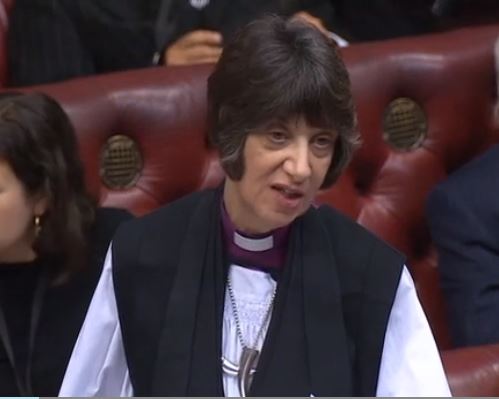
The Lord Bishop of Gloucester: My Lords, I too thank the Minister for all he has said and all he is doing. As we have heard, international humanitarian law exists to protect humanity at times of conflict and to shield us from acts of barbarism. In very different ways, as we have heard, both sides continue to flout that law; it is shocking. I want to return to the situation in the West Bank and east Jerusalem. Does the Minister agree that the rising settler violence and movement restrictions are a matter of real concern, in terms not only of individuals killed but of families displaced and the undermining of UNRWA’s ability to deliver much-needed humanitarian support there? The reports we are receiving from the Anglican diocese in Jerusalem indicate a perilous situation, and one that is going to worsen if steps are not taken to uphold the rule of law.
Lord Ahmad of Wimbledon: My Lords, I thank the right reverend Prelate. The insight of the faith communities is extremely important. The right reverend Prelate will know the personal prioritisation I give to this issue. Together with the political dialogue and the political track, we must ensure that communities are fully immersed. Ultimately, it is communities that deliver the outcomes.
The right reverend Prelate may be aware that I met my dear friend Archbishop Hosam when I visited Jerusalem, along with other Christian leaders. I have also engaged with other faith leaders. It is important that we keep the strength of what community and faith bring. I have visited Jerusalem on many occasions, and it was very sad for me that the silence of Jerusalem was deafening.
It is important that we once again look at how communities are working together. Faith leaders, particularly in the Holy Land, have a key role in ensuring that we return to that vision of sustainable peace. Let us not forget that in Israel 21% of the population is Arab; it is Christian and Muslim. We have very fine examples of how communities are working together. I have said it before and I will say it again: the exemplary example of what we see in Haifa is demonstrable. I have always said—I stand by this, and I challenge anyone to say it—that, even with the challenges in our country today, our country and any country is judged by the strength of its communities and the resilience and cohesion they bring. By God, we have challenges, but working together is how we solve them.
 The Church of England in Parliament
You must be logged in to post a comment.