
During a debate on the King’s Speech on 9th October 2023, the Bishop of London gave a speech focusing on issues of health and social care:
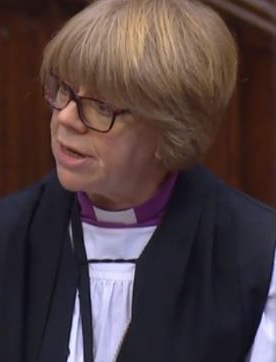
The Lord Bishop of London: My Lords, it is a pleasure to participate in this debate on the gracious Speech. I declare my interests as recorded in the register.
I begin by joining noble Lords across the House in welcoming the indication in the Speech that the Government will legislate for a ban on smoking. As we have heard, smoking is the single biggest preventable killer in the UK, but it is also an example of pronounced health inequality. The Chief Medical Officer gave this evidence to the Commons Health and Social Care Select Committee:
“Smoking is usually twice as high in people with lower incomes and more than twice as high in people living with mental health issues”.
He went on to say:
“The cigarette industry goes absolutely unerringly for the most vulnerable in society”.
So I welcome the decision by the Government, which will undoubtedly account for significant reductions in preventable cancers. However, there are many things that determine our health, and we have been discussing the social determinants of health for years. They were highlighted as early as 1980 in the Black report, yet we seem to be having the same conversations about the same statistics, with the same consensus again and again. The differences in life expectancy and healthy life expectancy remain truly shocking.
The failure to publish the health inequalities White Paper in the previous Session is lamentable, and I seek assurances from the Minister that health inequalities will be a key focus of the major conditions strategy. For the NHS to have the future that the Minister speaks about, we are dependent on reducing inequalities in health. Inequalities in health outcomes between racial and ethnic groups also persist. The most recent CQC State of Care report highlights these, especially in maternal and neonatal care and in mental health care. The report lists instances in which patients are not listened to and how their symptoms are not recognised due to the poor teaching of certain conditions that present in ethnic minority patients. The CQC report also highlights, as did the noble Baroness, Lady Watkins, that there are ethnic differences in the detention of mental health patients.
I add my voice to the disappointment that a mental health Bill has not been brought forward as part of the gracious Speech. As we have heard, reform of the Mental Health Act is long overdue, and the inequalities that people face under it need serious attention. There is much work to be done here, including in resourcing community care and increasing patients’ ability to make choices about their care. The Joint Committee on the draft Bill found that this would be a significant factor in the reduction of detention and inequalities. It is a great shame that the work already undertaken is not being taken forward.
We are all aware that the health service is straining. I too welcome the long-term workforce plan, but there are questions that remain unanswered, and I expect that its implementation will be challenging. The NHS staff experience remains one of exhaustion, overwork and understaffing, and I continue to remain concerned about the state of industrial relations following the Strikes (Minimum Service Levels) Act. If we are to exercise choice in our future, as the Minister rightly said, we need a workforce that is not tired, is appropriately trained and is valued.
Some 22 years ago, I commissioned the Chief Nursing Officer’s Black and Minority Ethnic Advisory Group, which has carried out truly inspiring work. However, the work is not done. The CQC report highlights the experience of not just ethnic-minority patients but staff. Midwives from ethnic-minority groups described a culture of tolerated discrimination and unchallenged stereotyping. This is something that we all need to work to reduce.
It is disappointing to see no mention of social care in the gracious Speech. Skills for Care’s latest report estimated a 28.3% staff turnover rate in 2022-23. With 400,000 people working in social care over the age of 55 and likely to retire within the next 10 years, we are desperate for a workforce strategy. Carers are finding it difficult to get by in the cost of living crisis, and the sector represents 5% of the entire economy.
The Archbishops’ Commission on Reimagining Care sets out the type of ambitious vision that I had hoped to see in the gracious Speech. The commission identified the need for a fundamental change in the way in which care is thought about, organised and delivered, with a national care covenant at the heart of a new approach that truly incorporates the views, voices and experiences of the people most affected. Social care should enable everyone, regardless of age or ability, to lead a life of purpose and fulfilment.
I also note the disappointment of many that the gracious Speech did not contain news of a ban on conversion therapy. The General Synod of the Church of England voted to call on the Government to ban conversion therapies in 2017; it remains firm that abuse of power in this way must be prevented.
What underpins everything I say today and will say in the coming Session is that people are made in the image of God and are immeasurably valued. Recognising that value, we must do more to pursue health equality and provide adequate resources. As Nye Bevan famously said in 1948:
“Illness is neither an indulgence for which people have to pay nor an offence for which they should be penalised, but a misfortune the cost of which should be shared by the community”.
Extracts from the speeches that followed:
Baroness Cumberlege (Con): My Lords, it is a great pleasure for me to follow Sarah Mullally, the right reverend Prelate the Bishop of London. She has a very interesting—I was going to say “past” but I think they call it a “back story” today. She has done a huge amount in the National Health Service. We know that she was the Chief Nursing Officer; she did so much for all of us who work in the service and especially for the patients who use it.
I want to say something about Sarah because we so often dismiss people; we just think that they are in a certain position, and that that is their life and how they run it. However, Sarah has three distinguished university doctorates and was made a Dame Commander of the Order of the British Empire for her contribution to nursing and midwifery. She was of course much admired when she was the Chief Nursing Officer in the Department of Health, where she made a great contribution to the NHS. I must say that it is a great pleasure to have you, Sarah, in this House and on these Benches, making the sort of contribution that you have made this afternoon.
Baroness Pinnock (LD): My noble friends Lady Burt and Lady Barker and the right reverend Prelate the Bishop of London all raised the issue of the Bill to ban conversion therapy: where is it? I will leave it at that because it is very important for a section of our society, and for some of us who have a commitment to equality across all our communities. I repeat, where is it?
One area that received good support across the House was the plan to reduce the availability of tobacco and to ban vapes for children. My noble friends Lord Rennard and Lady Walmsley, who have been constant campaigners on this issue, have spoken for us all. We are going to welcome it because we believe in cutting disease and early death. There is a green light for it. I will reflect what the noble Baroness, Lady Jay, said about the 26% cut to the public health grant. Without public health you cannot reduce health inequalities, which was raised by the right reverend Prelate the Bishop of London.
Baroness Merron (Lab): There were two general themes underlying the debate today, about which many noble Lords have spoken, and on which I shall conclude my remarks. First, inequalities run ever deeper across our society, whether we look at maternity care, life expectancy, the quality of health throughout life, or detention on mental health grounds. As the noble Lord, Lord Best, said, there are also inequalities in housing availability, affordability and quality. We are seeing an increasing divide on the basis of social determinants, of which the right reverend Prelate the Bishop of London spoke, whether they be because of race or colour, or where people live, their income, their education and/or their start in life.
Viscount Younger of Leckie (Con, DWP): Moving on now to health and social care services, which is another major theme for this afternoon, the gracious Speech underlines the Government’s commitment to ensuring that people can access the care that they need as well as taking the long-term decisions that will support and protect the NHS for the future. In meeting immediate challenges, we are providing record levels of funding to help the NHS continue to recover from the pressures caused by the pandemic, also a subject raised this afternoon, and to support the NHS through this winter. Last year, we virtually eliminated long waits of two years or more for elective procedures and by June this year waits of more than 78 weeks.
The right reverend Prelate the Bishop of London, who is not in her place, raised the subject of minimum service levels, and I think it was touched upon by other Peers. Our top priority is to protect the life and health of patients and the public. The aim is to keep patients safe, give the public much-needed assurance that vital health services can continue through strike action and ensure that emergency, urgent and essential care are there when patients need them most.
 The Church of England in Parliament
You must be logged in to post a comment.