
On 13th November 2023, the Bishop of Durham spoke in the King’s Speech debate on the issue of poverty and the UK economy:
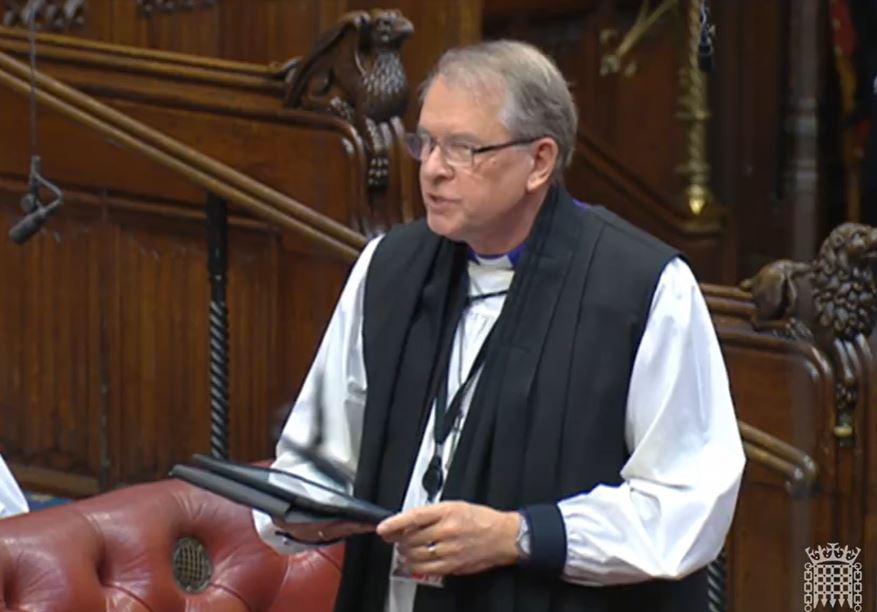
The Lord Bishop of Durham: I look forward to the maiden speeches of the noble Lord, Lord Gascoigne, and my right reverend friend the Bishop of Norwich. The gracious Speech expressed the Government’s intention to make difficult long-term decisions to build a better future for the country. I confess that I am struggling to see much evidence of that plan. To think truly long-term about our country’s future, it is vital that children and families and the environment are at the heart of every policy, particularly from the Treasury. Without prioritising investing in children, what hope is there of moulding citizens who contribute positively to society and the economic growth that this Government desire? So I welcome the Government’s plan to increase the number of those taking high-quality apprenticeships, allowing young people to pursue their varied skills, but to ensure the educational success of all children we need to prioritise their well-being inside and outside the school gates. Without this support, how can we expect them to thrive?
The Joseph Rowntree Foundation’s recent report Destitution in the UK 2023 revealed that around 1 million children have experienced destitution in the past year—I repeat: 1 million children have experienced not simply poverty, but destitution. This number is not inevitable. It is preventable.
Poverty limits opportunity and life chances. The implementation of the two-child limit, the benefit cap and low levels of universal credit continue to push more families into poverty, impacting their education and futures. The well-being of children and families must be at the heart of all policy decisions. The Government will soon outline their proposals to reform welfare. Will His Majesty’s Government carefully consider whether the decisions they make truly place children and families at the centre?
We also cannot abandon the urgent present needs. If these are not addressed now, they will have lasting consequences. The Trussell Trust revealed last week that over the summer it distributed record numbers of food parcels for that time of year, as well as having threateningly low levels of food-bank resources. As described by the Joseph Rowntree Foundation:
“We used to worry about food banks opening. Now we’re worrying about food banks closing”.
A vital lifeline for those facing hardship and unexpected costs has been the household support fund, allowing local authorities to help directly those most in need. This is due to end in March 2024, which will leave a gap that neither local government nor the charity sector has the resources to fill, pushing even more families into crisis. So I ask the Minister: will His Majesty’s Government renew this fund and develop a long-term strategy for local crisis support and proper economic support for local government?
I also believe that economic growth is hindered by certain groups being prevented from contributing to the economy. Nowhere is that truer than with refugees and those who are displaced. Refugees are gifts to our communities and companies alike. Our shared life is all the stronger due to the determination and contribution of many migrants. I highly commend the way the Government have piloted the tier 2 visa scheme with Talent Beyond Boundaries. Since 2021, it has seen 500 refugees come to Britain to help fill the country’s skills gap and contribute to our economic growth, including: medics, lawyers, IT workers, graphic designers, civil engineers, construction engineers, and more. It is clear evidence that compassion, justice, safe routes and good economics do often correlate. Will His Majesty’s Government commit to expanding this tier 2 visa scheme for refugees?
It remains nonsensical to prevent asylum seekers who have waited over six months for a determination of their case from working. It takes the toughest toll on people seeking asylum, but the nation is also missing out on tax revenue, much-needed specialists and a reduction in subsistence support. Allowing people seeking asylum to work could benefit the UK economy by well over £300 million each year. More importantly, it would allow people to rebuild their lives with dignity and purpose. Will His Majesty’s Government rethink this matter? We all want to see long-term decisions and economic growth that change this country for the better, but that begins with placing the future generation at the heart of those decisions and not preventing those who are in need and in a well-placed position to do so from contributing their skills to our nation’s life.
Extracts from the speeches that followed:
Lord Forsyth of Drumlean (Con): My Lords, it is a pleasure to follow the right reverend Prelate the Bishop of Durham. We all share his aspiration to ensure that children and families are supported, but in order to do so we need to create the wealth to achieve that. Governments do not create wealth, businesses do, and I am sorry that his speech had very little about that aspect.
Baroness Bennet of Manor Castle (GP): Finally, I will use the Government’s favourite phrase, employ some “long-term thinking” and reflect on the speech of the noble Lord, Lord Livermore, who opened for the Labour Party. The noble Lord focused on tax generally being high and blamed the poverty of the many and the terrible destitution affecting so many households, particularly those with children. As the right reverend Prelate the Bishop of Durham highlighted, some 1 million people are suffering from destitution. Labour’s answer to this is the magic of growth, implying a return to historic levels that very few can see in our future. That means, however, that if we do not tackle the distribution of wealth, those who are living on crumbs now will get only a few more crumbs.
I came into the Chamber for this debate from a session titled “the economic common-sense case for taxing wealth as well as work”, run by groups including Patriotic Millionaires UK, the APPG on Anti-Corruption and Responsible Tax, and Tax Justice UK. It highlighted how the 50 richest families in the UK have wealth worth more than the bottom half of the whole population. That is 50 families versus 33.5 million people. I suggest that the Labour Party think harder about who is and who is not paying tax and the need for the redistributive effects of a wealth tax in our society.
Baroness Hayman of Ullock (Lab): We also know of indirect impacts from the current situation on climate change and our economy, such as increased poverty, migration and intensified inequalities. My noble friend Lord Hendy talked about this, as did the right reverend Prelate the Bishop of Durham.
Baroness Penn (Con, Treasury): I reassure the right reverend Prelate the Bishop of Durham that we have targeted our support at the most vulnerable, with cost of living payments to more than 8 million households on means-tested benefits and 8 million pensioner households, and to 6 million people on disability benefits, worth respectively £900, £300 and £150 this year on top of payments of £650, £300 and £150 last year. This is in addition to uprating benefits by 10.1% this year in line with inflation and protecting the triple lock for around 12 million pensioners, worth £11 billion.
My right honourable friend the Chancellor confirmed that the UK Government will accept the Low Pay Commission’s forthcoming recommendation on the increase in the national living wage from April 2024, currently forecast to increase to at least £11 an hour. This means that the annual earnings of a full-time worker on the national living wage will increase by more than £1,000 next year.
There is no doubt that we have faced real challenges over the past few years, but this Government have stood by the British people every step of the way. When we look ahead, the Prime Minister has set three clear priorities for the economy to ensure that we recover from the shocks we have faced and once again release the potential of this great nation. First and foremost, we remain steadfast in our commitment to cutting inflation, the most insidious tax on household budgets there is. We are on track to deliver our aim to halve inflation this year as a staging post to returning to the 2% target, and decisions by the Bank of England’s independent Monetary Policy Committee remain the primary tool for controlling inflation.
 The Church of England in Parliament
You must be logged in to post a comment.