
The Bishop of London tabled a question for short debate on the impact of the proposed removal of free prescriptions for benefit claimants who fail to look for work on 30th November 2023:
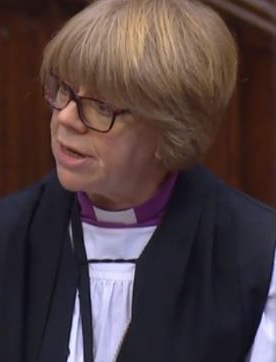
The Lord Bishop of London: To ask His Majesty’s Government what impact the removal of free prescriptions for benefit claimants who fail to look for work will have on their health, and the health of the workforce.
My Lords, I start by thanking your Lordships’ House for giving time for this important debate. I also thank the House of Lords Library for its very helpful briefing and the Minister for his engagement with me and for our helpful meeting earlier this week about this debate.
The measures we are discussing today relate to the announcement that the Government made in the Back to Work Plan and the Autumn Statement that people on universal credit who do not engage in activities designed to increase their skills and improve their employability after 18 months of support will have their claim terminated. With that termination, their accompanying passported benefits, including free prescriptions, will also be stopped.
Benefit claimants may disengage from Jobcentre Plus for many reasons, some of which I suspect we do not completely understand, and not solely because they have failed to look for work. I have brought this debate forward from a health perspective, and the central frame of my remarks today is around health inequalities, because the Back to Work Plan as it stands could serve to exacerbate these inequalities. There are many complexities within universal credit, and many exemptions and allowances that are made for vulnerabilities and medical conditions that are to be commended. I was grateful to hear about some of them at the meeting I had earlier in the week with the Minister and officials from DWP and DHSC. I understand that the number of people who will be affected by this is small: they are those without a vulnerability that would exempt them from having their claim ended, and who do not have an additional factor attached to their claim.
However, I also understand that those who will face this measure will have already been zero-rated for six months, for which time their prescription fee exemption will have already been removed. I believe the mitigation there is that if they have a health condition, they can access low-level prescriptions, such as an asthma pump, until the time their claim is stopped. I know that these mitigations and allowances are designed to reassure those of us scrutinising these plans and, more importantly, those who are fearful of losing the prescriptions they need. I appreciate that this measure will impact only a small number of people, whose prescriptions are likely to be of a low level, but I have some significant concerns.
First, as this House is acutely aware, we are in a cost of living crisis. The Royal Pharmaceutical Society published the results of a survey of pharmacists earlier this year. Some 51% had experienced an increase in the number of patients not collecting their prescriptions in the six months before the survey, and 52% reported an increase in patients asking for different items to be prioritised due to affordability concerns. Some 67% had seen more patients asking about cheaper, over the counter alternatives to their prescriptions. If prescriptions that were once free are no longer so, a person whose universal credit has just been stopped may not be able to afford their prescriptions. This is a serious concern, especially when in so many other ways the cost of living crisis has been an incubator of the gaping inequalities that remain.
Secondly, it is those who are unable to engage with Jobcentre Plus who are most likely to be subject to poor conditions that determine their health, or ill health. It is these people who are most likely to make up the “plus” of the Core20PLUS5. It is important that all engagement with them is not lost when their claim ends. If they struggle to engage with public services, any poor health they experience may worsen if they do not take the medication prescribed. Even if the prescription is of a low level, these prescriptions are fundamental to keeping us in good health, and our being in good health will in turn relieve pressure on the NHS. An acute asthma attack in A&E costs far more to the public purse than someone’s routine inhaler and has a far more profound impact on the person concerned.
I would be very interested to hear from the Minister how the department is working to understand the reasons for people’s disengagement from the support it offers, and what resource there might be for the department to offer the steadier relational support that I know Jobcentre Plus hopes to offer. Have they considered a way to identify those who are extremely vulnerable, and work with the health services to ensure that they do not fall off the radar, perhaps by informing the GP that their claim has ended?
Thirdly, I appreciate that this measure is a deterrent from disengagement and is designed to act as an encouragement into work. I was unaware, until meeting the Minister this week, that parliamentary legislation will be required to bring forward these changes. I have no objection to that in principle, but I am concerned that, with a limited amount of parliamentary time, there is a risk that this legislation will never appear. I am concerned that this proposed measure and the press coverage, which I acknowledge was not completely accurate or helpful, seems designed solely to deter, causing anxiety and fear. This is concerning, even given the small number of people it will impact, and when we are dealing with changes to a highly complex system, it often increases anxiety. To use, or to threaten to use, health measures in any way as a punitive consequence for disengagement is, I believe, a misuse of power and could have a significant impact on the lives of people who need to be helped, not punished.
Can the Minister confirm exactly what is needed to be brought in by primary legislation—whether it is the whole Back to Work plan—and share whether he has any expectation of when it might progress?
The expansion of the health programmes within the Back to Work plan are welcome and I know that they have been commended as part of the Autumn Statement debate. Health and work are linked, and prioritising the health of the workforce is required for a thriving economy. Part of that is to ensure that people have the option to take time off if they need it, which under the current sick pay system may not always be possible. This is especially true for those in insecure work. A report by WPI Economics, Making Statutory Sick Pay Work, highlights stories of workers coming back to work while still sick or injured because they cannot afford to take time off. Can the Minister say whether the Government have any plans to examine statutory sick pay and ensure that those who are working have the option to take time off while they are ill?
On a slightly different note, I was very surprised to read in the Lords Library briefing that the total cost to the NHS of exempt prescription charges from community pharmacies in England was £9.9 billion, while paid-for prescriptions made up only £500 million. It makes me wonder whether installing universal free prescriptions would be less costly than is sometimes assumed and whether the savings to the public purse from better public health may well be worth it.
I again thank the Minister and look forward to hearing the speeches of noble Lords participating. Worsening health inequalities is one of the worst health outcomes of recent times and it requires a multifaceted approach. It is important to consider how people’s health may be impacted by measures that are not directly health based, and I feel encouraged that the Chamber has decided to debate this.
Extracts from the speeches that followed:
Lord Davies of Brixton (Lab): My Lords, I thank the right reverend Prelate the Bishop of London for securing this debate on the end of free prescriptions for certain benefit claimants. She covered, in detail, the operational effectiveness of this and how it works out in practice; I will talk about the philosophy that lies behind the proposal.
As I said in yesterday’s debate on the Autumn Statement, I am angry. I saved my anger from yesterday’s debate for today. It is unfortunate that the noble Viscount the Minister, for whom I have considerable respect, has to be the butt of my anger, but my anger exists nevertheless. I am angry about this cruel and outrageous proposal that reflects so badly on a Government that have already lost much credibility and honour—I am angry and sick to my stomach. My immediate reaction when I read this policy was to ask, “Are we back to the workhouse?”. I am angry, because we have known for almost two centuries that the policy of less eligibility simply does not work—not only does it not work; it leads to further cruelty in a race to the bottom, devoid of compassion and sense.
Baroness Bennett of Manor Castle (GP): As the noble Lord said, poverty is a feature of our system, not an individual failing. I thank the right reverend Prelate for securing this terribly important debate. It is a grave pity that we do not see on the speakers list any Tory Back-Benchers stepping up to defend the policy—although I note that one noble Baroness on the Tory Benches has joined us to listen to the debate. Perhaps the others will read it in Hansard later.
The right reverend Prelate talked about “significant concerns”, in the manner of her speeches. I would go much stronger: this is a disgusting piece of dog-whistle politics targeting the most vulnerable in our society and, as the right reverend Prelate said, possibly having minimal effect in saving the Government money and likely costing them money, while spreading fear in an attempt to activate some of the least desirable emotions in our society.
I am going to take a somewhat different approach from the noble Lord, Lord Davies, and look at the medical impact. The right reverend Prelate clearly and cleverly set out the debate by talking about the impact on individual health and the health of the workforce, so my speech will cover those two areas. I looked in some detail at to whom free subscriptions are available. There is a group of conditions—cancer, diabetes, hypothyroidism and epilepsy are among them—the sufferers of which automatically have the right to free prescriptions. I ask the Minister to put on the record that, if you have those conditions, even if you are affected by these rules, you will still get your cancer drugs and diabetes drugs. It is incredibly important to put that on the record for people to understand.
Lord Allan of Hallam (LD): My Lords, the right reverend Prelate the Bishop of London helpfully said in her opening speech that she was in some ways surprised to see that this issue would require legislation. I fear that may actually be the point: that the whole purpose of this is to table something and invite Members on this side of the House to vote against it, so that the Government can somehow claim that we are being weak on the workshy. I must say, whenever the Government find time for something such as this—as noble Lords might expect, I think it is wrong in principle and in practice—in lieu of other legislation we have called for, such as on mental health, we have to question their priorities and whether all we are seeing now is a political agenda from a party playing out its last few months in office.
Baroness Sherlock (Lab):
My Lords, I thank all noble Lords for their contributions to this short debate, especially the right reverend Prelate the Bishop of London for making it possible and for her introduction. I remain grateful for her continued commitment to the health and well-being of the nation, especially the most vulnerable within it, and I thank her for all she does in this respect.
(…) As we have heard, the trigger for this debate is the Government’s proposal to close the universal credit claims of some people who fail to meet employment-related requirements. As a result, they would cease to have access to passported benefits, including free prescriptions. The noble Lord, Lord Allan, explained the rationale for a prescription charging policy, but the problem is that this is not a health policy. It is a policy that would try to use access to healthcare as a tool to enforce conditionality in the welfare state. The right reverend Prelate the Bishop of London has highlighted some of the real challenges of such an approach. As she, the noble Baroness, Lady Bennett, and others, have said, this clearly risks putting the health of some individuals at risk. It will clearly not make them any more likely to work—less likely, if anything—and it will probably end up costing the NHS more in the long run, as the right reverend Prelate’s example of asthma inhalers versus asthma attack treatment has shown.
(…) In opening, the right reverend Prelate the Bishop of London said that, in her conversations with the Minister, she realised that very few people would be affected and that the media may have misreported this. To be fair, I think they were meant to report it in the way they had. I would not expect the right reverend Prelate to engage in the politics, but I simply quote from the speech made to the Conservative Party conference by the Chancellor of the Exchequer Jeremy Hunt. He said:
“It isn’t fair that someone who refuses to look seriously for a job gets the same as someone trying their best”.
It was then briefed out that the intention was to signal this as a crackdown on those who do not try very hard. The job of the Minister, for whom we all have great respect, is to say that this is one of two things: it is either a major crackdown, which potentially risks the health of many people, or it does not make much difference. I would like to know which it is, so could the Minister explain that?
Viscount Younger of Leckie (Con, DWP): It is a pleasure to close this important debate which, at its heart, is about ensuring that more people who can work are supported to do so and benefit from all the rewards of work. I start by thanking all noble Lords for their valuable contributions, in particular the right reverend Prelate the Bishop of London for initiating this debate. I also thank her for our meeting earlier this week, which was greatly appreciated. Getting into work and ensuring that work pays remains a key government priority. Building on the £7 billion employment package announced in the Spring Budget, the Autumn Statement set out a further £2.5 billion investment in employment support over the next five years. This support will ensure that no claimant reaches 18 months of unemployment if they have taken every reasonable step to comply with the jobcentre support offered to them.
(…) I close by saying that our Back to Work plan is about putting fairness at the heart of our welfare system: fairness for claimants who play by the rules and try their best, and fairness for taxpayers who contribute to the welfare system. Above all, it is about helping those who can work to move into jobs, which will grow our economy, change lives and, indeed, change their own lives.
 The Church of England in Parliament
You must be logged in to post a comment.