
On 30th November 2023, the Bishop of London took part in a debate marking the 75th Anniversary of the NHS, paying tribute to the NHS workforce and urging greater support for healthcare workers and community care:
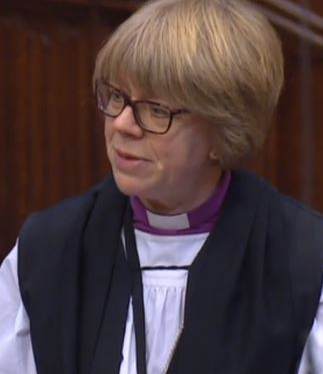
The Lord Bishop of London: My Lords, I declare my interests in the register. It is a privilege to participate in this debate about one of our most valued institutions and to follow some excellent contributions. One of the focuses of my work in this House has been reducing health inequalities. The NHS was founded in the face of extreme inequality, in the hope that financial means would not be the sole determinant of health. The universal service that is free at the point of use is something we can be extremely proud of.
The 75th anniversary of the NHS is very close to the 75th anniversary of the Windrush generation, which I will celebrate today. As we know, many of the passengers on HMT “Empire Windrush” took up roles in the NHS, which launched just two weeks later. When experiencing workforce shortages from 1948 onwards, British politicians visited the Caribbean as part of a recruitment programme that had 16 agencies in the British colonies by 1955. By 1977, 66% of overseas student nurses and midwives originated from the Caribbean. In the face of overt racism and unequal opportunities for professional development, their contribution has been truly extraordinary. Without it, the health service would not be what it is today.
I am sure much of our nation would say that the true treasure of the NHS is its workforce, whose example should be a great encouragement to all of us. In this House, I have not held back from highlighting the challenges that the workforce currently face: significant vacancies, sometimes poor working conditions and enormous pressure. The industrial action we have seen is a product of the erosion of trust between the front line and this Government. Since the passing of the minimum service levels Act in the last Session, what ongoing work is being done to build relationships of trust with the unions and other bodies to ensure that the concerns and needs of the workforce are truly listened to?
As I have said before in your Lordships’ House, the global majority heritage staff continue to face troubling challenges. The Care Quality Commission’s State of Care report highlights instances of tolerated discrimination and a lower chance of being represented in leadership and managerial roles. There are over 256,000 black and minority-ethnic nurses and midwives, but they are overrepresented in bands 1 to 5. When I was the Government’s Chief Nursing Officer for England, I commissioned the government Chief Nursing Officer’s black and minority-ethnic advisory group, which it was a joy meet with on its 22nd anniversary. The most recent race equality standard report from the NHS shows that there is progress heading in the right direction; although it is slow, it should celebrated.
Amid the celebration of this great institution, many challenges remain. The strain placed on the service is clear in key areas, including the number of people waiting for care and the significant workforce challenges. But there are also challenges with our health, distinct from our healthcare. Some 50% of people in the most deprived areas report poor health by the ages of 55 to 59, which is over two decades earlier than in the least deprived areas. It remains an injustice that where exactly you live can change the length of your healthy life in such a serious way. In light of this, what consultation has taken place with other departments to seize the opportunity of the Major Conditions Strategy to give new focus on health inequalities?
It is good to see the new integrated care systems becoming more established. I hope that we will see real progress in place-based and community-focused preventive care. Research published recently by the NHS Confederation shows that every £1 invested in community and primary care brings back £14 to the economy, compared to £11 per £1 for acute services. It is through working for a healthier population that the pressure will be lifted off the NHS and the opportunity to address health inequalities will be realised. I commend the small-scale projects happening in London, where I am. The community health and well-being worker model, which is being rolled out in Westminster, is already encouraging the uptake of health screenings that would otherwise not happen, management of low-level health conditions and promoting well-being. There is much to celebrate about the NHS but, as we have heard, there remains work to be done if we are to press ahead in the same spirit as the architects of the NHS 75 years ago.
Extracts from the speeches that followed:
Lord Cashman (Lab): My Lords, it is a real pleasure to follow the right reverend Prelate the Bishop of London, particularly given her experience in the NHS—and, may I say, her recent intervention in Synod on the issue of same-sex unions. It is also good to look around the House and see Members wearing the red AIDS ribbon, a powerful reminder that tomorrow is World AIDS Day and of what research, awareness-raising and the saving of lives can bring about when we work together. I particularly congratulate the Government on the Secretary of State’s announcement yesterday on increasing opt-out testing for HIV/AIDS and hepatitis C. That brings me to my first point, which is that it is vital that we do not forget the lessons learned from the recent Covid pandemic and the importance of simple but effective preventive public health measures in helping to protect the NHS against the financial and logistical burden of seasonal and other infectious diseases.
Ministers will recall that a targeted hygiene approach was applied to control transmission of Covid-19 and other infections in public areas, at COP 26 in Glasgow, and at the 2022 Commonwealth Games in Birmingham. The approach was extremely successful. If the Government were actively to promote targeted hygiene among the public and with owners and operators of public spaces, it could deliver a threefold benefit: building public confidence in using communal spaces and, by preventing illness, reducing pressure on the NHS and boosting productivity in the workforce.
Baroness Merron (Lab): In the wake of the Second World War, the Labour Government founded the National Health Service through the leadership of Prime Minister Clement Attlee and Health Secretary Nye Bevan. While the values on which it was founded still survive, its ability to deliver on them, as we have heard today, has been greatly diminished by the biggest crisis in its history and by stagnation; while the world, the whole of our country and the expectations and demands of the people in it have changed around it, not least through the widening inequalities in healthy lives and access to healthcare that the right reverend Prelate the Bishop of London so clearly identified. The current situation is so dire that leaders at the King’s Fund, the Health Foundation and Nuffield Health felt a need to write on the 75th birthday of the National Health Service to the leaders of each major political party, urging change.
The content of their letter was stark and bears reflection. According to it, the NHS has insufficient resources to do its job, fewer beds than almost all similar countries’ services, equipment that is out of date and inadequate, buildings that are falling down, and inadequate IT systems to do the job. It does not have enough staff, so people’s needs are not being met, whether they are patients on the receiving end or staff seeking to do the job; and it does not matter how hard-working those staff are because they are struggling to deliver care of a quality that people need and deserve. As my noble friend Lord Prentis emphasised in speaking about the whole team, whether we are talking about the cleaner or the consultant, all play their part. The letter also said that any plans to move care from hospitals to closer to people’s homes have seen movement in the opposite direction only. All of this, while public satisfaction is at its lowest level in 25 years, with no let-up in sight.
This is the key question that I always think of when we discuss waiting lists and the other challenges for the health service: can the Minister explain to your Lordships’ House how the Government got us to this stage? They have had 13 years in which to improve things; it is impossible to ignore the role of government—the role this Government have played since 2010.
Lord Markham (Con, DHSC): One of the key differences in inequalities in life expectancy, as raised by the right reverend Prelate the Bishop of London, is lung cancer. Of the nine-year disparity, one year is caused by lung cancer. That is why we have things such as mobile screening, which we take on the road to areas where lung cancer is most prevalent—for example, in some of the mining communities. Rather than the majority of people with lung cancer not being found until stage 4, when it is too late, in the areas where they have been doing this we are finding the majority of people in stage 1 or 2. That is so much better in terms of life chances. That is how we will achieve the target of detecting 75% of cancers by stage 1 or 2 by 2028. To give some context to that, we estimate that it will mean that 55,000 more people will be surviving as a result by then.
 The Church of England in Parliament
You must be logged in to post a comment.