
The Bishop of Chelmsford spoke in the Archbishop of Canterbury’s debate on the work of the Families & Households Commission and the “Love Matters” report on 8th November 2023, bringing up the need for stable and affordable housing:
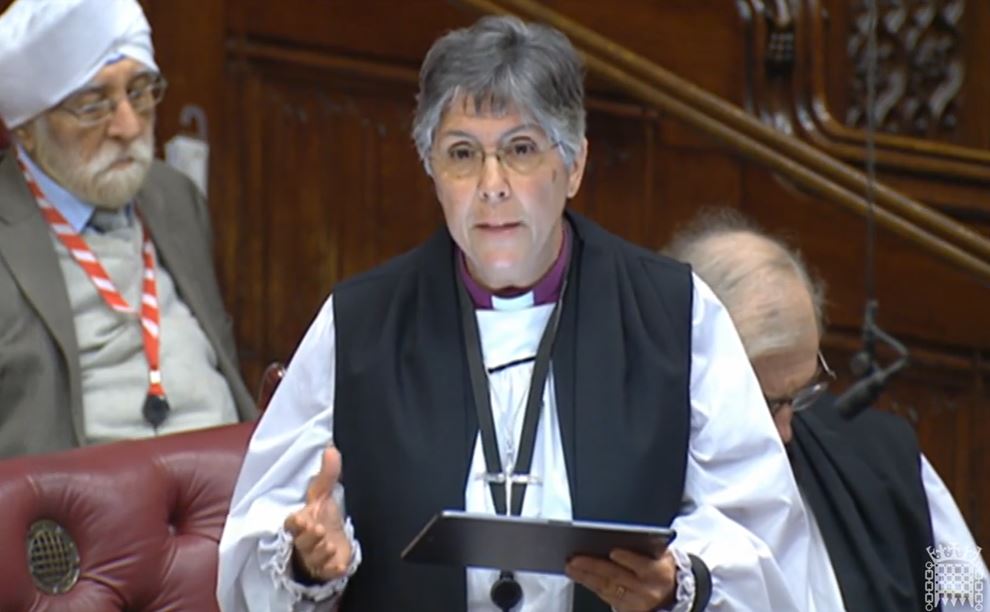
My Lords, I too thank my most reverend friend the Archbishop of Canterbury for securing this important debate. Love Matters is, as noble Lords have already remarked, impressive for its scale and breadth. Covering subjects from tackling child poverty to valuing single people in our churches, the report is able to draw some creative links across a range of topics.
Today, however, given my role as the lead bishop for housing in the Church of England, I want to focus my remarks on the report’s findings on bricks, mortar and the communities that well-designed, affordable housing can foster. It is in houses and flats that families and households of different shapes and sizes are built, and housing which, done right, creates homes and can enable the health and prosperity of those who live in them. I want here to thank in particular the noble Lord, Lord Mann, for his valuable contribution on housing-related issues in this debate.
Noble Lords will know that this report is the last in a series of three. The first, published in 2021, was on the work for which I am now responsible: housing, church and community. I cannot take any credit for the report itself, but I am delighted to be involved in that work. The report, to which the most reverend Primate the Archbishop of Canterbury has already referred, was called Coming Home, and it recommended, among other things, that housing needed to be stable, affordable and of high quality to enable people to put down roots and build healthy lives, families and neighbourhoods.
The principle of stability goes to the heart of what I want to contribute to today’s debate—again, “stable” was a word used several times by the most reverend Primate in his opening remarks. For too many people, housing is not stable; it is unaffordable; it is not decent; the tenure is insecure and thus it is not a long-term home but a temporary base where it is impossible to put down roots. Such housing is no foundation for strong families and households. By contrast, where there is high-quality, affordable housing, it is much easier to find secure, healthy and happy families.
Let me make four points on stable housing to underscore this point. First, stable housing is healthy housing. Poor-quality housing—indicated by damp, mould, poor insulation and heating, unsafe installations, lack of natural light and overcrowding—can and does affect the health and well-being, both mental and physical, of its occupants. Poor health has knock-on effects for families—lower educational outcomes, for example, or higher caring costs—and in particular, as we have heard, for children, who we know are all too often at the sharp end of the poor health outcomes caused by low-quality housing.
The cost to the NHS of treating people whose health has been impacted by poor housing conditions is estimated at £1.4 billion per year. Unhealthy homes are a widespread and serious barrier to the creation of stable, healthy households and families. Looking back to the peak of the pandemic, as Love Matters does, we can see that housing inequality can be a driving force behind health inequality. I reiterate the call made by my most reverend friend the Archbishop of Canterbury that high-quality homes, and especially social housing, where the Government can have a particular hand in improving standards, should be placed at the centre of manifesto pledges ahead of the next election.
Secondly, stable housing is affordable housing. To make starting a family viable for many young couples, particularly in areas including London and the south-east where housing costs are high, genuine affordability must also be considered. If, as for many young couples, even on a dual income, the only financially viable option is a one-bedroom flat with little space and scant disposable income, couples who wish to start a family may have no choice but to delay.
At the other end of the life of a relationship, the stresses and strains of managing finances are one of the biggest contributing factors to relationship breakdowns. Where housing eats up a large slice of a household’s income, extra pressure is piled on at every stage.
Housing affordability is not an abstract concept over which we have little control. The Government can take steps in the here and now to relieve this pressure on households. In the Autumn Statement, the Chancellor made the welcome and long-overdue announcement that local housing allowance would be unfrozen and brought back in line with its former level, covering the lowest 30% of local rents in a given area. While I warmly welcome the change, it is also vital that it comes into effect as soon as possible to provide a lifeline for those struggling to afford housing costs, rather than waiting until April as currently proposed. Winter is the toughest time for families and households to make ends meet. The vision of the Love Matters report for a society in which families are strong, healthy and happy will simply not be possible if the support available to those on the lowest incomes does not cover the basics. Will the Government look again at the timing of the change to LHA to promote healthy, strong homes over the coming winter months?
Thirdly, stable housing is for the long term. Earlier this year, figures from the Department for Levelling Up, Housing and Communities showed that record numbers of households were stuck in temporary accommodation—over 100,000 households between January and March, with over 130,000 dependent children. For refugee families, the move-on period from temporary accommodation when an asylum claim has been granted can in practice be little more than a couple of weeks. How are young refugee families looking to set down roots in the UK, often after a drawn-out and traumatic experience, supposed to feel that they can begin building a settled home? We all want to see stronger families and households, but without a commitment to long-term housing options it is not clear how this can practically be achieved.
Fourthly, stable housing is tailored to the needs of its occupants. I am grateful to the noble Lord, Lord Davies of Brixton, for drawing attention to this matter. Not every household or family will fit one of the familiar flats or homes most common to our cities, towns and villages. We need to see more intergenerational family homes built, where grandparents can live alongside their children and grandchildren, with each able to support the other and maintain a level of independence. Such housing should take into account the family in all its fullness, including uncles, aunts, cousins and neighbours, who are like family to us but are not usually considered in the setting of family policy.
There are numerous benefits to building this kind of housing: lower combined housing costs, childcare readily available from grandparents, reduced loneliness and lower care costs, to name just a few.
We know that we need to build more houses, but I take this opportunity to call on local authorities and those involved in commissioning new projects to look creatively at the breadth of housing offered. The Church of England is committed to leading by example, and as bishop for housing I am overseeing the work to change the way the Church thinks about and manages its land and property assets. Our goal is to build many more stable homes for families who desperately need good housing in our villages, towns and cities. However, I am disappointed that it is taking us so long to develop this work. We still have much to do to agree and implement a whole-Church approach to using our assets for the common good. We have made some real progress, but there is so much more to do to make the really significant impact on the housing crisis envisioned in the Coming Home report, which is possible.
I end by reiterating the words of Love Matters:
“Housing is more than bricks and mortar—it is where we should all feel safe”.
Stable housing is healthy, affordable and appropriate—and one of the most fundamental building blocks of happy and healthy families. We might get some way towards achieving the visions set out in the Archbishops’ Commission on Families and Households by robust and creative investment in this fundamental building block.
Extracts from the speeches that followed:
Lord Cormack (Con): It is appropriate to turn to the role of government. I agree with my noble friend Lord Robathan, who made the point that he was not a supporter of the nanny state—he did not put it in those words. Nor am I, but I think that the Government have a real task to encourage family life and to do all they can, to touch on the point made by the right reverend Prelate the Bishop of Chelmsford, to ensure that there is proper housing available. It is difficult to hold a family together if it has to live in the sort of conditions that the noble Lord, Lord Griffiths of Burry Port, so movingly described in his speech.
Baroness Twycross (Lab): The right reverend Prelate the Bishop of Chelmsford focused on the need for stable, affordable and decent housing. As the noble Lord, Lord Mann, highlighted, there is an extreme need for housing, and income determines whether people can afford decent homes. A good start in life can be enhanced by external support, but a safe, warm home is essential. The report that we are debating makes it clear that:
“Overcrowding and unsuitable housing can cause stress, depression and anxiety”.
The housing market in many parts of the country, both rural and urban—London was mentioned—is effectively broken and pricing people out of decent homes. The right reverend Prelate the Bishop of Chelmsford and my noble friend Lord Davies highlighted the need for multigenerational homes. The Labour Party plans to build 1.5 million homes over five years, including social housing, to provide families with a secure home in order to build a family, with first-time buyers getting first dibs on new homes.
Viscount Younger of Leckie (Con, DWP): The House will be aware of the £276 billion spent on welfare in Great Britain over 2023-24. I will not rehearse all the Autumn Statement announcements, because the House has heard them on several occasions over the past two weeks or so. However, as I said earlier, I will focus on housing. The noble Lord, Lord Mann, raised this, and the most reverend Primate also spoke about the importance of family, where they live and how they live, and the right reverend Prelate the Bishop of Chelmsford spoke about the types of houses, the intergenerational focus on the buildings and, frankly, making it a lot better for families to live near each other so that we have the influence of the intergenerational aspects. Those are incredibly important points, which I certainly take on board.
In the meantime, as the House will know, in the Autumn Statement the Government are raising the local housing allowance rates to the 30th percentile of local market rents in April 2024, which will benefit 1.6 million low-income households by on average £800 a year in 2024-25, and of course help many who are in poverty. The right reverend Prelate the Bishop of Chelmsford asked about timing. I will certainly take her point back about perhaps bringing the date forward but I certainly cannot offer any reassurance on that.
 The Church of England in Parliament
You must be logged in to post a comment.