
On 8th December 2023, The Bishop of Durham spoke in the Archbishop of Canterbury’s debate on families, mentioning the importance of preparation when entering marriage, and the need for supportive and strong communities:
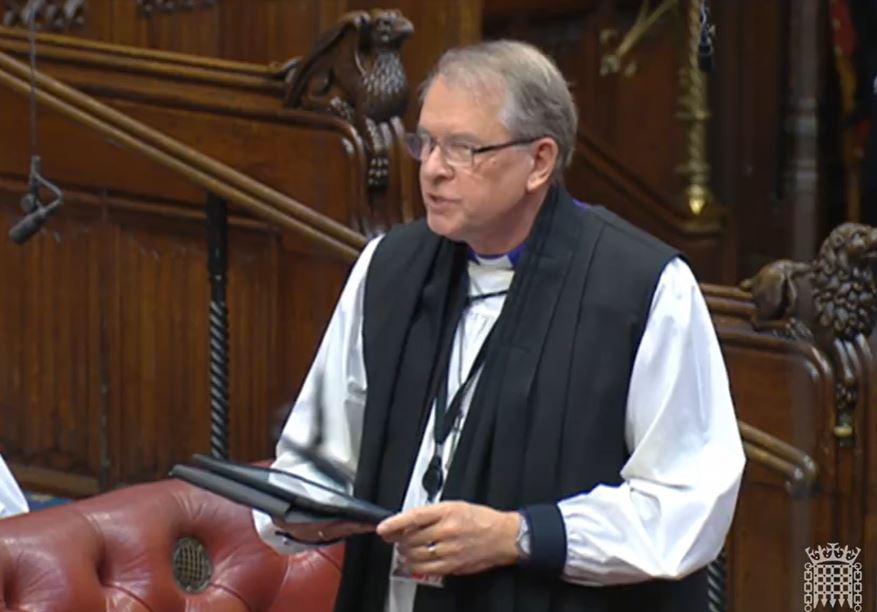
The Lord Bishop of Durham: My Lords, I thank the most reverend Primate the Archbishop of Canterbury for holding this debate on a matter that is foundational to not only the well-being of us as individuals but the whole of society. I should obviously declare my interest as co-chair of the commission that produced the report. I also thank him for the privilege of being asked to co-chair it, alongside Professor Janet Walker. It was an honour to work with her and the 10 other commission members in listening and speaking to children, young people and adults from all faiths and all walks of life.
I thank each of the commission members, who generously gave their time and expertise voluntarily to contribute to this. Their work has been invaluable. I also pay tribute to the Children’s Commissioner for England for the way in which she shared with us her work, which took place in parallel. Our conclusions are remarkably similar.
My most reverend friend the Archbishop of Canterbury opened the debate by speaking poignantly on the importance of family. I will speak on what is at the very heart of families, which is relationships. Throughout the commission, we met and spoke with people from across the country. They were people from different backgrounds, ages, cultures and faiths. Despite these differences, there was a theme that echoed throughout all our conversations: the importance of family and loving relationships.
For an individual and family to flourish, each person must have their basic needs met—water, food, clothing, enough money to live on and a roof over their head—but true flourishing comes from loving relationships. It is through these relationships that we find support, connectedness and belonging. Families today come in all shapes, sizes and structures, but the commission found that what matters most is the quality of the relationships and love that we receive and give. We are made for loving relationships—to love and be loved.
Family life is messy. Let us be clear: there are huge joys in family life, but there are also the stresses of life that can put strain on relationships. The breakdown, separation or divorce of a committed couple relationship can be extremely painful and particularly detrimental to any children involved. Entering a long-term committed couple relationship with another individual is one of the most significant decisions we can make, yet there is often little preparation beforehand.
The pre-marriage course developed by Holy Trinity Brompton is a successful example of a course that helps to prepare couples considering marriage and wishing to build a strong and lasting relationship. The course encourages couples to discuss issues they may not have considered, their hopes and fears, and the everyday worries that they will face together. Those who have done it are positive about its value. Throughout the commission, we found consensus that marriage preparation should be made available to everyone forming a committed couple relationship. This is because we believe that marriage, with the seriousness of the vows undertaken and the covenant made, is the best option. Will the Government ensure that all registrars are required to signpost couples to marriage and relationship preparation, available in their community, when the couple give notice of an intention to marry or form a civil partnership? Please note that we do not think registrars should do it; they should signpost to the experts who can.
It is important for couples to be supported not only on entering a lifelong committed relationship, but at all stages. Relationship support should always be available, particularly during significant life transitions, whether that be entering marriage, having children, experiencing conflict, or grief and bereavement. I believe there is particularly great potential for relationship support to be made available through the emerging family hubs. There is already a welcome focus on parent-infant relationship support within family hubs, but greater emphasis on parent-relationship support would further benefit the whole family. It has been encouraging to see many family hubs opening their doors for the first time in recent months, as part of the Family Hubs and Start for Life programme. I hope these hubs will be places where families can go in times of need and where the whole family can receive the support it needs to truly prosper.
The family hub guidance provided to local authorities clearly states:
“Voluntary, community and faith organisations should be key partners, collectively improving the reach and impact of additional support for seldom heard parents and families”.
Despite being well placed in communities and having the ability to help to deliver family hubs cost-effectively, there is currently very little evidence of engagement with the faith communities. What steps will His Majesty’s Government take to further encourage local authorities, and hold them accountable in partnering with voluntary and faith communities as they develop family hubs?
Research has demonstrated that the foundations of our relational capability are laid down in childhood. Learning about relationships should, therefore, begin as early as possible in a child’s life and continue throughout their years at school. Friendship and family relationships, as well as intimate couple relationships, should be embedded in the school curriculum along with the relational skills that are crucial to loving relationships, such as dealing with conflict and communication. This should include the good of marriage as a covenanted lifelong relationship, but relationships cannot simply be taught from textbooks. The ethos, behaviour and culture at a school, and how staff relate to one another, will teach a child far more on how to conduct healthy and caring relationships than any worksheet will ever do.
Interestingly, on the train down this morning I found myself sitting opposite an RE teacher coming down for a course, who is also interested in relationships education. I tested this out with her. She said, “You are absolutely right, Bishop. The young people in my school do not want relationships education to be about the manual aspects of sex. They want to know how to be better friends and how to relate better to their parents and one another. That is the heart of what they want from relationships education”.
Discussions about the importance of people who remain single forming loving relationships should also be included in relationships education. According to the Office for National Statistics, England saw more than an 8% increase in people living in single-person households between 2011 and 2021. People remain single for a wide number of reasons—some through choice; some because they have not yet met a life partner; some due to separation, divorce or death. Our culture can idolise romantic relationships and indeed marriage, at times causing those who are single to feel inferior. This has been particularly true of the Church, but single people are just as much relational and family people as those who are married, have children or are in couple relationships.
For many, family stretches beyond the biological and includes friends, colleagues, neighbours and members of their community. Support should not be limited to those in couple relationships; everyone in society—regardless of their relationship status—must be supported and valued. I am reminded that Jesus remained single throughout his life, rooted in family and community. He was single, but a family person—although of course his view of family stretched to include those way beyond his close biological family. I encourage noble Lords to consider how we can reflect his attitude in the way that society values those who are single and in the policies that we make. How can we ensure that the value and dignity of each person, regardless of their relationship status, is truly recognised in our society?
I offer a brief comment to the noble Lord, Lord Davies of Brixton, on reference to the elderly. He is absolutely right; our report is weak on that, but that is because we already had the Housing Commission report and the social care report, which dealt with many of the issues he raised. He needs to look at the three together to see the whole picture. I hope that helps.
Today we are lifting the lid on a matter that is rarely spoken about in this House yet impacts us all: love. The commission concludes that
“love is central to how people think about ‘family’ and it is necessary for families and households to flourish. Love provides us with a blueprint for strong relationships. The New Testament provides a vivid yet simple understanding of love in its purest form which sets the principles for how we should relate to each other. In St Paul’s first letter to the Corinthians”—
I make no apology for repeating what my right reverend friend the Archbishop of Canterbury said earlier—
“we are told that ‘Love is patient; love is kind; love is not envious or boastful or arrogant or rude. It does not insist on its own way; it is not irritable or resentful; it does not rejoice in wrongdoing, but rejoices in the truth. It bears all things, believes in all things, hopes all things, endures all things. Love never ends.’ This text, which is popular at weddings and funerals, frames love not as an unattainable ideal, but something which is deeply practical, with Jesus Christ as our teacher. We see a description of love being worked out in human circumstances, relationships and situations with kindness and patience, laying aside boasting, pride and dishonour. It speaks of trust and perseverance rather than keeping records of wrongs or being easily moved to anger. What these verses … make clear is that love is not a feeling but an attitude, a choice, a commitment to give to, and promote the flourishing of the other. Love puts others before self. If every family and household could aspire to this kind of loving as the foundation on which flourishing can be achieved, then our society would be stronger, kinder, fairer and more just”.
Love is often separated from public life and policy-making, yet it is through loving relationships that we truly flourish. By placing them at the centre of our policies, we can reimagine a society where everyone is supported and valued, regardless of their background, culture, age, relationship status or family structure. Is this not the society we all desire to live in?
Extracts from the speeches that followed:
Lord Addington (LD): My Lords, a debate like this is an odd one: by going through it, you suddenly realise the great reach of the Church of England. It is a big institution. It has done many things which are good and one or two things that you might disagree with, but you cannot deny its reach and power. Also, I feel that any report that gives a greater number of recommendations to itself to change than government probably deserves some attention from everybody. It has not said that its own house is correct—that gets it a hearing, at least from me, when it comes to the process.
On the emphasis on family, anybody who has done anything in the many fields in which the Church is involved knows it as a delivery structure or campaigning organisation. This report is mainly about children. I enjoyed the thrust of the noble Lord, Lord Davies, and the counter and parry by the right reverend Prelate the Bishop of Durham. That was one of the little things I enjoyed in this debate. Fair enough: age was not mentioned, but it had been mentioned somewhere else.
I was talking about family and children. Children who have problems and get through them usually have a family behind them. They have an immediate support structure, which knows what is going on, recognises it and campaigns.
Baroness Twycross (Lab): The report notes that love is rarely referred to in any analysis of family life, nor in policies or services. It also concludes that love on its own is unlikely to be sufficient to ensure that everyone can flourish. I am not sure the country is ready for manifestos next year leading with a pledge on love, but I think the country is ready for a commitment to ensure that everyone in society has their basic needs met.
The right reverend Prelate the Bishop of Durham referred to the commission’s sentiment that, without a roof over our head, and without food or money, daily life becomes a huge struggle for survival. I want to focus a bit on low income. Low income has been found by the Trussell Trust to be the main driver of rising hardship and hunger. When I started doing research on food poverty as a new member of the London Assembly more than 10 years ago, my first report aspired to a zero-hunger city. The truth is that, since then, the aspiration to achieve this in London and around the country is even further away. Shockingly, the Trussell Trust is, for the first time, expecting to provide more than 1 million food parcels this Christmas, with families with children continuing to be the most likely to need support from food banks.
(…)
Your Lordships’ House debated childcare and early years last week. During that debate, it was made clear that many early years and childcare providers were struggling to stay afloat while many parents were struggling to pay for childcare —in some cases, the cost were higher than their rent or mortgage payments. As has been widely reported, there is a staffing crisis in the sector while the cost of doing business crisis has seen thousands of nurseries shut their doors. The right reverend Prelate the Bishop of Durham highlighted the role that family hubs could play in supporting family relationships. Will the Minister commit to the Government considering this?
(…)
The right reverend Prelate the Bishop of Durham highlighted the need to support relationships through marriage preparation. I should probably declare an interest as somebody who went to a church preparation session before I got married. The potential for more formal signposting by registrars would surely be beneficial to many.
Viscount Younger of Leckie (Con, DWP): I echo the report’s celebration of all forms of loving relationships. As the most reverend Primate and the right reverend Prelate the Bishop of Durham said, they are significant for every individual, whether they opt for a life as a pair within a family unit or as a single person. We must respect and recognise the different family arrangements and structures, so that we can provide the right types of support. However, I listened very carefully to my noble friends Lady Stowell, Lord Cormack and Lord Robathan. They spoke passionately, particularly my noble friend Lady Stowell, about the value and benefit of marriage and the need to keep promoting this, and they are absolutely right.
The right reverend Prelate the Bishop of Durham echoed the view, which was also raised by the noble Baroness, Lady Twycross, that the marriage ceremony is enormously important, and the preparation for the ceremony—preparing for the commitment of marriage—was at the heart of this. The right reverend Prelate cited a role model for this at the Holy Trinity Brompton. I also declare an interest that I believe that I am a beneficiary of good preparation for marriage, having just, last June, celebrated 35 years—not quite as many as some others in the Chamber. I also noted the question raised by the right reverend Prelate the Bishop of Durham about the registrar possibly doing some signposting. I will reflect on that, and I will certainly get back to him, and put a letter in the House Library regarding that important point.
In terms of supporting marriage, I remind the House that the Government do indeed support the institution of marriage. The House will know that we introduced the marriage allowance in 2015 to recognise marriage and civil partnerships in the tax system as just one example of our support for marriage. The Government also have a strong track record of advancing LGBT rights, including the introduction of same-sex marriage in 2013. I was deeply moved by the speech from my noble friend Lord Herbert.
(…)
In addition, the start for life and family hubs programme has created a network of centres for families with children up to 19, or up to 25 where the child has a disability. These family hubs link professionals, local partners and faith groups to support families. The right reverend Prelate the Bishop of Durham spoke about family hubs very eloquently. They also support the very important early years development, which I know is a priority for the Royal Foundation and her Royal Highness the Princess of Wales. I am sure that the House will welcome the joined-up support being given by midwives and family hub workers to expectant and new parents, helping them with both their child’s and their own health and well-being.
The right reverend Prelate the Bishop of Durham asked how the Government will ensure that faith groups are involved in family hubs, and that they provide the necessary relationships advice. He is right: faith groups are at the heart of many communities and therefore are a key component of the family hub model. We have published guidance for local authorities on the services we expect family hubs to offer, including helping families access support for separating and separated parents, and to reduce parental conflict.
(…)
The right reverend Prelate the Bishop of Durham spoke about the two-child limit, which I was certainly expecting to speak about this afternoon. He will probably know what my answer will be; my noble friend Lady Stowell alluded to it. The two-child limit has been extensively debated in this House. On inception, the policy had two clear intentions: first, to make universal credit fairer and more affordable to the taxpayer; secondly, to make sure those supporting themselves through benefits face the same financial choices around the number of children they can afford to have as those not on benefits. The House will be aware of the exceptions that apply. Child benefit continues to be paid for all children in eligible families.
The Lord Archbishop of Canterbury: The right reverend Prelate the Bishop of Durham spoke about the two-child limit, which I was certainly expecting to speak about this afternoon. He will probably know what my answer will be; my noble friend Lady Stowell alluded to it. The two-child limit has been extensively debated in this House. On inception, the policy had two clear intentions: first, to make universal credit fairer and more affordable to the taxpayer; secondly, to make sure those supporting themselves through benefits face the same financial choices around the number of children they can afford to have as those not on benefits. The House will be aware of the exceptions that apply. Child benefit continues to be paid for all children in eligible families.
 The Church of England in Parliament
You must be logged in to post a comment.