
The Bishop of Durham spoke in a debate on what steps the government are taking to promote the principles of the Universal Declaration of Human Rights on 11th December 2023, stressing the dangers of the potential incompatibility of the government’s Safety of Rwanda (Asylum & Immigration) Bill with the UDHR:
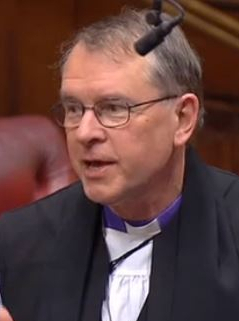
The Lord Bishop of Durham: My Lords, I add my thanks to the noble Baroness, Lady Anelay of St Johns, for securing this debate, and for the way in which she has stood for these issues for many years.
The United Nation’s adoption of the Universal Declaration of Human Rights was a milestone in the history of our world. It marked a global commitment to put human beings above conflict, above the politics of division and above economic gain, granting each individual dignity without discrimination. Though we are 75 years on, promoting the human rights laid out in the declaration remains as vital today as it was in 1948.
The principles and values of human rights lie in the conviction that each human being is unique, made in the image of God and loved by God. Each person is valuable for who they are, not what they are able to do. Thus it applies to every infant and child, and to every frail elderly person, as much as to those who are regarded as wholly fit and able.
In the first place, if we are to promote human rights globally, it is essential that we uphold them in our own nation. Article 16 of the UN declaration states:
“The family is the natural and fundamental group unit of society and is entitled to protection by society and the State”.
As raised in the debate last Friday in this Chamber, brought by my friend the most reverend Primate the Archbishop of Canterbury, family is crucial to our flourishing as humans. However, this is regrettably not reflected in all our Government’s policies. The two-child limit, for example, continues to push families into poverty, withholding support for children due simply to the number of siblings they have.
I now raise my concerns regarding the recent decision by the Government to override their commitments to global human rights agreements. Although the Universal Declaration of Human Rights is not totally legally binding, it is a declaration of the core values that underpin the human rights agreements that the UK has since committed to in a range of international agreements and in the foundations of many of our laws.
Rwanda is a country that is close to my heart. I have visited it 20 times since 1997. It has a deeply painful history of suffering, yet I have observed at first hand how, as a nation, it has rebuilt itself in the past 30 years, bringing those who violated the human rights of others in the past to justice. It demonstrated to the world a remarkable way of handling this, at all levels of society, through its Gacaca courts. However, given reports from Human Rights Watch, as well as the United States Government, on the violation of human rights within Rwanda in recent years, questions are now being raised that our Government can simply rule that the country is indeed safe for refugees and asylum seekers to be sent to.
On the face of the Safety of Rwanda (Asylum and Immigration) Bill lies a declaration from the Home Secretary that he is unable to state whether the Bill is compatible with the UK’s human rights obligations. In producing such a Bill, we are disregarding the humanity of asylum seekers as fellow human beings—fellow human beings who are equal in dignity and possess the same freedoms as ourselves.
I remind the House that this is not an issue of boats; it is an issue of people. As a nation, we have a proud history of upholding and promoting human rights across the globe. Rightly, these human rights apply no matter the nationality a person is born to, no matter their method of travel or entry to a country, and no matter how many siblings they have.
Human rights also always imply human responsibility for one another. If we each want these rights, then we also each must defend them for others. We cannot decide to remove rights from others without diminishing ourselves and accepting that we thus remove those rights from ourselves. We have been at the forefront since 1948 of promoting human rights. Will His Majesty’s Government commit to continuing to lead the way, rather than, as currently appears, stepping backwards from that leading role?
Extracts from the speeches that followed:
Lord Collins of Highbury (Lab): My Lords, I too congratulate the noble Baroness, Lady Anelay, on marking Human Rights Day and the 75th anniversary of the Universal Declaration of Human Rights; it is really good that this Chamber has the opportunity to mark these important events. The declaration makes it clear that universal human rights are part of what it means to be human, not gifts granted by the state. As we have heard, the declaration is not formally binding on UN member states, but it did inspire the European Convention on Human Rights and, let us not forget, our own Human Rights Act. My noble friend Lady Chakrabarti and other noble Lords, including the right reverend Prelate the Bishop of Durham, are absolutely right to draw attention to the contradictions and tensions inherent in saying one thing and then doing something else.
It is important to understand that the UN, despite all its faults and all the problems, is an important part of our multilateral system. It deserves to be recognised as the place where we can raise our concerns about human rights violations and abuses. As we have heard, we are a member of the UN Human Rights Council, but there are other important forums where human rights can be raised, not least the General Assembly, ECOSOC and the Security Council, with all their imperfections, but also the UN Commission on the Status of Women. These are vital in terms of hearing voices in the international forums that are not necessarily heard. I pay tribute to the Government for leading debates at the HRC, and for raising issues and tabling resolutions concerning Syria, Sudan, South Sudan—the noble Baroness played a prominent part in those—and of course Sri Lanka. They have been incredibly important in tabling and voting on resolutions and in building a difficult consensus. It has not been easy, but we have been leading on that, including on Ukraine, Russia, Afghanistan and Iran.
Baroness Swinburne (Con): I defer to the right reverend Prelate the Bishop of Durham’s extensive knowledge of Rwanda, but the Box has prepared some remarks for me regarding the state that Rwanda is currently in. I can assure him that we are committed to upholding human rights everywhere, including in countries that we work closely with. Rwanda, of course, is deemed a safe and secure country with respect to the rule of law. It is a state party to the 1951 UN refugee convention and the seven core UN human rights conventions. The migration partnership fully complies with all national and international law, including the UN refugee convention and the European Convention on Human Rights. With all international partnerships we have thorough, ongoing dialogue in which we will raise concerns, including on topics such as human rights. Our close co-operation with Rwanda on a range of issues, including climate, development and the Commonwealth, enables us to raise these concerns at the highest levels.
 The Church of England in Parliament
You must be logged in to post a comment.