
On 18th January 2024, in Grand Committee during a debate on refugee integration, Bishop of Durham gave a speech on the importance of community support for refugees, particularly in access to housing under the government’s current policy, asking whether the government would extend the current “move on” period for refugees leaving home office accommodation:
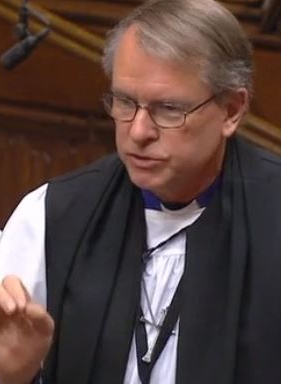
The Lord Bishop of Durham: My Lords, I declare my interests as laid out in the register.
Successful integration into life in the UK is critical for refugees to rebuild their lives, enabling society to benefit from the valuable skills that they bring as a gift to this country. However, current policy makes integration difficult, leaving them with very little support, particularly in the early period.
My friend the right reverend Prelate the Bishop of London raised the 28-day move-on period in this House last month and in a letter to the Home Office with other faith leaders. I echo her concerns. Current policy gives refugees 28 days from the issuing of a biometric residence permit until they can no longer access asylum support and accommodation. In practice, refugees are often given much shorter notice to find accommodation and means to support themselves.
Last week, I witnessed this in the north-east, when a refugee, whom I have known for some years, was given a matter of hours by the Home Office to find new accommodation—he has just recently been given his status. As a male whose family has not yet joined him in the UK, he was not considered a priority for housing, so private rental was his only option. He is in full-time paid work as a social carer. Fortunately, the local authority agreed to provide a week in a guest house as he found a more permanent solution, but he was left in need of a guarantor, a deposit and a first month of rent. Had it not been for the generosity of local connections that he had made, plus the willingness of the local authority and charity sector to provide support and guidance, it would have been a very different story.
The 57% of refugees who end up sleeping rough, or in a hostel or night shelter, when they leave asylum accommodation are not as fortunate. Those who need to access universal credit when granted refugee status must endure the five-week wait for their first payment.
Considering that the move-on period is 28 days yet the wait for a first universal credit payment is five weeks, how will the Government prevent those who have recently been granted refugee status but not yet found employment experiencing homelessness and destitution? Will they extend the move-on period to 56 days, so that it is compatible with the universal credit processing time or, as a minimum, correctly and clearly implement the current policy to ensure that all refugees truly have 28 days from receiving their BRP to leave their asylum accommodation?
I commend the Government for adopting community sponsorship as a safe and legal route to the UK. Community sponsorship has proven to help refugees to successfully integrate much more quickly, with the sponsoring communities providing wraparound support. I ask the Government what plans they have to upscale and promote this scheme, so that more refugees can integrate into life in the UK.
Refugees, when seen as a gift not a problem, have so much potential to contribute to our communities and economy. It is vital that newly recognised refugees receive the support they require with housing, employment, language skills and building social networks. Only then can they successfully integrate, rebuild their lives and fully contribute to life in the UK, which is exactly what they want to do.
Lord Gascoigne (Con): The right reverend Prelate mentioned his right reverend friend the Bishop of London, and my understanding is that there is some outstanding correspondence and that one of the Home Office Ministers has since written. I spoke to the Minister this morning, and he wanted me to pass on that he is aware that there needs to be a response to that. He is happy to have the conversation once he is in a position to do so. I assure noble Lords that the department is on it and they will meet.
There were a number of other issues—I have written them down—but, in the interest of time, I will just thank the noble Lord, Lord German, again for raising this debate, and all those who participated in the debate. I hope one of the things we can take away is that the Government recognise the importance of supporting refugees towards integration. It is certainly not the case that we see them as a burden, as was said; we do not. We continue to explore how refugees can be supported towards integration more effectively and how to improve their outcomes. That is why we have been testing a different model of support through our recent refugee transition outcomes fund pilot, as mentioned, and it is why this programme and the new Refugee Employability Programme are being evaluated. This is so that learning can be captured and can inform policy developments in this space.
(…)
The Lord Bishop of Durham: Will the Minister write to me about community sponsorship? He was meant to hit that out of the park for six as a positive, and he did not.
Lord Gascoigne: I thank the right reverend Prelate. I will write, and I apologise profusely—there are a number of other issues that I have not had a chance to address.
In conclusion—I say to the Whip that I am conscious of time—it is in refugees’ interest and that of the country as a whole that they are able to adapt to life in the United Kingdom, build rewarding and happy lives here, and contribute to society.
 The Church of England in Parliament
You must be logged in to post a comment.