
On 29th January 2024, the House of Lords debated the the Safety of Rwanda (Asylum & Immigration) Bill. The Bishop of Durham spoke in the debate, questioning, based on his experience of the country through his role as Bishop, whether Rwanda would be able to adequately support refugees relocated from the UK, and highlighting the risks to refugees in the country, particularly in terms of modern slavery:
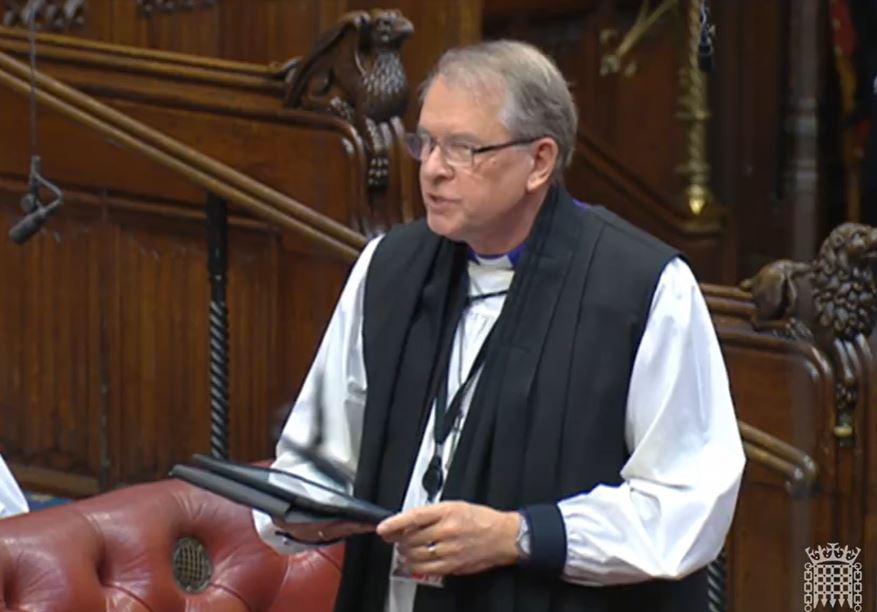
The Lord Bishop of Durham: My Lords, I declare my interests as laid out in the register. I stand in agreement with the arguments already made regarding the domestic constitutional, international standing and human rights concerns surrounding this Bill. I echo the belief that we should not outsource our moral and legal responsibilities to refugees and asylum seekers. However, today I hope to bring some insight to this debate through my own experience of Rwanda.
Rwanda is a country that I love. It is a country that I have travelled to on 20 occasions since 1997. I have observed the amazing transformation of Kigali and some aspects of the whole nation. My visits take me to rural villages, small towns and cities, not simply the glamour of a great international city. I have had the privilege of becoming friends with many local people whom I have met and stayed with there. The conversations I had there last August further led me to conclude that this policy will simply not work.
Under the new UK-Rwanda treaty, Rwanda is required not to remove any person relocated under this partnership. Instead, those sent to Rwanda will remain in the country and live there for the foreseeable future. However, is Rwanda truly capable of delivering the support and opportunities required for each of these refugees and asylum seekers to rebuild their lives? Can Rwanda offer enough employment opportunities for them to provide for themselves, when many of its young people are leaving because there are no jobs? In Rwanda you need Kinyarwanda and English. Will adequate language training be available to enable those sent there to successfully integrate? Locally, also, Kigali residents know where a few hundred might be initially housed—they offered to take me to see it—but seriously wonder how thousands would, or even could, be received with dignity.
From what I have observed during my time spent in Rwanda, there will not be enough in all of these areas. Low incomes in the country require people to rely on their own land to provide crops. However, those removed there from the UK will not have ownership of, or access to, such land. In a country without high levels of social security, who will ensure that these people do not face destitution?
Each time I have travelled to Rwanda, I have been met with great kindness and hospitality. I am aware, though, that this is not the case for every individual who steps foot on Rwandan soil. I note, for example, the arrest of pastors who criticised the Government in 2018, following the closure of churches due to legislation, some of which made sense. How can we ensure that Rwanda is safe for people of all faiths to practise their religion? Courts and decision-makers should not be compelled to treat Rwanda as safe without a commitment to ongoing scrutiny. Simply put, the Bill is not workable either in the UK or in Rwanda.
My right reverend friend the Bishop of Bristol regrets that she cannot be in her place today, but I express her concerns that the Bill might also create a greater risk to victims of modern slavery. There is reason to be sceptical that survivors will be as safe in Rwanda as they would be in the UK. According to the 2023 Global Slavery Index, prevalence of modern slavery in Rwanda is more than twice as high as in the UK, and Rwanda is not a signatory to ECAT.
I further worry that this legislation will apply to people who have been receiving support through the UK’s national referral mechanism for some time. Could this support be replicated to the same quality in Rwanda, and what would be the impact of removal of any such people on their physical and mental health? My right reverend friend the Bishop of Bristol will seek to pursue this issue in Committee.
We are speaking of some of the most vulnerable people, many of whom have experienced the devastation of war and conflict, leaving behind their homes and livelihoods. They are human beings, each with value and deserving of dignity. We need solutions where people are provided with adequate support and opportunities to rebuild their lives. I and many others in this House have made many proposals as to how this can be done better. I am afraid that the Bill will not achieve it.
Extracts from the speeches that followed:
Lord Clarke of Nottingham (Con): As time goes by in my career, I always fear echoes of the warnings that Quintin Hailsham used to give us all about the risks of moving towards an elected dictatorship in this country. The sovereignty of Parliament has its limits, which are the limits of the rule of law, the separation of powers and what ought to be the constitutional limits on any branch of government in a liberal democratic society such as ours.
The way this should be resolved is for the Government to say that the facts have changed. We are not hearing or testing arguments. I am meant to cast a vote as to whether Rwanda is safe, and I have received an email, the text of the Government’s treaty and the Explanatory Notes. I do not have the expertise on Rwanda that the right reverend Prelate the Bishop of Durham has just demonstrated. I have never been there. I know that it has been a one-man dictatorship for more than 20 years, that we sometimes give refugee status here to people fleeing persecution in Rwanda and, indeed, that it has a rather dodgy record—not as bad as some African countries—on human rights in various respects. I am not surprised by the judgment.
The Government say that things have changed, but I have no means of testing that, and I agree with all those who have said that change is subject to the Rwandans actually complying with the treaty, to the training being effective, to change on the ground reaching the required standard and to periodic checks being made of that. That is not what Clause 2, which we are asked to approve, sets out.
Lord Thomas of Gresford (LD): My Lords, it is a great pleasure to follow the noble Lord, Lord Clarke, since he sets the foundations of what I am about to say. I agreed with everything that he said except his conclusion.
This Bill does two things. It creates a legal fiction that Rwanda is a safe country for asylum seekers and it purports to exclude the courts of this country from examining that fiction. Let us first consider the morality of creating a legal fiction that a country is a safe haven for an asylum seeker when in fact, as the Supreme Court has found and this House has agreed, it is not. Is it in accordance with the ethical standards which the British people were once proud to carry across the world to deal with refugees from oppression, or indeed, any person within this jurisdiction, on the basis of a lie—a lie which may put their very lives in danger, not least for the reasons given by the right reverend Prelate the Bishop of Durham?
How is that legal fiction, this lie, to be created? By the “judgement of Parliament”. This is a new constitutional concept. It is certainly not a judgment in the legal sense, which requires an impartial tribunal, weighing the evidence and arguments on both sides of an issue and coming to a considered conclusion. How then is the “judgement of Parliament” to be ascertained? By a majority vote? In which case, the upper House of Parliament has determined that, for the moment, Rwanda is not safe. It seems that the Government construe the “judgement of Parliament” as a majority vote in the House of Commons only.
Lord Cashman: This Bill is outsourcing legal and moral obligations, and I consider it not only unacceptable but repugnant. It will have long-term profound consequences for the United Kingdom and in Rwanda, as outlined by the right reverend Prelate the Bishop of Durham. The Bill is unacceptable, as we have heard, for many reasons—on legal, constitutional and moral grounds. In essence, I believe it is entirely unacceptable in any country that considers itself civilised or allied to the rule of law.
The Government have continually stressed that relocation to Rwanda, coupled with detention and the removal of rights within the Illegal Migration Act, are the deterrents that will end small boats crossing the channel and so-called illegal migration. It is one thing for the Government to try to fool their critics, but when they fool themselves, we are all the losers and democracy is the greater loser. Not in my name and not with my silence will this Bill pass.
It puts at risk the most vulnerable minorities and individuals. I agree with the noble and learned Lord, Lord Etherton, that LGBT+ people will not be safe in Rwanda. Like him, I was given the same assurances during the passage of the Illegal Migration Act. I seek the assurances of HJ (Iran) again.
In conclusion, this is the heart of my concern: this drawback mentality offered by the Government will achieve nothing except diversion, division and greater degrees of inhumane treatment against those who are among the most vulnerable and in need. I hang my head in shame when I see what my country has fallen to, when all we can offer is a legislative lie.
Baroness Northover (LD): As the right reverend Prelate the Bishop of Durham and the most reverend Primate the Archbishop of Canterbury have rightly said, Rwanda has made great strides since the terrible years of its genocide. Nevertheless, the UK Supreme Court has deemed it still an unsafe country—and we have heard a number of reasons why that is the case, not least from the noble Lord, Lord McDonald. We have recently granted asylum to Rwandan refugees, as my noble friend Lady Brinton pointed out. Of course, it appears to be part of the Government’s narrative for the right-wing press that Rwanda is a desperate place in which to end up—acting as an apparent disincentive to those who may seek asylum in the UK. It is ironic that they then deem the country safe.
Lord Purvis of Tweed (LD): Before I close, I will pick up the point about trafficking made by my noble friend Lady Northover and the right reverend Prelate the Bishop of Durham. In 2022, 2,658 people who arrived via irregular routes were successfully referred through the national referral mechanism for report. However, the US State Department’s Trafficking in Persons 2023 report on Rwanda, which the Home Office cites as a gold standard and operates on the basis of, said that the Government of Rwanda
“did not meet the minimum standards in several key areas. The government continued to lack specialized SOPs to adequately screen for trafficking among vulnerable populations and did not refer any victims to services. The government provided support to and coordinated with the March 23 Movement … armed group, which forcibly recruited and used children … Scarce resources, lack of training, limited capacity, and conflation of human trafficking with other crimes hindered law enforcement efforts”.
So we are now expected to send a woman trafficked by a British gang, who arrived undocumented and cannot even claim that she has been trafficked here in the UK, to another country which will somehow operate a system which the TIP report has said does not even meet minimum standards.
 The Church of England in Parliament
You must be logged in to post a comment.