
The Bishop of St Albans spoke in a debate on the contribution of the arts to the economy and society on 1st February 2024, calling upon the government to both fund the arts and ensure access to arts and culture for wider groups of people:
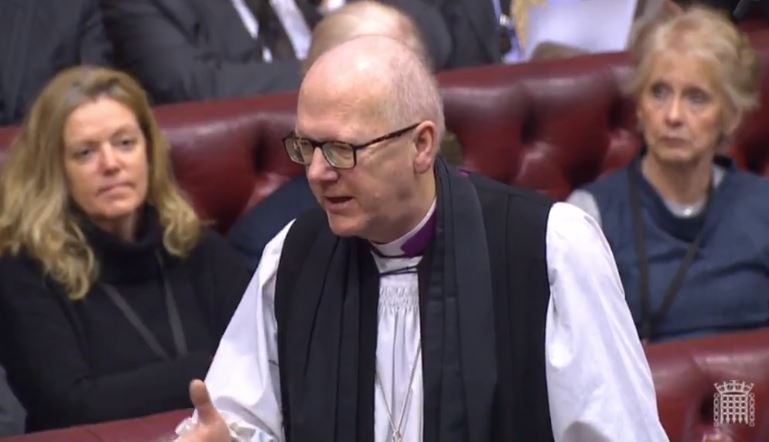
The Lord Bishop of St Albans: My Lords, I too am grateful to the noble Lord, Lord Bragg, for securing this debate, and I am particularly glad we are debating the contribution of the arts not just to finance and the economy but to society. The arts are fundamental to human flourishing, to expanding our imaginations, to deepening our sympathies and to touching all aspects of our lives that, so often, the merely financial fails to engage with.
Of course, the arts do make a significant contribution to the wealth of this nation, and we are fortunate to be home to some of the world’s leading orchestras, musicians, playwrights, theatres, artists and galleries. In my own diocese in Hertfordshire there is a rapid expansion of studios that are attracting filmmakers from around the world, which is important. But the danger is that we do not give enough time and attention to thinking, “Where are these musicians and artists going to come from, and where are they first going to get the experience of the arts? Where are the ordinary people, in their homes and families, engaging with the sheer delight of creativity?” That is why I find it deeply sad that many young people do not have the access to artistic expression or musical education in their communities, homes, or, sadly sometimes, even in their schools.
As I go around the communities in Bedfordshire and Hertfordshire, I note that, in many villages, the only place with any communal singing left is the church; what was once a bigger part of communal life is dwindling. But the music and arts are not just for professionals: they should be accessible to all, and this really matters. I have spoken before in this Chamber about how many of the UK’s composers, including Vaughan Williams, Elgar, Howells, Taverner and Rutter began their musical careers because they were caught up in local music making in their churches. Without this opportunity, many of them might never have touched the artistic part of their lives and developed their skills.
A significant number of contemporary musicians also started out in local—sometimes church—choirs, such as Ed Sheeran, Annie Lennox and Chris Martin of Coldplay. The Royal School of Church Music is just one example of an organisation that is working at grass roots across our country to bring the joy of music making to so many others that would not otherwise experience it, for example through its Voice for Life course. In my own diocese, the St Albans chorister outreach project has worked with over 80 primary schools and given thousands of primary school-age children the opportunity to participate in and enjoy singing. The National Schools Singing Programme, run by the Roman Catholic Church, has already expanded into 27 of Britain’s 32 Catholic dioceses, reaching more than 17,000 children in 175 schools.
None of this is funded by the state, but, in some limited cases, all that is needed to get it going is some limited seed-corn funding. Yet, in the face of financial pressures, those very modest amounts of money have been renewed, which has enabled people to get going; it has given them a life experience of the joy of music and art and set them off in a career that has been such a blessing to many people. So my question to the Minister is: will His Majesty’s Government take a fresh look to ensure that we do not just fund flagship arts projects but have modest amounts of money to release the arts among a much wider group of people in our nation?
Extracts from the speeches that followed:
Baroness Miller of Chilthorne Domer (LD): My Lords, as ever, it is a great honour to follow the noble Lord, Lord Rooker, who put his finger on a very important issue. However, I return to the role that the arts play in activism and campaigning—what the right reverend Prelate the Bishop of St Albans called “deepening our sympathies”.
The arts can engage us in a way that a thousand worthy leaflets or an informed speech simply do not. The noble Baroness, Lady McIntosh of Hudnall, laid that out when she talked about “Mr Bates vs The Post Office”. It took an ITV drama to focus the nation’s attention; two decades of campaigning led up to it but had not been able to focus anybody’s attention on its sufficiently. I am amazed how the scriptwriter, Gwyneth Hughes, managed so brilliantly to condense all that into a drama.
Baroness Bennett of Manor Castle (GP): I shall focus on the importance of that staff being available to all communities, as did the right reverend Prelate the Bishop of St Albans in noting the near collapse of provision in Bedfordshire and Hertfordshire, particularly in opportunities for people to participate in the arts. For the Green Party, that must be the foundation of arts policy: focusing not on what people purchase—Hollywood movies or blockbuster exhibitions —but on what they participate in or jointly create. We know that that is of great public interest, in the best sense.
To take an example that noble Lords may be aware of, there is currently a giant furore around Suffolk County Council’s decision to deliver a 100% cut to core arts funding. This has even penetrated the London-centric mainstream media bubble. We have to acknowledge the long-term impact of more than a decade of government austerity on local government—and I declare my position as a vice-president of the Local Government Association. The foundational blame lies in Westminster. But the local decision is still indefensible and has since, to a degree, been reversed, although the outcome is yet to be finalised. However, a partial climbdown by the county council leaves hugely valued local institutions, such as DanceEast and the New Wolsey Theatre, without the kind of certainty needed to securely continue to deliver hugely valued community services. The mother of 15 year-old Jack, who has autism, told Channel 4 how much a weekly drama class had brought him out of his shell. “I absolutely love them”, Jack told Channel 4’s reporter.
Baroness Smith of Basildon (Lab): This debate has raised a wide range of issues; lots of concerns have been raised about both funding and the pipeline of talent. My noble friend Lady Thornton spoke about how young people can be engaged and enthused by museums and theatre. We heard a lot from the noble Lord, Lord Aberdare, the right reverend Prelate the Bishop of St Albans and others about the role of music in health—for example, the growth of community choirs and how they are bringing people together. I am one of those people who benefited from school music lessons. I am not sure that my neighbours agreed, as I was allocated the trumpet to play at the time. Those opportunities are fewer and farther between today.
Lord Parkinson of Whitley Bay (Con, DCMS): An arts education fosters creativity, critical thinking and emotional intelligence. It cultivates a space where young minds learn to express themselves, develop a sense of self and appreciate diverse perspectives. Moreover, arts education nurtures the skills essential for a dynamic workforce, producing minds capable of critical thinking and adaptability. These are things that no country should take lightly, and certainly should not take for granted, which is why cultural education is such a priority for the Secretary of State and for me.
While an arts education plays an important role in developing individuals, we know that it has a wider impact on society. For example, the Arts and Place Shaping: Evidence Review, commissioned by Arts Council England and published in 2022, points to a body of evidence that demonstrates how arts and culture-led regeneration and investment can help to promote social cohesion and civic pride. Alongside this study, other research, including the McKinsey study mentioned by many noble Lords today, has testified that cultural participation can contribute to social relationships, community cohesion, and making communities feel safer and stronger. Its impact depends not only on the individual efforts of artists and arts organisations but on the whole ecosystem: creators, educators, distributors and promoters, suppliers, funders and audiences.
To that end, and in line with the challenge rightly posed by the right reverend Prelate the Bishop of St Albans, we are delivering a number of programmes to help communities across the country to extend and improve their arts and cultural offerings. The £4.8 billion levelling up fund, for example, invests in local infrastructure projects that improve life for people across the UK, focusing on regeneration and transport, and supporting cultural, creative and heritage assets. The second round of the fund, announced last January, included over £500 million of support, awarded to 31 culture and heritage-led projects.
 The Church of England in Parliament
You must be logged in to post a comment.