
On 8th February 2024, the Bishop of Bristol spoke in a debate on a report from the Communications and Digital Committee on digital exclusion, emphasising the impact of lack of digital access on children:
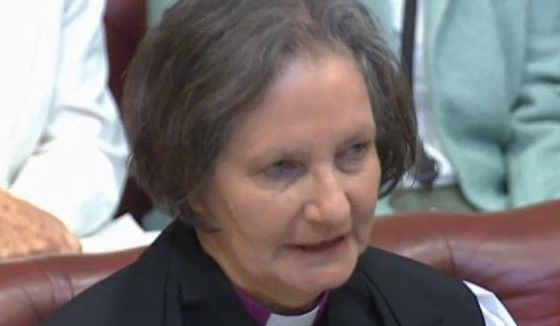
The Lord Bishop of Bristol: My Lords, it is a pleasure to follow the noble Lord, Lord Lipsey, whose speech imaginatively took us into the life and world of Joe Soap. I congratulate the noble Baroness, Lady Stowell, on securing this timely debate—timely in one sense—and I offer my thanks to all members of the Communications and Digital Committee for a thorough and wide-ranging report. I also lament the lack of a government cross-departmental strategy.
Today, I focus my comments on digital inclusion and exclusion in and around schools, about which I have a little knowledge. In 2021, UNICEF produced an excellent report on the effect of digital exclusion on schoolchildren. That report said that
“digital inclusion must be seen as the cornerstone to ensuring social justice and equitable life chances for every child”.
Those words were written while the pandemic was at its peak and the long-term impact on education was still difficult to predict.
We know today that, while the pandemic certainly played a major role in accelerating this trend, the impact will long outlast the pandemic, because digital schooling is here to stay. The question then is how we make sure this new status quo works for all children. Given this debate, I hardly need to convince noble Lords of the importance of children being able to access the tools they need to make a success of their schooling. I particularly noted the input of digital exclusion expert Kat Dixon into the committee’s report. She described how, for people of all ages, not having internet access
“prevents access to modern life”.
How much more wide-ranging are the impacts of lack of access for children, who will be missing out on the building blocks of their education?
Ofcom’s 2022 digital exclusion review set out three key tenets of digital inclusion: affordability, access and ability. Today, I consider how these might apply to digital exclusion for children and young people at school. First, on affordability, we know that inflation has been at a 40-year high, and many families are still struggling with the cost of living, particularly families with children. Those who are from less advantaged backgrounds are much more likely to face digital exclusion than their peers from affluent backgrounds. Where children who already face disadvantage cannot access the digital resources they need for school, that disadvantage is compounded and can become entrenched. This, in turn, entrenches generational disadvantage.
In his response, I would be grateful if the Minister could include what steps the Government are taking to increase the affordability of digital inclusion for children of school age, particularly for the express purpose of full participation in schooling. During the cost of living crisis, many internet packages have become more expensive, by as much as 17% in some cases. We have heard about the proposal for social tariffs and their demerits. I call on the Government to make broadband much more cheaply available to families who need it, particularly where a child’s participation in school is at stake.
The second tenet of digital inclusion is access. In my own patch, research carried out by the University of Bristol showed that only 47% of those in Knowle West—much in the news recently—who needed a laptop or PC for home schooling had access to one. Even where there is a device in a household, it is often not appropriate for participating in school. Families of five might share a single phone, or might not have access to reliable wifi, meaning children have to complete their homework in distracting settings, such as on public transport. Fully 8% of children aged five to 15 do not have access to an internet-enabled desktop computer, laptop or netbook at home. It is not just the children—more and more data about school is delivered to parents digitally. Almost all teachers are using technology to communicate with parents and carers about safeguarding. What happens when you cannot access that important data about your child?
As we have heard, churches have been used as hubs, first for broadcasting to not-spot areas—which has worked well in remote rural areas such as Dartmoor—and in urban areas as church-based warm spaces. I wonder whether this might be encouraged more broadly. I too lament the demise of libraries because of costs for local authorities.
The final pillar of digital inclusion is ability. This is where schools can really make a difference, rather than just firefighting the impacts of entrenched digital disadvantage. Training the whole population in basic and advanced digital literacy will be fundamental to addressing that digital divide. Improving digital literacy from the start, by embedding this into the curriculum, will be fundamental. Although this report rightly focuses on how we can get adults digitally literate where they currently lack the skills they need to get online, for a long-term plan this really has to be embedded in the life of schools.
Finally, my comments today have focused on ensuring that children can access technology for their education. Technology can augment and enhance education, but it should also be noted that technology carries inherent risks, and we must not lose sight of those. Technology must enhance human contact, not replace it; and technology must serve students, not exploit or manipulate them, as the noble Baroness, Lady Stowell, indicated earlier. Considering affordability, access and ability, we must keep ethics as well as safeguarding at the heart of this conversation and when considering our investment in the future of all our children.
Extracts from the speeches that followed:
Baroness Jones of Whitchurch (Lab): A number of noble Lords raised the basic challenge of improving digital skills. It was good to hear that computing is now a statutory part of the national curriculum and that teachers are becoming better trained to teach computer science. This is a fast-changing knowledge sector and it is crucial that teachers are equipped to teach courses of a required standard and are at the cutting edge of technology, so that young people go into the workplace with relevant and up-to-date skills.
However, it is a mistake to assume that the next generation will have been taught the skills that make the digital exclusion debate redundant. A number of noble Lords made this point, and the right reverend Prelate the Bishop of Bristol spoke passionately about the issue. While young people are becoming more adept at using smartphones for basic communication and social media, this does not mean that they have the skills to manage AI in the workplace or to access the raft of public sector services that are going online. As we know, we are currently facing a growing challenge of school refuseniks who are dropping out of school at an early stage, so will not have the benefit of a well-run computing curriculum. Does the Minister accept that there will always be a percentage of young people who will reach school-leaving age without the requisite digital skills to navigate the workplace and society’s demands successfully? What plans do the Government have to address that education gap specifically?
Viscount Camrose (Con): I also thank the noble Baroness, Lady Armstrong, and the noble Lord, Lord Lipsey, for their thoughtful contributions, which noted the importance of social tariffs provided by telecoms companies, and the right reverend Prelate the Bishop of Bristol for her well-made point on affordability. We recognise that cost is a barrier for many. As I have noted, prices in the UK are falling and the Government have worked closely with the telecoms industry to ensure the provision of low-cost, high-quality fixed and mobile tariffs, also known as social tariffs, for those on universal credit as well as other means-tested benefits. There is of course a balance to be struck between ensuring investment in UK telecoms infrastructure and ensuring that services remain affordable.
We have established a pro-investment, pro-competition environment and remain committed to the idea that a competitive market will deliver the best outcomes for all consumers. Social tariffs are now available from 27 providers, up from 10 in November 2022, from the likes of BT, Sky and Virgin Media and across 99% of the UK. We have seen an increase in uptake of almost 160% since September 2022, but I am afraid to say that this represents just 8% of total eligible households. I absolutely acknowledge that we need to make more progress and we will continue to look at how to accelerate that.
 The Church of England in Parliament
You must be logged in to post a comment.