
The Bishop of Bristol spoke in a debate on the Conversion Therapy Prohibition (Sexual Orientation and Gender Identity) Bill, (a private members bill brought by Baroness Burt of Solihull to ban the practice of conversion therapy for LBGT+ people) on 9th February 2024, supporting the bill and stressing the need to continue to work to protect LGBT+ people from harm, and expressing a desire for greater clarity in some parts of the legislation:
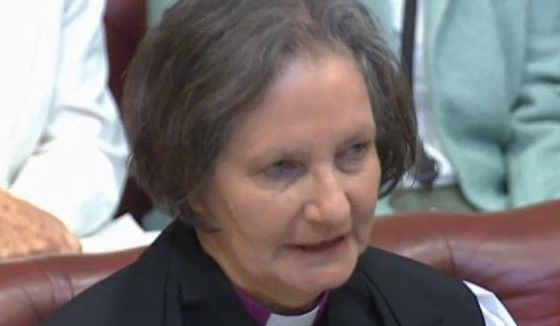
The Lord Bishop of Bristol: My Lords, I begin by thanking the noble Baroness, Lady Burt, for her Bill. I am grateful to the noble Baroness for engaging with the complexity of drafting legislation to prevent conversation therapy or practices, given the variety of views there clearly are in this Chamber and in wider society. I declare my interests: until December, I was one of the bishops leading on safeguarding in the Church of England and I am still co-chair of the APPG on Safeguarding in Faith Communities.
I have been aware for many years in pastoral ministry of some horrific practices, from physical punishment, counselling and prayer techniques akin to interrogation to, at worst, supposedly curative rape. Such practices are used against those in faith communities who are regarded as deviating from the communities’ norms for sexuality and gender identity. These more or less hidden practices must be prevented by statutory provision if they are not already. We should note too that those who are victims should be much better supported. I am also aware of the much more subtle impact on LGBTIQ people of faith—the pressure on them to conform to the norms set by the hierarchy of their faith community. The cultures which pervade many faith communities render those exploring their identity very vulnerable indeed to abuse, as the IICSA report reminded us.
I am relieved that the Church of England is at last owning its homophobia and making some moves to change its culture and practice. Personally, I wish that it would change much faster and further, but I am also aware that, in my diocese, there are very different perspectives in this ongoing debate. I am profoundly grateful to the noble Lord, Lord Paddick, for setting out some of the issues as they affected his own life. In my diocese, the organisation Living Out supports LGBTIQ adults who, exercising agency and autonomy and inspired by their interpretation of Christian faith, seek counselling to support celibate lives or marry someone of the opposite sex. I know too how hard it is to write into guidance or regulation definitions that help rather than harm. The Church of England has wrestled for some years to define spiritual abuse. We have begun to recognise its presence and impact, but are not consistently agreed on its definition or how any definition should be applied in disciplinary process.
I am therefore not yet convinced that the text of this Bill and its lack of agreed definition would give Living Out, for example, the safe space that its members need. But I do believe that we need to keep working at this, and I am grateful for the determined efforts of the noble Baroness, Lady Burt, in the absence of a government proposal. The right reverend Prelate the Bishop of London, who is unable to be present today, and I, want to continue to work to find agreed definitions that protect from harm while continuing to preserve our current liberties.
Extracts from the speeches that followed:
Baroness Chakrabarti (Lab): My Lords, I have listened with great care to many very fine and thoughtful speeches today. I support the intentions of the noble Baroness, Lady Burt. I think some kind of intervention in this area is long overdue. We have heard from the speeches of Theresa May when she was Prime Minister, and Boris Johnson, when he was Prime Minister, made similar remarks.
It is always dangerous to attempt to gauge the consensus of your Lordships’ House, but, like many noble Lords, I do not think that Clause 1(2) works, as it is cast too wide. However, like the noble and learned Baroness, Lady Butler-Sloss, and as with the outstanding interventions of the noble Baroness, Lady Hunt of Bethnal Green, and the right reverend Prelate the Bishop of Bristol, I believe that it is within the capabilities of people of good will, wit and wisdom to tighten the net and attack the real harm that is being caused to people, as we know that it is.
Words have been used by noble Lords such as “coercion”, “manipulation”, “degradation” and “abuse of power”. I add that, notwithstanding the very thoughtful remarks of the noble Lord, Lord Altrincham, there are people putting themselves out there, in a desert of mental health services, who should not be. These talking therapies can be very powerful for good, but can also be very dangerous when they are manipulative.
Baroness Donaghy (Lab): I think I am all right with giving an anecdote, as the noble Lord, Lord Robathan, did it. No, I did not apply to join the Special Air Service, but I did watch TV at the weekend—that was my activity. It was a private audience with the Pope, involving celebs who had gone on some sort of mission. I have no idea what it was; I only saw the bit I am about to describe. A man in his fifties said to the Pope, “I don’t know what religion I’ve got. I’ve been an outsider all my life because I’m gay and I’m black”. The Pope said to him, through a translator, “Adjectives used to describe people are meaningless”. I thought, “Wow—that is pretty good.” He got up and hugged the guy, they all cried and it was marvellous theatre, but I thought that that reference to using adjectives to describe people very much reflected what the right reverend Prelate the Bishop of Bristol has just said: that we want to create a space to make progress on an issue we are not solving. Three previous Prime Ministers have said there is an issue, and we have to try to solve it. We have not succeeded—the noble Lord, Lord Farmer, is quite right—but we have to keep that space so that we can carry on discussing it. As far as I am concerned, this Bill is creating that space to close that adjective box.
 The Church of England in Parliament
You must be logged in to post a comment.