
On 14th February 2024, the House of Lords debated the Safety of Rwanda (Asylum and Immigration) Bill in committee. The Bishop of St Edmundsbury and Ipswich spoke in support of amendment 36 to the bill, on behalf of the Archbishop of Canterbury. The amendment would leave out clause 3 of the bill, in order to “limit the Bill’s disapplication of the Human Rights Act to immunising the Secretary of State from challenge of his decision to lay positive UNHCR advice.” The Bishop also pointed out the risks associated with disapplying the universal principle of human rights to asylum seekers:
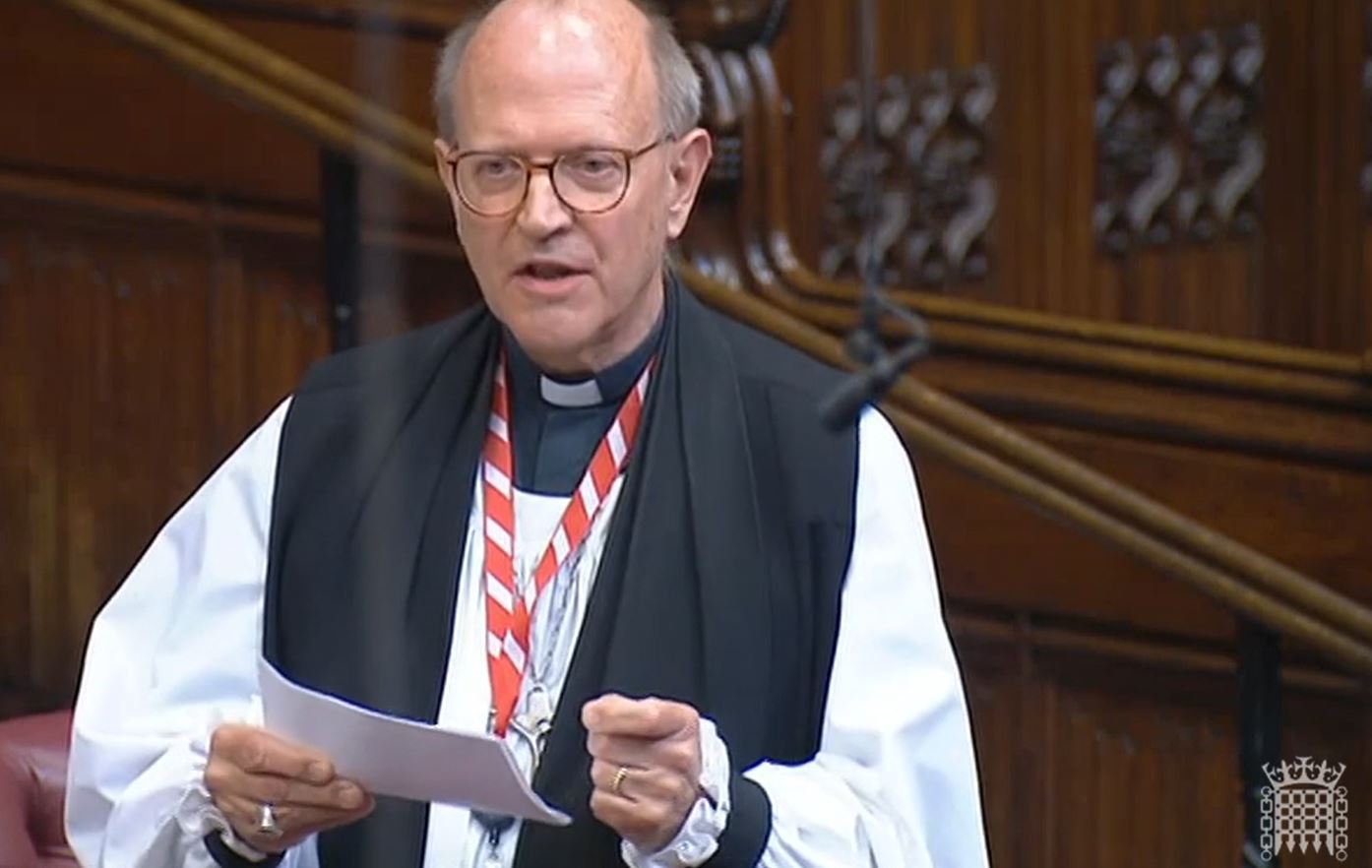
The Lord Bishop of St Edmundsbury and Ipswich: My Lords, it is a pleasure to follow the noble Lord from Suffolk. The most reverend Primate the Archbishop of Canterbury regrets that he cannot be in his place to speak to Amendment 36, tabled in the name of the noble Baroness who has just briefly left, and to which he has added his name. I will speak briefly and again repeat the moral point.
The amendment leaves out Clause 3, where the Bill disapplies large chunks of the Human Rights Act and replaces it instead with one very limited disapplication of the Act to allow the Secretary of State to lay positive UNHCR advice before Parliament. This seems a necessary corrective to the wider issues in the Bill and supports the other amendments tabled by the noble Baroness, Lady Chakrabarti, to Clause 1 of the Bill, to give the UNHCR a role in providing positive advice on the safety of Rwanda before any asylum seekers can be sent there.
As my right reverend friend the Bishop of London said at Second Reading, in this Bill the Government are effectively deciding to whom human rights apply and to whom they do not—and specifically that certain rights do not apply to asylum seekers. As she asked, has history not taught us the risk of this? It undermines the basis on which human rights are made: the principle of universality. At the heart of the faith that I espouse is a belief in the precious value of every human being, asylum seekers included. Clause 3 of this Bill, and the Bill as a whole, which I described at Second Reading as “immoral”, risks placing less value on some human beings than on others—and, as the noble Viscount, Lord Hailsham, said, that is a very slippery slope indeed.
 The Church of England in Parliament
You must be logged in to post a comment.