
During a debate on the Safety of Rwanda (Immigration and Asylum) Bill on 19th February 2024, the Bishop of Chelmsford spoke in support of two amendments tabled by Lord Dubs which sought to prevent the erroneous relocation of unaccompanied children to Rwanda:
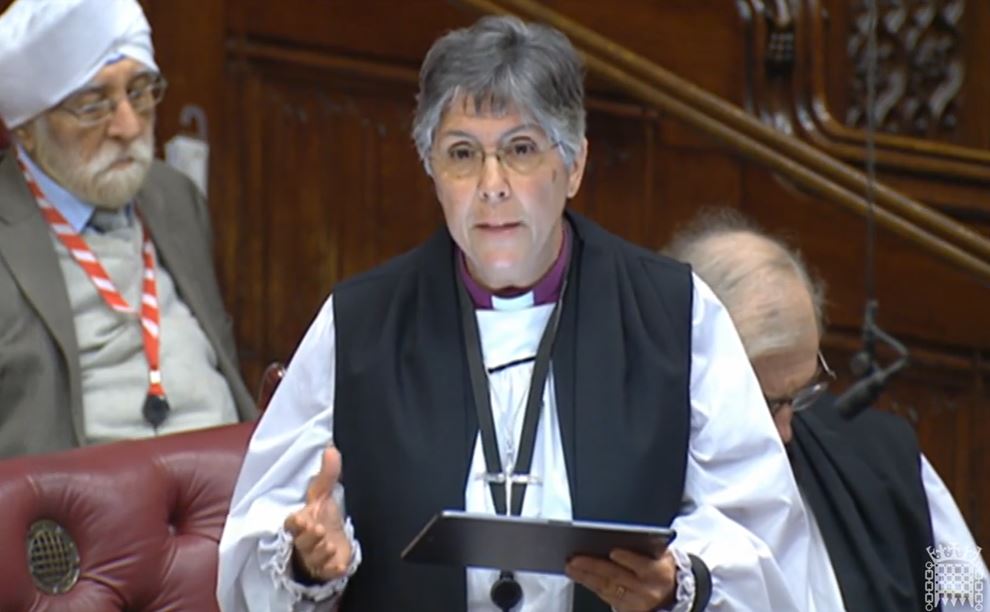
The Lord Bishop of Chelmsford: My Lords, I too support Amendments 54 and 55, to which I have added my name. I thank the noble Baroness, Lady Lister, and the noble Lord, Lord Dubs, for giving us the opportunity to ensure that the voice of the child is heard in this debate. For we should never forget that both accompanied and unaccompanied children, and those who may well be found to be children, are in the scope of the Bill, which the Government cannot confirm is compatible with convention rights under the ECHR. I spoke earlier in Committee on the universality of human rights, but to remove children from their reach is simply unforgivable. For this reason, I repeat the noble Baroness’s request that a children’s rights impact assessment be published as a matter of urgency.
I believe strongly that changes are needed to Clause 4 if we are to ensure that the welfare and best interests of children are protected. For safeguarding is not a discretionary requirement, and the UK is legally obliged to protect and promote the interests of the child. The fundamental issue that Amendment 55 seeks to address is that the treaty itself excludes unaccompanied children from the partnership agreement, while acknowledging that they may be sent to Rwanda erroneously. This contradiction means that the treaty, in a section entitled “Part 3—General”, provides only vague information about Rwanda’s plans to safeguard children, a group surely more vulnerable than any other we could possibly imagine.
It is not my place to doubt the sincerity of the Rwandan authorities’ commitment to providing child-suitable safeguards, but good intent is no basis for safeguarding, and sending children before the treaty is fully implemented would be a dereliction of our duty to them. This, combined with leaving a potential child with no suspensive legal redress against their removal, is simply unconscionable. If the treaty has identified the risk of sending a child to Rwanda in error, why has no mitigation been put in place? Has it been decided that the risk is tolerable, regardless of all the anguish and trauma it would cause to a child? Can the Minister assure us that all children would be returned in these circumstances? Although it is in the treaty, it is not a legal obligation in the Bill.
The Home Office’s own figures, although incomplete—they do not include the number of children moved into an adult setting—indicate that, last year, 60% of all resolved age dispute cases found the young asylum seeker to be a child. This point was well made by the noble Baroness, Lady Lister, but I will emphasise it because of its importance. There are 2,219 children without a parent or guardian, who, if the Bill had been in operation, may have been eligible for removal to Rwanda if a full assessment had not been completed. I therefore ask the Minister: what assessment has been undertaken to evaluate the impact of removing a potential child from the UK’s child support services, and then from the UK entirely, before awaiting the conclusion of all outstanding age assessment challenges?
Age assessments are complex—again, we have already heard this—and therefore it is understandable that visual age assessments by immigration officers can lead to inaccurate judgments. I will not repeat the quote from the Home Office’s guidance on this. Given that errors are an inherent part of the age-verification process, can the Minister reassure us that, at the very least, when an individual’s age is disputed, they will not be subject to removal before having met with a social worker and child protection team for a more comprehensive age assessment?
Under the Bill, the repercussions of inaccurate age assessments are disastrous. Even if a child were to be returned to the UK after they were verified to be a minor, the impact would be devastating for their physical and mental well-being, and it would likely leave an imprint on them for the remainder of their life. The amendment proposed does not hinder the Government’s objective to begin the transfer of asylum seekers to Rwanda, but it ensures that there has been a definitive determination of a person’s age before their removal. It supports the Government in meeting the treaty commitment.
The determination that a young person may be a child, and therefore could deserve all the rights of a child, should and must be reason enough to prevent their removal. A child is a child, regardless of whether they remain with their family or not. Amendment 54 simply seeks to maintain a current safeguard when a child is being considered for removal, which requires the Home Secretary to consult with the Independent Family Returns Panel to ensure that their safeguarding needs are appropriately met. Section 14 of the Illegal Migration Act, which is not yet in effect, disapplied this safeguard.
I do not believe that children seeking safety in the UK should face removal to Rwanda. But, at the absolute minimum, the process should ensure that their welfare and best interests are considered, and maintaining a role for the panel would help facilitate this. If the Government proceed to send minors to Rwanda without appropriate safeguards, vulnerable children will undoubtedly face an intolerable level of emotional distress. I therefore implore the Government to give the utmost consideration to these reasonable and principled amendments.
Extracts from the speeches that followed:
Baroness Mobarik (Con): My Lords, I support Amendment 55, in the name of the noble Baroness, Lady Lister of Burtersett, supported by the right reverend Prelate the Bishop of Chelmsford and the noble Baronesses, Lady Neuberger and Lady Brinton. I also support Amendments 78 and 79, in the name of the noble Lord, Lord Dubs, supported by the noble and learned Baroness, Lady Butler-Sloss. These amendments relate to children who arrive in the UK alone, unaccompanied by any adult.
Lone children have no one. They are some of the most vulnerable members of our society, and their welfare and best interests should be safeguarded. I am glad to see that it is not the intention of the Government of this country or of the Government of the Republic of Rwanda for this scheme to cover unaccompanied children. Article 3 of the Rwanda treaty is clear, stating:
“The Agreement does not cover unaccompanied children”.
Therefore, on my reading, this amendment helps safeguard that intention while upholding the best interests of such children.
If the agreement with Rwanda does not cover unaccompanied children, it seems to me common sense that the United Kingdom should make sure that it is not sending unaccompanied children to Rwanda. The constitutionally proper way for us to be sure of that is after an assessment that an individual is an adult, to allow our courts and tribunals to have an opportunity to fully consider whether an individual is an unaccompanied child, as they claim to be, before the individual is removed.
Baroness Lister of Burtersett (LD): I turn to the amendments in my name and those of the right reverend Prelate the Bishop of Chelmsford and the noble Baronesses, Lady Neuberger and Lady Brinton, to whom I am grateful for their support. I am also grateful for the help of ILPA, the Refugee and Migrant Children’s Consortium, and RAMP, of which I am an associate. I shall begin by making some general points and then speak to each amendment separately.
My starting point for the two amendments is last year’s concluding observations of the UN Committee on the Rights of the Child, in which it urged the UK to:
“Ensure that children and age-disputed children are not removed to a third country”.
It expressed deep concern about the potential impact of the Illegal Migration Act, which underpins this Bill, and the lack of consideration for the principle of the best interests of the child. This is clear from the failure to provide a child rights impact assessment until the very last minute of the Bill’s passage, despite repeated calls from noble Lords—and then it amounted to little more than a post hoc justification of the Bill’s measures. Needless to say, there has been no child rights impact assessment of the current Bill. In the debate on the treaty, when I asked whether there would be one, I did not receive a reply.
UNICEF warned that a blanket provision on inadmissibility and subsequent removal that applied to children without undertaking a best interests procedure and implementing its determinations would not be compliant with the UN Convention on the Rights of the Child, and in particular Article 3, which, as the noble Lord, Lord Hannay of Chiswick, advised on Wednesday, we need to take seriously. Yet the treaty, while acknowledging the convention, makes no reference to determining a child’s best interests. Concerns about children’s best interests are not assuaged by the treaty’s statement that it does not cover unaccompanied children and that the UK Government will not seek to relocate them, as the Minister reminded us on Wednesday.
 The Church of England in Parliament
You must be logged in to post a comment.