
On 21st February 2024, yhe Bishop of St Edmundsbury and Ipswich gave a speech during the second reading of the Animal Welfare (Livestock Exports) Bill, expressing his support for the bill and stressing the importance of maintaining animal welfare standards in the UK:
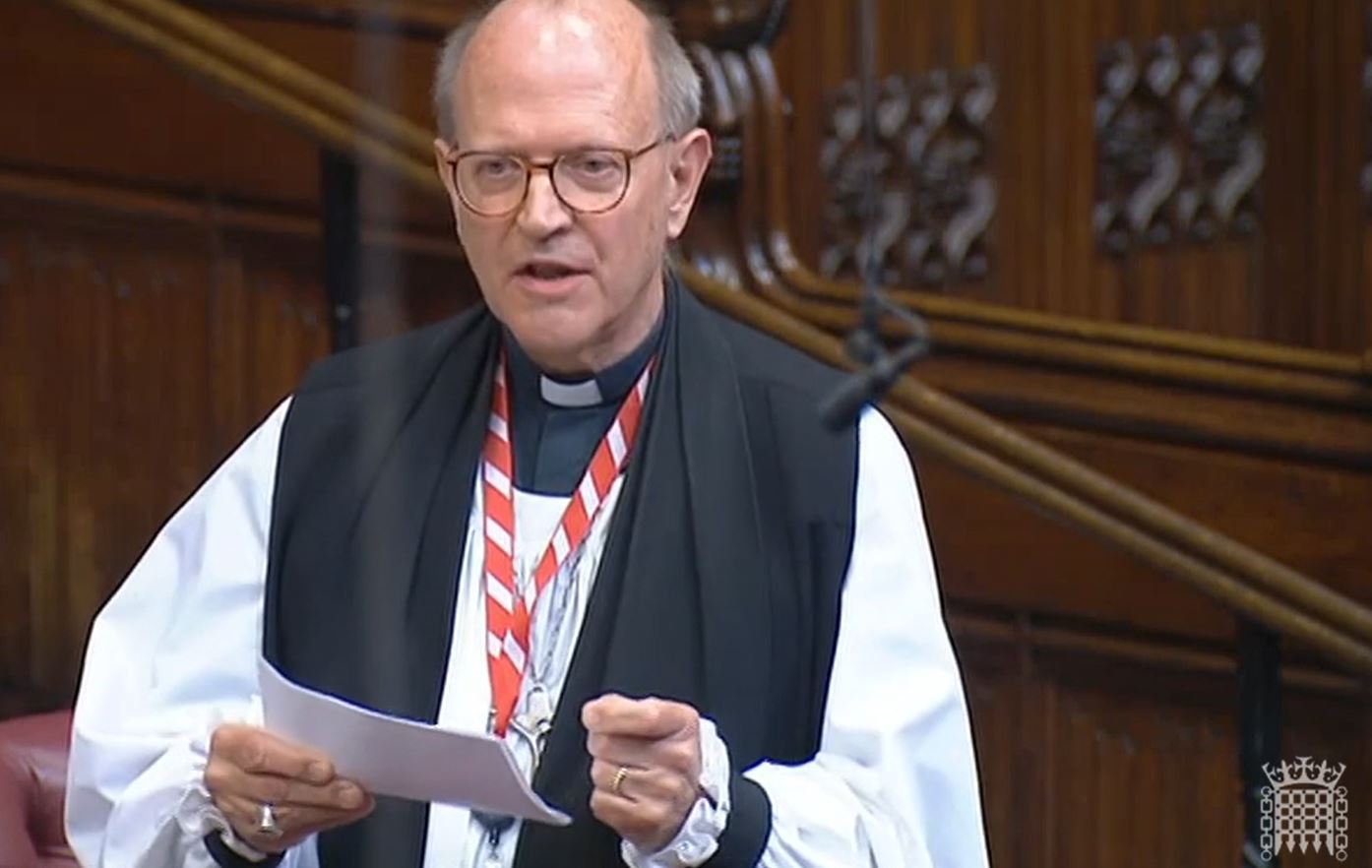
The Lord Bishop of St Edmundsbury and Ipswich: My Lords, I draw attention to my entry in the register of interests. It is a pleasure to speak in this debate, and I welcome the Government’s commitment to improving the standards of animal welfare in the UK. I add my thanks to the Minister, as he begins his new role, and to those who have campaigned for so long, particularly the noble Baroness, Lady Fookes, whose birthday it is today.
I have spoken to farmers and farm vets in Suffolk, and they are clear that the exporting of animals for slaughter is not an acceptable practice, and I fully support the Bill. They raised with me a couple of related points, both of which have been made already, but I will briefly refer to them. First, we must ensure that holding British farmers to high welfare standards does not result in the undercutting of our farmers by cheaply produced imported meat that does not meet the same standards required of UK farmers. I hope the Government are able to provide farmers with the assurances they need on this matter.
Equally, it is important that consumers in Britain can feel confident that the produce they are buying meets the appropriately high standards of animal welfare that we expect of British farmers, regardless of where the meat originated. Producing food in the UK remains a vital role in protecting the food security of the country, which of course is another issue. I support calls from the NFU and others to establish core production standards that apply to agri-food imports, and to establish best practice protocols for transporting animals.
Secondly, one of the key drivers of the desire to export live animals for slaughter—a desire that could easily be reignited—has been the reduction in the number of UK slaughterhouses. As we have heard, this results in longer journeys to slaughterhouses within the UK—not only is this an animal welfare concern but it drives up emissions associated with the transport of livestock. The transport of animals to small and medium-sized abattoirs often has the shortest overall journey lengths, and it is important that we have a sufficient network of abattoirs, particularly small and medium-sized ones, so that our food supply chain can be as humane as possible.
I also add my support for the possibility of an amendment to achieve a simple device for adding new animals to the list.
As a country, we strive to be a world leader in animal welfare standards, and I fully support this legislation and its speedy progress.
Extracts from the speeches that followed:
Baroness Bakewell of Hartington Mandeville (LD): The majority of the comments that I have received have been overwhelmingly in favour of the Bill. However, the NFU has expressed concern that no impact assessments were provided with the proposals. The impact assessment that was provided had been produced for the kept animals Bill, which was subsequently abandoned. That IA indicated that a loss of around £5.2 million over a 10-year period would be suffered, mainly by sheep exporters; the noble Lord, Lord Carrington, referred to sheep farmers. That is a significant sum for a section of the farming community that is generally not affluent.
The NFU is concerned that British farmers will be undercut by imports that do not meet the same high animal welfare standards that exist here. The NFU is calling for the establishment of core production standards that apply to agri-food imports. That would assist in providing a level playing field for British farmers. I fully support the NFU on that and agree with the right reverend Prelate the Bishop of St Edmundsbury and Ipswich. The British Veterinary Association and the Farmers’ Union of Wales also support the call for British livestock farmers not to be undercut by trade deals that do not meet equivalent animal welfare standards. Can the Minister give reassurance on that issue?
Baroness Hayman of Ullock (Lab): The noble Baroness, Lady Hodgson, made the important point about keeping a close eye on imports, as did other noble Baronesses. The noble Lord, Lord Carrington, talked about farming concerns, and the NFU has raised concerns about trade negotiations with countries that export large numbers of animals for fattening and slaughter. It is very important that British livestock farmers are not undercut by imports that do not meet the same high standards that we adhere to in this country—the right reverend Prelate the Bishop of St Edmundsbury and Ipswich talked at length about this. I am sure I do not need to remind the Minister that we signed trade deals not very long ago with at least one country that does not have standards compatible with this proposed legislation. For example, Australia still permits the live export of animals over long distances, including overseas. Lower animal welfare standards should not be imported, and we should be using our influence to drive up standards in the countries with which we do trade deals.
Lord Douglas-Miller (Con): The issue of small abattoirs was raised by the right reverend Prelate the Bishop of St Edmundsbury and Ipswich, the noble Lords, Lord Carrington, Lord Trees and Lord de Clifford, the noble Baronesses, Lady Hoey, Lady Bakewell and Lady Hayman, and my noble friend Lady Hodgson, so it was a popular subject today. Many asked what further financial assistance there is for small abattoirs and what work we are doing to promote and market sheep products, particularly in order to develop our meat export trade. The farming investment fund has offered access to financial support to establish new producer-led abattoirs. Now that the first round is closed, we will assess how the scheme has performed and will investigate the potential launching of a second round later this year. The Government are working with the Agriculture and Horticulture Development Board and industry to help secure market access for world-class British red meat and dairy, empowering our exporters to maximise opportunities on the global stage.
 The Church of England in Parliament
You must be logged in to post a comment.