
On 6ht March 2024, the House of Lords debated the Safety of Rwanda (Asylum and Immigration) Bill in the final day of the report stage. The Bishop of Chelmsford spoke in support of amendment 34 to the bill, tabled by Baroness Lister of Burtersett, which would seek to restore the jurisdiction of the courts to review removal decisions taken on the basis of age assessments of unaccompanied children:
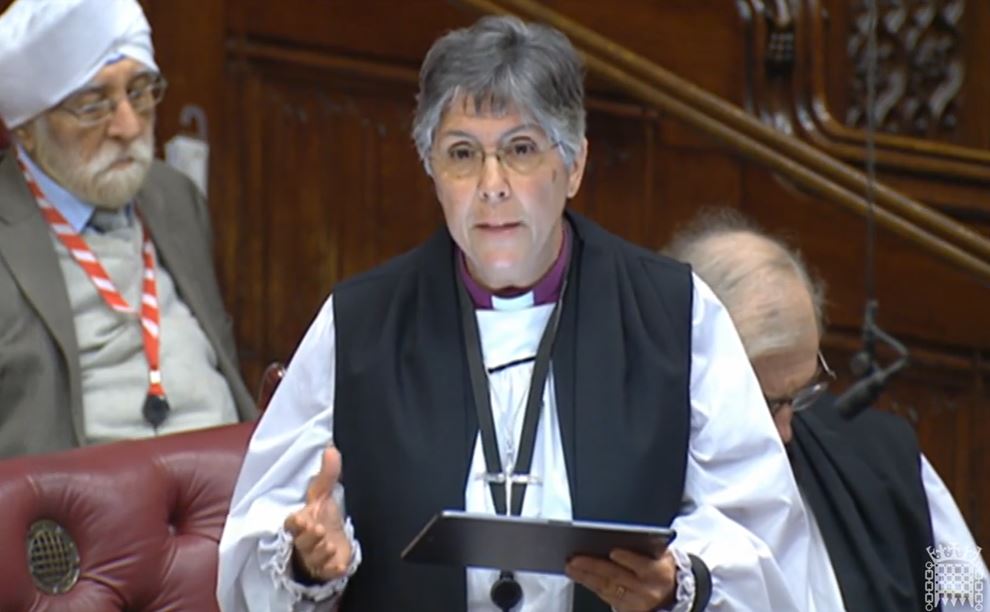
The Lord Bishop of Chelmsford: My Lords, I rise also to support Amendment 34. I will keep my comments brief because I fully support the statements from the noble Baroness, Lady Lister, and the noble Lord, Lord Dubs. But please do not mistake my brevity with the level of importance that should be attached to this issue. Safeguarding is not some burdensome requirement but a moral and legal imperative. It is for this reason that I repeat the request that I made in Committee for a child’s rights impact assessment to be published.
It is welcome that the Government have excluded unaccompanied children from the Rwandan partnership, but to safeguard potential children effectively, this commitment must be more than a mere intention; it must be operationally put into practice. This amendment would help mitigate the risk of a person being sent erroneously—when they are, in fact, a child—by sensibly awaiting the result of any age assessment challenge before their removal. When it comes to a child, we cannot allow harm to be addressed retrospectively, as surely it is the role of any Government to prevent harm, regardless of the immigration objective. Trauma, as we have heard, simply cannot be remedied.
The Minister has shared that the Home Office will treat an individual claiming to be a child as an adult, without conducting further inquiries, only if two officers have separately determined that the individual’s appearance and demeanour strongly suggest that they are significantly over the age of 18. But practice to date shows that this is no safeguard at all, because it has not prevented hundreds of children from being incorrectly assessed as adults.
I also want to add that the hotels reinspection report by the Independent Chief Inspector of Borders and Immigration, finally published last week, states,
“there has been no assessment of the collective needs of the children”.
That is traumatised unaccompanied children whom the Home Office has placed in hotels. This disturbing finding does not provide any reassurance that the Home Office is equipped to ensure children are protected through the age assessment process.
Therefore, given that errors have been made in the age verification process and children have been subjected to unsafe adult environments as a result, can I ask the Minister to agree today to review the Home Office’s age assessment guidance, in consultation with stakeholders, in light of the new risks posed by the Rwandan removals? Will he also be willing to meet with the signatories of the amendments in this group to discuss this matter?
Finally, the golden rule, “Do to others as you would have them do to you”, could easily be rephrased for this context into the question, “Would you consent to this course of action for your own child or grandchild?” I do not believe that there is anyone among us who would. For this reason, I pray that the Government consider the issues raised today with the consideration that every child deserves.
The Bishop also responded to a question by Lord Lilley on whether she or the Bishops Benches would espouse the view of complete “prevention” of asylum seekers from reaching the UK, making it clear that the Bishops Benches are not whipped and pointing out that the amendment in question referred to age assessment regulations, rather than general small boat arrivals, and questioning the premise of his argument:
Lord Lilley (Con): The noble Baroness, Lady Lawlor, makes an important point that provokes in me a question. I understand why the right reverend Prelate the Bishop of Chelmsford and others—all of us, I hope—have the interests of children at heart. I answer her question, “Would we send our child to Rwanda?” by asking her, “Would she send a child in a boat from France, a safe country, to the United Kingdom?” I hope she will answer that before the end of this section. I do not think she would.
In this Bill, we are trying to deter them from coming. I understand the collective view of the Bench of Bishops is that we should not deter but prevent them; we should make prevention—the actions taken by the French police force, the interruption of the people smugglers and so on—effective. If that is the case, will she confirm that it is the policy of the bishops to stop any children getting to this country? If prevention is made effective, they will not be able to—and nor will gay people or pregnant women or the other groups we are concerned about. They will all be prevented. Is that the view she is espousing?
The Lord Bishop of Chelmsford: My Lords, I will rise just to answer the question that was put to me. First, I do not speak on behalf of the Church of England; I will be quite clear on that. We are not whipped on these Benches; we speak individually. There happens to be a great deal of agreement among us on these Benches on these issues, but we do not speak with one voice. The question I posed about whether any one of us would want this situation for our children was actually around age assessment. If we found our child or grandchild, or anyone we knew, in this situation, would we want them to be assessed in this way?
As to the question of whether I would ever put a child on a boat, I think that is the wrong question. The point is that, behind every one of these figures, there are individual stories of enormous amounts of trauma that most of us cannot even begin to contemplate. I do not want to make a judgment about what goes on before somebody gets on a boat. I do not know whether it is necessarily parents putting children on the boats; we do not even know what has become of the parents of the children who end up here. I would not want to make a judgment on that.
 The Church of England in Parliament
You must be logged in to post a comment.