
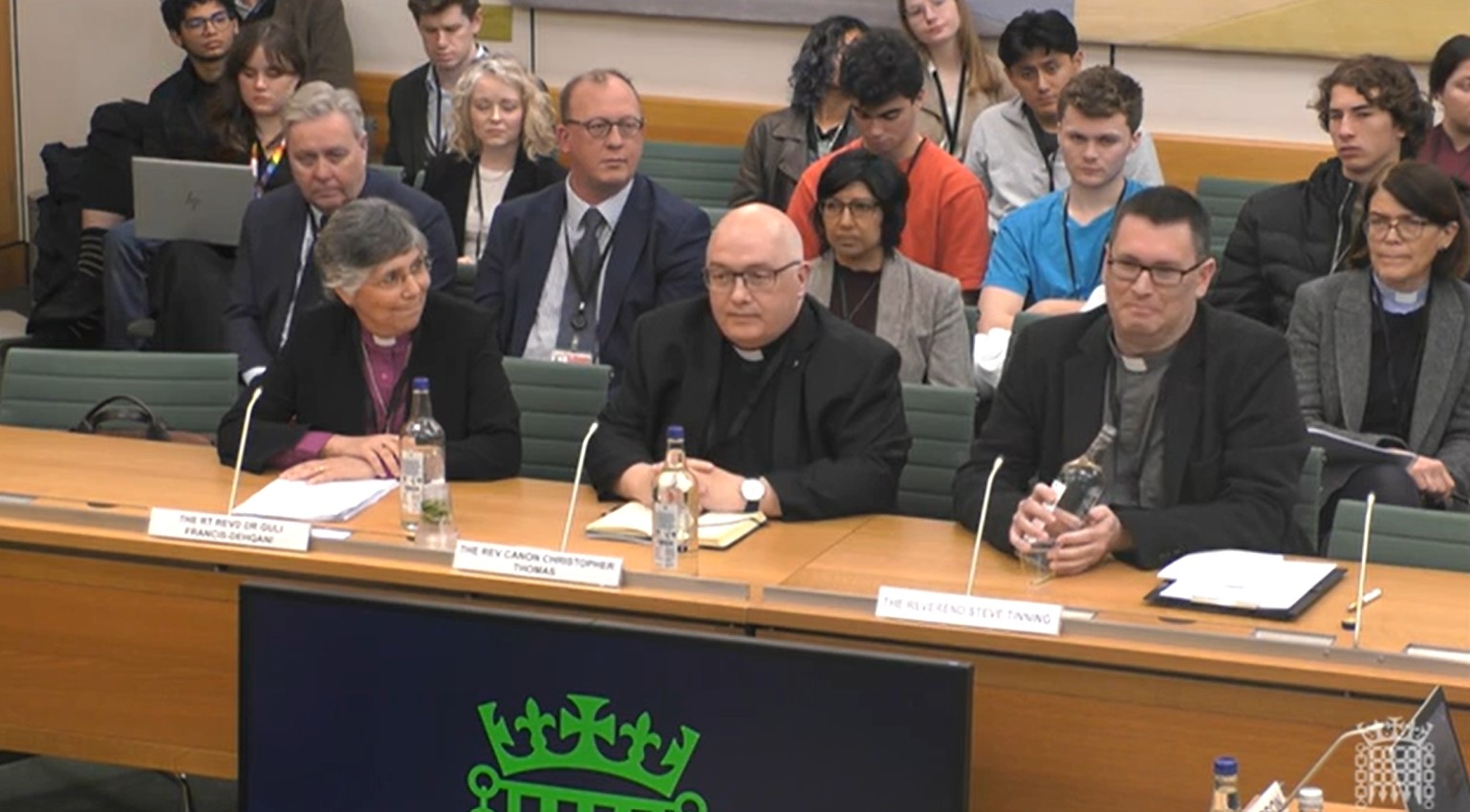
On 12th March 2024 the House of Commons Home Affairs Select Committee held a one-off session on asylum decision-making and conversion to Christianity. The Bishop of Chelmsford, the Right Reverend Dr Guli Francis-Dehqani, gave evidence in the second session alongside representatives from the Roman Catholic Church and Baptist Church. Dame Diana Johnson MP chaired the meeting.
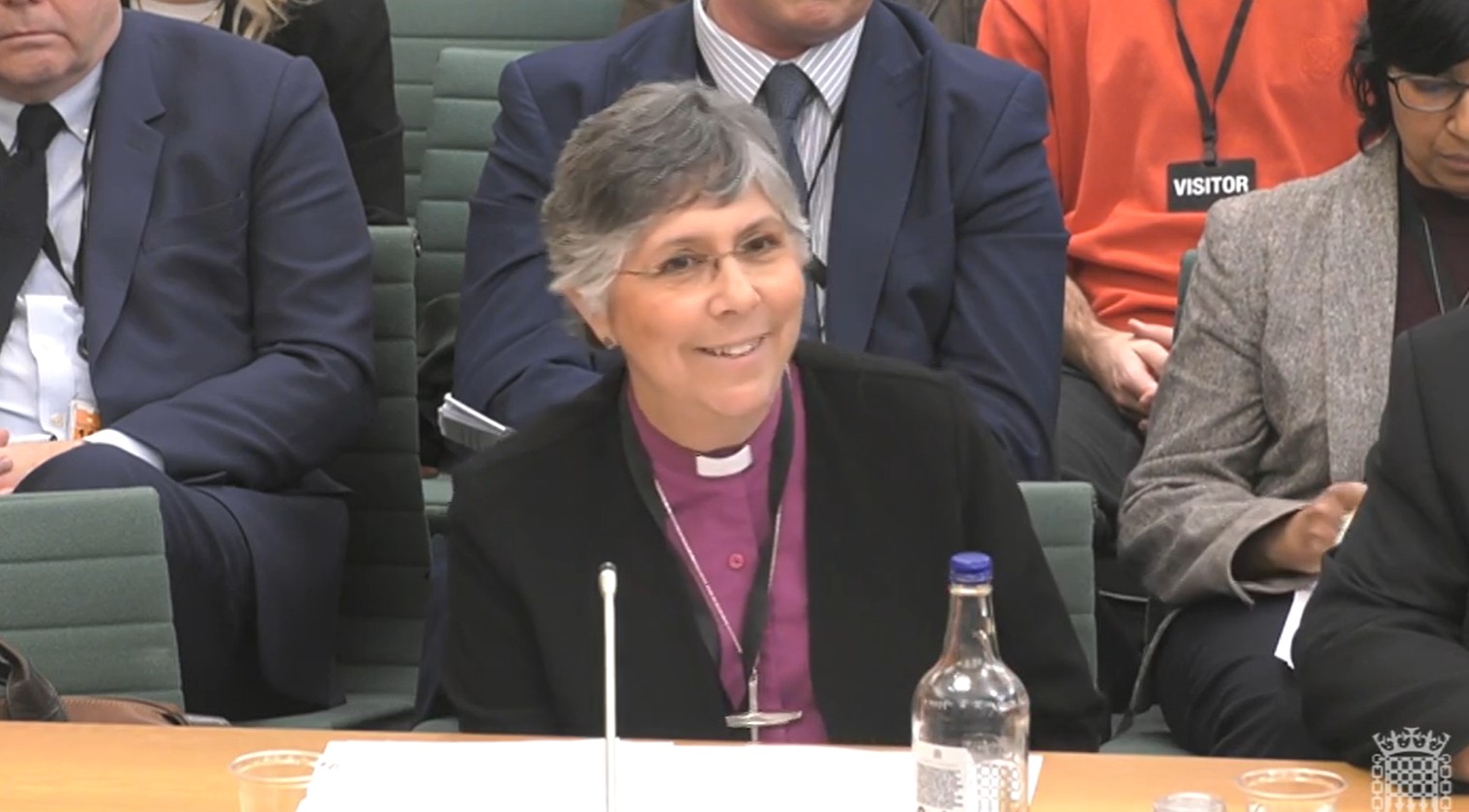
Below is the full transcript of the second session, featuring the Bishop of Chelmsford, followed by an extract of the third evidence session featuring the Immigration Minister Tom Pursglove MP, who was asked questions about views publicly expressed on this issue by the former Home Secretary, Suella Braverman. The first evidence session was with the Reverend Matthew Firth.
The whole transcript can be seen here.
Witnesses: Reverend Canon Christopher Thomas, Right Reverend Dr Guli Francis-Dehqani; Reverend Steve Tinning.
Q74 Chair: Thank you very much for coming along this morning. I wonder whether each of you in turn would like to introduce yourselves.
Dr Francis-Dehqani: Yes, of course. Good morning, my name is Guli Francis-Dehqani. I am the Bishop of Chelmsford.
Chair: You are very welcome.
Christopher Thomas: My name is Canon Christopher Thomas. I am the general secretary of the Catholic Bishops’ Conference of England and Wales.
Steve Tinning: I am Reverend Steve Tinning. I am the public issues enabler for the Baptist Union of Great Britain.
Q75 Chair: We are very pleased that we have a variety of churches in front of us this morning. Bishop, I wonder whether you could perhaps start us off with your reflections on what we have just been hearing about what was happening in Darlington between 2018 and 2020. Is there anything that you would like to say in response to the evidence that we have just heard?
Dr Francis-Dehqani: I do not know Mr Firth personally, so I do not want to get involved in tit-for-tat accusations. I have also seen the response of the diocese of Durham, which has been robust. Mr Firth was there for a brief period of time.
The thing that I am most interested in is the figures. The figures suggest that there are 15 people who may have been asylum seekers over a 10-year period. Five or six of those years are before Mr Firth arrived. He is absolutely right to say that clergy should be very vigilant. We take baptism incredibly seriously. It is a sacrament. It is not something to be played with. We also expect our clergy to act honestly and truthfully and within the bounds of the law.
The figures do not quite add up for me. The objection that the diocese of Durham had was the suggestion that the church is being a conveyor belt for asylum-seeking cases. Those figures from the best part of a 10-year period just do not demonstrate that from that parish, nor indeed more widely. Where the number of asylum seekers has gone up—this is generally, across the board—the number of baptisms, certainly in the Church of England, have not gone up in correlation.
In all honesty, if there is evidence there, we would really like to see it. We genuinely want to be helpful in this conversation and in the way ahead. At the minute, we have not seen evidence that is compelling.
Q76 Chair: We did hear comment about Liverpool, Wakefield and other parts of England. Do you have any sense at all whether what was described to us is happening around England? You look particularly at this area and at asylum seekers, do you not?
Dr Francis-Dehqani: I am one of those who is interested in this area. It is certainly true that some churches are experiencing a larger number of asylum seekers than others. In places such as Liverpool and the other places that were mentioned, that is the case.
I believe that is largely because that is where asylum seekers are themselves placed. Where we see hotels or a high-density population of asylum seekers, it is likely to be the churches in those areas that will see asylum seekers coming to them. Our churches respond to local need however it presents itself. That might happen to be in an area where there are large numbers of asylum seekers.
Incidentally, in the increasingly hostile environment, it is perhaps not surprising that, if they find a place of warmth and welcome, they may well be drawn to it. That is a totally separate issue to saying that we are quickly, easily and freely baptising large numbers in order to scam the asylum process, which is properly the responsibility of the Government, the Home Office, the courts and the tribunals.
We need to play our part honestly and truthfully, but with the extension of Christian warmth, hospitality and welcome that is our responsibility.
Q77 Chair: I wondered whether we could talk a little bit about the Catholic Church. We have been talking mainly about the Church of England. What is the Catholic Church’s view on what is happening? Are large numbers of asylum seekers trying to become Catholics?
Christopher Thomas: We do not have that data in the office that I work in because we do not collate that data. As the bishop has noted and as our Holy Father Pope Francis has been saying constantly, we should welcome the migrant. We should protect them and promote their integration into the community, not only within the church but within the broader society in which we live.
We have a very defined and universal process for the right of initiation of adults, which is quite a lengthy process. I do not have any data about people who have come for baptism who are asylum seekers, but I can give you some figures from 2020 to 2022 on the baptisms of those who were over seven years old. That is the only data that we collate. We do not collate data on what their position was prior to baptism. In the church in England and Wales in 2020, there were 2,157 baptisms of children who were seven years old, 2,841 in 2021 and 3,958 in 2022. Those would be children who were aged seven and adults.
We do not have any data about what the background of the people was beforehand. We have a defined process. I have sent evidence to you about the lengthy way in which the order of Christian initiation takes place.
Q78 Chair: Could you give the Committee an idea of how long that process would take? Are we talking months and months?
Christopher Thomas: Yes. Typically, in any parish, you would begin that process around September. There are markers on the road, as it were, of that process. The process takes place not just with one person, a priest or a parish deacon, but with a team of people. There will be a team of catechists who engage with anybody who is seeking baptism as an adult. They will engage with the person on a regular, normally weekly, basis and explore why they want to become a Christian.
At the end of this first period—it is called the period of inquiry—around Advent Sunday, the first Sunday in December, there is a formal welcome of those people who are interested in becoming Christians into the local community. From the period over Advent and Christmas, the first part of the year, up until the first Sunday of Lent, there will be the period of inquiry. That is where it becomes more formal in terms of looking at what the church teaches. Can you adhere to what the church teaches? Do you have questions about it?
On the first Sunday of Lent, all the people from the diocese, which is the geographical area in which a parish is situated, will come to the cathedral to be greeted by the bishop. He would then welcome them as a broader community. It moves from the individual to the parish and then to the broader community of the diocese.
In the period of Lent, which is called the period of enlightenment, there is a deeper reflection on what they have learned before the sacraments of initiation take place, which includes baptism and confirmation of the Eucharist, at Easter. The period after Easter, mystagogia—it is from the Greek word—is about deepening the experience and insertion into the parish community.
There is an expectation that the person who comes right at the beginning of this process will be part of the community, that they will be baptised and then continue their work and life within the community itself. You are looking at around about nine months.
Chair: It takes nine months to go through that process.
Christopher Thomas: That is right.
Q79 Chair: How long is the process in the Church of England? If you were going to baptise someone, how long would you expect someone to engage with the church?
Dr Francis-Dehqani: We do not have a central policy about how that is done. According to canon law, clergy are required to make sure that any inquirers have a full and deep understanding of the Christian faith and so on.
Typically, for those who are asylum seekers, from the stories I hear from churches around the country, the process of Bible study, classes, learning or whatever lasts somewhere around 10 to 12 weeks. It is often done in groups. From the evidence that I hear from people that I speak to, a high percentage then remain involved in the life of the church and the community.
They would expect to see Christian faith demonstrated through attendance at Sunday services, Bible studies, classes and so on; in a growing ability to reflect and understand; in how they are contributing to community life; and in their changing patterns of behaviour in life. Those are the kinds of criteria, given that there is no cast iron set of criteria.
Q80 Chair: In terms of the Baptists, what is the range of time that you would expect someone to engage with you before they became a member of the Baptists?
Steve Tinning: It is varied. Every Baptist church would be expected to follow up with those who are inquiring about baptism on their journey of faith. Many of them will have been on courses about the Christian faith to help them develop their own understanding and come to a personal response of Christian conversion.
The Baptist Church does not baptise children or babies. There is no set age, but we tend to wait until that point when people can give personal testimony as to their own faith. That is quite a central part of it. The clue is in the name. Being Baptists, this is what we are about.
At the point when a person has come to a personal conviction of faith and would like to express that publicly through baptism, it is more common than not that they will embark upon a course of around six weeks to look at what baptism is, their personal journey of faith, why they have come to that decision and the practicalities of how the day progresses.
That is often done hand in hand with church membership. More often than not in the Baptist Church, congregations have an official church membership covenant agreement between the Christians who want to commit themselves to that fellowship and similarly from the fellowship into their pastoral care, discipleship and growth. There is a very strong expectation that people who are baptised in the context of a Baptist church will go on to exist in the context of that ongoing church.
Q81 Chair: Does the Baptist Church have data about asylum seekers who are seeking baptism with the Baptists?
Steve Tinning: No, we are not a centralised denomination as such. We are a movement of 1,800 churches that have a central resource that supports and encourages those churches. We just do not collect data of that nature, no.
Q82 Chair: Are you able to say anything about the story that was in the paper about the Baptist church in Weymouth and the number of asylum seekers who were living on the Bibby Stockholm barge being baptised? Are you able to say anything about that?
Steve Tinning: Yes, of course. My understanding is that around 40 asylum seekers on the Bibby Stockholm are currently attending churches in the local area. Around 25 to 30 of them are attending the Baptist church in Weymouth. Seven of them have been baptised since October, where they have been attending that church. They have gone through that process, as I said, of understanding their faith. They have been meeting with a Farsi-speaking Christian who is associated with the church, alongside a Baptist minister that is in membership of that church as well. They have gone through all of that in their own language and translated for the English speakers, to understand that discernment process themselves.
When they were baptised, they gave full testimony of their Christian conversion, all of which occurred in their country of origin, not as a result of Christian conversion since they have arrived at the Bibby Stockholm.
Some of the 40 have come from other places around the country. I understand some of them have been baptised in those contexts, but the first four that came to Weymouth Baptist Church came out of the blue one Sunday morning. They just attended. There is an organisation called Welcome Churches that exists to help asylum seekers transition when they are moved on. If they are part of a church that is expressing an explicit welcome towards asylum seekers and refugees and they are moved on and they are registered with Welcome Churches, then similar churches in that area will be alerted, given permission, so that they can extend and continue that discipleship process.
That is how that started initially, and then a number more came and a number more came, and now they are vibrant members of the community of that church.
Q83 Tim Loughton: Can I first welcome all of the work that the various churches have done in giving support to various asylum seekers and refugees in this country? What we are looking at today, though, is those who effectively may have abused that hospitality, who have used a conversion of faith as a means of boosting their asylum application.
Canon, can I just query your figures? You just gave us the figures in the Catholic Church for baptisms for over-sevens between 2020 and 2022, which showed a big increase. That was, of course, during Covid, was it not?
Christopher Thomas: That is right, yes.
Q84 Tim Loughton: Do you have similar figures pre-Covid?
Christopher Thomas: We do, but I do not have them with me, I am afraid. I can send them to the Committee afterwards if need be.
Q85 Tim Loughton: Would those figures, off the top of your head, show an increase or a decrease?
Christopher Thomas: They would be around about the same, I would suspect. I would have to look at them, but it would be around about the same number as for 2022. There would have been a dip during the time of the pandemic, especially because churches were closed at that time.
Q86 Tim Loughton: That is my point. I quoted figures before for Church of England baptisms in the 10 years up to Covid, which is a legitimate period to take, which show a very substantial decrease of more than a third. It was 140,000, dropping to 87,000 in the year before Covid. Would that pattern be similar for your church?
Christopher Thomas: It could be. There would be a decrease, but one of the things about the Catholic Church that is significant is that over the period of the last 20 years we have seen a significant number of migrants coming in, particularly from the Philippines and south India, in the Keralan community, who are Catholics. They would actually be part of the community and would come and seek our communities. When they have children, they would have those children baptised. I could certainly send the figures to the Committee afterwards.
Q87 Tim Loughton: Can I just check that for both the Catholic Church and the various Baptist churches you represent, Reverend Tinning, there is no central guidance to clergy about baptisms for asylum seekers?
Christopher Thomas: No, there is not.
Steve Tinning: There is not specifically for asylum seekers. We have a collection of various guidance for baptism and we have guidance for ministers that are called to give evidence at tribunals in cases of asylum seekers as well. If you are asking if I have a special pamphlet just for asylum seekers, no, I have not.
Q88 Tim Loughton: Bishop, the Church of England does have guidance, which you have now decided urgently to review. Why?
Dr Francis-Dehqani: It is always advisable to review guidance periodically. It was produced initially, as I understand it, in 2017, around the time that the community sponsorship programme was launched jointly by the then Home Secretary and the Archbishop of Canterbury at Lambeth Palace. The guidance was produced around about that sort of time. A great deal has changed between then and now, including some legislation and policy, so it is appropriate that we look again.
I do wonder whether it is not so much that the guidance is not now helpful, but that actually the context has changed with the hostile environment. Maybe the guideline now looks softer than it actually is, because of the change in context around us. Having said that, it is quite appropriate that we look at it. I have said publicly that we ought to review these guidelines from time to time.
My sense is that we may be able to tighten up some of the language, to clarify things a little bit more. The underlying essence of it will not change. Our role is to offer a warm and loving welcome, to provide support and pastoral care where we can, but to be wise as serpents, certainly when it comes to baptism, and to always act honestly and within the bounds of the law.
Q89 Tim Loughton: You do not think the guidance will fundamentally change. There will be some nuances and some contextual changes, but the underlying guidance is sound, as far as you are concerned.
Dr Francis-Dehqani: It is guidance. We need to remember that. It is not policy. It is guidance. The underlying message will remain the same, but I hesitate to say too much because it is currently under review. We will see what is produced, and what is produced will take into account consultation, both with clergy who have a lot of experience in this area and with other stakeholders—charities and so on. We do want to take into account the reality of the situation and the experience of people on the ground.
Q90 Tim Loughton: Where in the guidance does it guide clergy that they should be convinced as to the sincerity of somebody coming forward to be baptised into the Church of England and that that should be a consideration before taking forward that process?
Dr Francis-Dehqani: I do not have the detail in front of me, but my understanding and memory is that, in this guidance and more generally, there is an understanding, according to canon law, that anybody who seeks baptism must understand the importance of what they are doing. They must understand the tenets of the Christian faith. They must demonstrate this through their lifestyle, what they are saying and their commitment to the life of the church. The things I have already mentioned—attendance, Bible study, involvement in community and so on—are absolutely necessary parts of the discernment process.
Q91 Tim Loughton: That is not what I asked, is it? You said just now that there should be a full and deep understanding under canon law. The phrase on page 8 of the guidance, which is the only section of this 10-page guidance that appears to refer to any judgment about the legitimacy of the applicant for baptism, is “to be as wise as serpents and innocent as doves”. It says, “Clergy must be confident that those seeking baptism fully understand what it signifies as a sacramental act of initiation, which ushers an individual into the church”. It is an understanding of what it is all about. It is a general knowledge test, rather than a genuine commitment that is being judged according to your guidance, is it not?
Dr Francis-Dehqani: Nobody in the Church of England would say that the baptism is about a general knowledge test. That is part of the challenge, is it not? How do you assess something that is in somebody’s heart? It is very difficult to do that. As I understand it, some of the Home Office approach and tests and so on have been exactly that, trying to see what people’s knowledge might be about the Bible or whatever. It is a very difficult thing to assess, which is why we use the language of discernment and wisdom needed.
I have spoken to clergy who have said that they have denied baptism to asylum seekers because they have felt that there has been a lack of genuineness. As a bishop, I have to trust our clergy, the training they get and the experience that they have on the ground. They get to know people. They develop relationships and they use their wisdom, but if the language can be tightened up in the guidelines, I am really comfortable with that.
Q92 Tim Loughton: Do you not think it is more than just tightening up the language? Going through this guidance, which was quite an eye-opener for me, it is more of an instruction manual as to how to get somebody through the asylum process. There are lots of practical things for clergy here about their participation in attending court appearances. For example, it gives the advice, “Judges are likely to react negatively if there is anything that looks like an organised demonstration, so avoid there being too many people present”. It says, “You need to give convincing evidence”.
It also then says, “It would be very helpful if we can collect case studies where cases claiming religious conversion have been poorly assessed. The Home Office changed their policy on LGBTI assessments based on the Guardian presenting a list of poorly assessed cases”.
Then, as we heard from Reverend Firth earlier, it talks about journalists and the anti-immigration rhetoric of a number of media outlets, “which are used to support broader political narratives about British identity, rights and values, as was particularly evident in the run-up to the EU referendum”. Why is that relevant to how clergy should assess whether somebody approaching them for baptism into a new church is what they should be looking for? This is all about process, is it not? It is an instruction manual; it is not really guidance.
Dr Francis-Dehqani: I do not think it is an instruction manual. We do not have a policy on this. It is not an instruction manual. It was designed, when it was created, in order to help clergy understand how best to support somebody in a way that is both helpful to the individual, but also appropriate and honest. Around this whole area, there is an awful lot of rhetoric and negativity of language, which is feeding into the reality of the experience. Headlines are very often driving people’s perceptions and that is unhelpful, which is why an opportunity to explore these things more deeply is a positive thing.
Q93 Tim Loughton: It is not impartial guidance, is it, though, when it starts to talk about Brexit, effectively?
Dr Francis-Dehqani: I cannot comment on Brexit, I am afraid. It depends what you mean by “impartial”. It is designed to support somebody well through the system. It is not designed to ensure that you baptise people and get them through. Again, if I can just come back to the data and the figures, my understanding is that in 2023 the Upper Tribunal cited 0.1% of their cases—23 of their cases—where religious conversion was cited as a reason. Of those, 13 were set aside. Only seven people were accepted on the basis of religious conversion.
The Upper Tribunal has also said that clergy coming to support as witnesses should not be considered generally as expert evidence and that religious faith and conversion is not a determinative reason for asylum. We, as a church, have also been learning more and more over the years. Anybody who comes to us, seeking practical support or teaching, friendship and support through a process of exploring faith will receive the same treatment, whether they are an asylum seeker or not. Again, I stress this: we want to act always honestly, above board and in keeping with what is law.
Q94 Tim Loughton: Bishop, are you saying that you do not seem to think there is a particular problem with this guidance? This revisit is largely about updating the context, rather than essentially making this into greater guidance for clergy to ascertain whether somebody is genuine about their reasons for converting and not seeking to do so for the convenience, so that it aids their asylum case. You do not think there will be a fundamental change in this guidance. Presumably, it has to be passed by the Synod, does it?
Dr Francis-Dehqani: The Archbishops’ Council, one of the NCIs, have taken responsibility for this document. It was one of their staff who produced it and it will be they who renew it. What I am trying to get across is the essence of the fact that the church is there to support individuals and enable them to explore faith, to teach them, to bring them to baptism if that is their intention, they demonstrate commitment and clergy discern that that is the right thing.
Essentially, that is our role, and it is the role of the Home Office, the courts and tribunals to assess the veracity of the asylum claim. If we can help with that in any way, we are absolutely happy to do that in the understanding of conversion and all of those things.
In terms of tightening up on the criteria for how you assess whether somebody is genuine or not, I come back to the point that there will never be a set of cast-iron criteria. You are looking into people’s hearts. Our evidence, the evidence that I witness when I visit churches and so on, is, where there are asylum seekers, often thriving communities, mixed communities of asylum seekers, refugees and locally born British people all contributing to life in the community, and they have retained an interest and indeed are contributing to the—
Q95 Tim Loughton: Nobody is denying that. We are just concerned about those people, whatever the number, who appear to match the description that Reverend Firth has given in his limited experience. Do you regard Reverend Firth as a whistleblower?
Dr Francis-Dehqani: I do not know that I can answer that, to be honest with you. I do not know enough about the situation. He was in Durham for a short period of time. As I understand it, he did not raise these issues—
Q96 Tim Loughton: He was in charge of a parish for at least a couple of years.
Dr Francis-Dehqani: For a couple of years, yes. He did not raise these issues, as I understand it, while he was there. He raised them through an article or an interview in a newspaper and the diocese have responded. If you want more detail about that, I am sure we can find it from the diocese of Durham. I am afraid I cannot comment on it.
Q97 Tim Loughton: Do you support the response of the now retired Bishop of Durham, in his pretty robust calling out of Reverend Firth? Effectively, he accused him of lying.
Dr Francis-Dehqani: I have no reason not to take the comments of the Bishop of Durham and the diocese of Durham seriously. As I say, I do not know the situation. I do not know the church, so I hesitate to make a value judgment.
Q98 Tim Loughton: You agree with the Bishop of Durham and his inference that Reverend Firth was lying.
Dr Francis-Dehqani: I am not going to get into comments and judgments about whether he was lying. I do not recognise the notion that the Church of England is currently being a conveyor belt for baptisms in order for people to gain their asylum status.
Q99 Tim Loughton: You have condemned the use of the phrase “conveyor belt”. Would you use any phrase to recognise that there is some abuse going on?
Dr Francis-Dehqani: I do not believe that there is abuse going on. I have put in a written question through the House of Lords to ask for statistical evidence from the Home Office to the claim made by the former Home Secretary in the Daily Telegraph on 3 February that she has become aware of churches around the country facilitating “industrial-scale bogus asylum claims”. We do not have that evidence. If there is such evidence, we would like to see it so that we can adjust and work with the Home Office.
Q100 Tim Loughton: Of those baptism figures in the 10 years that I gave, how many of them are by people going through the asylum seeker process?
Dr Francis-Dehqani: Like my two colleagues, we do not hold information about what people’s status is pre-baptism. We have been baptising people for centuries and we have never held that kind of information.
Q101 Tim Loughton: With respect, Bishop, you have just condemned Reverend Firth’s figures of only having dealt with 15 baptisms in his parish, of which seven were down to him. You have no knowledge of what the total figure is for the UK. How can you join in the Bishop of Durham’s condemnation for that only being an insignificant amount, even though it represents 20% of all baptisms? What is your data?
Dr Francis-Dehqani: Our data is the number of baptisms that have taken place over the age of 11 or 13. We do not hold data centrally—or anywhere, for that matter—about precisely what the status of the individual is. However, as I have explained to you, where there are large numbers of asylum seekers—and when we are talking large numbers, we are talking maybe 20 or 30 in any given church community—there is evidence that they are participating fully in the life of the church.
Q102 Tim Loughton: With respect, Bishop, that is not the point. Can you just confirm that the Church of England does not keep any figures and has not done any analysis of the proportion of those that it has accepted into baptism in the church over the last 10 years, or whatever it may be, who went through that process while part of an asylum-seeking procedure? Therefore, you cannot claim that the figures cited by Reverend Firth, as condemned by the former Bishop of Durham, are negligible, because you do not know what the overall figure is, do you?
Dr Francis-Dehqani: We do not hold that information. You are correct. What we do know is that, sadly, from our perspective, there has been a steady decline in the number of baptisms overall, including where there have been peaks in the number of asylum claims. Baptism figures have still been steadily going down. What I would say is that the reason the figure of 15 is interesting in that particular context is that it is 15 people over a 10-year period. However you look at the figures, those are not vast enough to reference a conveyor belt.
Q103 Lee Anderson: Bishop, were you alarmed when Reverend Firth said that the only asylum seekers he ever saw for baptism were at the appeal stage? They were not there before, or after they had been granted asylum; they were strictly at the stage of an appeal for asylum. Was that alarming? Was that a red flag?
Dr Francis-Dehqani: If that is his experience, then that is his experience. I do not want to question it. I have not heard that before.
Q104 Lee Anderson: If you were a vicar in a local parish church, would that be a red flag for you?
Dr Francis-Dehqani: I would ensure that I was applying the process of discernment as wisely as I could. If that was the pattern I was seeing, I would want to be very careful.
Q105 Lee Anderson: Would you raise it with your superiors?
Dr Francis-Dehqani: I would certainly raise it with colleagues to see if they were noticing a similar pattern and, if I felt it was necessary, yes, I could speak to my seniors as well.
Q106 Lee Anderson: The previous witness suggested, in the end, that the Archbishop had turned a blind eye to this. Do you agree with him?
Dr Francis-Dehqani: We do not operate that kind of system in the Church of England. The Archbishop does not act as a CEO in the Church of England. Every diocese is led by the diocesan bishop, together with a leadership team, and we have responsibility for clergy within the fact that they are officeholders. Clergy have a certain autonomy and responsibility in their own patches as well. The Archbishop of Canterbury, even if he wanted to have that kind of responsibility, could not within the structures that we have.
Q107 Lee Anderson: We know the asylum process and system is broken in this country. We all know that. Do you think, with what Reverend Firth had to say, that the church is adding to the problem?
Dr Francis-Dehqani: As I have said already, we want to be part of the conversation going forward and, if we can help and if there is data presented that suggests that there is a serious problem, then absolutely we want to be part of that conversation.
Q108 Lee Anderson: You said previously, Bishop, that as a church you want to provide a warm and loving environment for refugees and asylum seekers. Can you tell the Committee how many asylum seekers the Church of England actually houses in its vicarages and properties around the country?
Dr Francis-Dehqani: I cannot talk for the whole country. I can talk for Chelmsford diocese, where we currently have 11—
Q109 Lee Anderson: What about a rough, ballpark figure around the country?
Dr Francis-Dehqani: I am really sorry. I just do not have that evidence. I can only speak for Chelmsford diocese. I can give you the information about Chelmsford—
Q110 Lee Anderson: Is it hundreds?
Dr Francis-Dehqani: Do you mean in Chelmsford diocese?
Lee Anderson: No, I mean around the country.
Dr Francis-Dehqani: I do not know what other dioceses do.
Q111 Lee Anderson: Is it dozens?
Dr Francis-Dehqani: We can try to find out, if you want it, but I really do not know what the policy is in other dioceses. This is what I am trying to say.
Q112 Lee Anderson: What I am trying to ask, Bishop, is whether you are practising what you preach. Excuse the pun.
Dr Francis-Dehqani: Yes, absolutely. There are many examples of churches offering warm welcomes through events, through practical support, through guidance and so on, but in practical terms around housing, I can only speak for Chelmsford diocese.
Q113 Marco Longhi: I am afraid this is again for you, Bishop. Are you aware that the chap who was on his way to blow up Liverpool’s Women’s Hospital, al-Swealmeen, was in the country as a result of claiming to have converted to Christianity?
Dr Francis-Dehqani: I believe I have read some of that in the newspapers.
Q114 Marco Longhi: As was the case, in fact, for Ezedi as well. Do you believe these to be Christian acts?
Dr Francis-Dehqani: They are crimes. Of course I do not.
Q115 Marco Longhi: These are very violent acts, quite clearly completely at odds with Christianity, though not necessarily, in fact, at odds with other religious teachings. How could it get to the stage that clergy would vouch for the Christian faith of people who then go on to commit these acts, given that you say such a small proportion of people are actually allowed into the country on that basis?
Dr Francis-Dehqani: The first thing I want to say is that the church is not infallible. It is a human institution and errors of judgment and so on may be made. I want to absolutely accept that.
However, we cannot make policy and form our wider opinions on the basis of a couple of negative cases. We have to be very careful about that. Human beings will fall into bad ways and particularly human beings who have been through traumatic experiences, have mental health problems or whatever it is. There could be a whole host of reasons, but it is dangerous to use a couple of examples to criticise a whole system when, at the end of the day, it is not the church’s responsibility to assess the veracity of the asylum claim.
Q116 Marco Longhi: It is as a result of the church’s position that a previous denial of claim for asylum has then been overturned. I am expressing an opinion of my own now; perhaps I should ask the question. Is the church’s altruism over its attitude towards asylum seeker applications and asylum seekers not actually at the cost of and to the harm of other people already resident in this country, some of them perhaps belonging to your church? Could it not actually harm them?
Dr Francis-Dehqani: I have a couple of things in relation to that, if I may. One is that the asylum claim has to take into account more issues than just the conversion. We know that it is not a determinative factor. The responsibility for giving somebody permission to become a refugee does not lie with the church. That is one thing I would say.
The other is that you could argue from the other side that the work that the church and other civil groups and charities do with asylum seekers is enabling positive and good integration. If these kinds of groups were not working with asylum seekers and refugees, we could have even more problems because people are not being enabled to integrate well, to find a place of belonging, to begin to contribute to the new society that they are part of. Again, it is difficult to assess these things, but there are many good examples.
I wonder whether the complexity of this issue is such that one Select Committee is going to struggle to get to the heart of it. If there is a genuine desire to understand the significance of the church, other groups, charities and so on working with asylum seekers, perhaps there is a longer-term process to be done, with a Committee looking over a period of time. We would be delighted to show you some of the places and some of the good examples, but we cannot vouch for every case.
Q117 Marco Longhi: If I may, you have mentioned that you are human beings and therefore fallible, but that could be at very serious cost. That is the first point I would like to make.
The second point I am really struggling to reconcile here is that you seem to be very willing to describe the former Bishop of Durham’s testimony in response to Reverend Firth as being serious, with no reason why you would want to question it. When you come to answer other questions, you say that you simply have no data, but you are not willing to accept that Reverend Firth’s observations of what he was experiencing have any credibility at all. Those are completely contradictory positions to take, if you do not mind me saying.
Dr Francis-Dehqani: I hope I have said that I do not know the situation of Mr Firth, and I have not criticised him or accused him of anything.
Q118 Marco Longhi: You seem to be supporting the former Bishop of Durham’s position, though, which is basically calling him a liar.
Dr Francis-Dehqani: I have never called him a liar. What I am saying is that, if he is claiming that the Church of England is being a conveyor belt for baptisms in order for people to gain asylum status, that is not the experience that I have. I do not believe there is the evidence to suggest it.
Q119 Marco Longhi: Perhaps we are arguing about semantics. Maybe there is a conveyor belt in attempting to get baptisms, but that fortunately many of those are not succeeding.
Dr Francis-Dehqani: Possibly, but I have not seen the evidence for it.
Q120 Marco Longhi: You have heard evidence from Reverend Firth this morning. Is there any particular part of it that you disagree with?
Dr Francis-Dehqani: The experience that I have—
Marco Longhi: No. That is not the answer to my question.
Chair: Let the bishop answer.
Q121 Marco Longhi: Are there any aspects of the evidence you heard from Reverend Firth this morning that you disagree with?
Dr Francis-Dehqani: He was speaking about his particular context in Darlington and I cannot comment on that specific context in Darlington.
Marco Longhi: There is no point asking any further questions.
Q122 James Daly: I am going to have to come back to you briefly, Bishop. The situation that concerns me goes to Mr Loughton’s point. An organisation—in your case a religious organisation—takes an overtly political stance in respect of an issue. What Mr Loughton read out to you is a political statement. It is not an ecumenical statement. It is a political statement, and we have a situation where the Archbishop of Canterbury is using very strong terminology in respect of legislation such as the Rwanda Bill that is going through Parliament.
How can we rely on the Church of England on this issue to take an impartial position regarding these applications? It is clear as day that you are an organisation that will do everything possible to ensure and support asylum seekers to stay within this country. That might be an admirable position. I am not challenging that, but it is not an even-handed position, is it? I sometimes do wonder whether one of your parishioners, if they had the temerity to support the Rwanda legislation, would dare say that and would be welcome in their parish after that.
Dr Francis-Dehqani: We represent the breadth of the Church of England and there are people with all kinds of different views in our parishes. They would find an equally welcome place, or they should find an equally welcome place. Sorry; can you just restate your question?
Q123 James Daly: In terms of the wider application of Christian conversion that we are talking about here, we are concerned that we have an organisation with an overtly political position. It is not a religious position. It is a political position, which makes reference to the EU referendum. Morality has been brought into discussions of the Rwanda legislation. Some of us are losing faith that you are, as an organisation, dealing with applications in an even-handed manner and have a sufficient amount of impartiality.
You are looking at claims in a way where you are essentially part of a process that is looking to ensure that people can make successful applications, rather than taking a position based on the evidence. A lot of people, as we have heard from Reverend Firth, appear to be turning up at churches attempting to get a quick baptism for the reasons that have been said. Is it unfair for me to say that?
Dr Francis-Dehqani: It is not unfair for you to say it, because there is that perception around. It has not been what I have experienced and I come back to this point that, if the Committee really wants to see what the picture is widely across the Church of England, perhaps there needs to be a little more time invested, to come, see and meet some of our clergy, who have built up a lot of experience over the years. They seek support and advice from one another as well.
Q124 James Daly: Has the Church of England, through the Archbishop of Canterbury’s leadership, taken a political position on how this country should deal with asylum seekers?
Dr Francis-Dehqani: No.
Q125 James Daly: You have not taken a political position at all in respect of that, even though Mr Loughton has said what he has said.
Dr Francis-Dehqani: Sorry. Do you mean an agreed, common political stand?
James Daly: Absolutely, yes.
Dr Francis-Dehqani: No. That absolutely has not been the case. The Lords Spiritual who sit in the House of Lords are not whipped. We are there as individual people. There happens to be a lot of agreement on the Rwanda Bill and the Illegal Migration Act, but we are there as individuals. There is no common political stand.
Q126 James Daly: A lot of people would be surprised by that. My final question is this. By any stretch, there is no evidence—none whatsoever—that Reverend Firth is not telling the truth regarding six or seven people attending every three weeks. He has, quite admirably, taken the position that we have to engage in the full Christian process before baptism can happen, as he has said today.
Can I ask you, as a bishop in the Church of England, what you are going to do, taking away that information? It is not just happening in one church in Darlington, is it? It is happening all over the country. What steps can be taken? What research can you do? What processes are going to be put in place to ensure that that is not happening elsewhere?
Dr Francis-Dehqani: If there are churches where large numbers of asylum seekers are being brought, at appeal stage, asking for baptism, we would advise our clergy, as we always do, to act with great wisdom and discernment. As I have said, there are clergy I have spoken to who say that they have turned down baptisms. The picture that Mr Firth has painted—
Q127 James Daly: How many have turned down baptisms? You have said that you know people have done it. How many?
Dr Francis-Dehqani: I do not know exactly how many, but I have spoken to clergy who have told me that they have turned people down because they did not feel that what they were saying was meeting the criteria.
Q128 Alison Thewliss: I wanted to ask the other two churches about what happens in their church communities. It feels as though they have perhaps not had enough of a say here. I am conscious that we do not have representatives from Scotland here. Could you tell me a bit more about how you see this? Do people who have converted stay in the life of the church? Do they continue to contribute?
Christopher Thomas: I do not have specific data about asylum seekers. Our process, the Order of Christian Initiation of Adults, is quite a robust process in terms of the engagement that people need before they receive the sacrament of baptism. There is also the discernment that Bishop Francis-Dehqani has talked about. It is not a singular person taking that decision. It is not just the parish priest. There are other people involved, including sponsors and catechists, and there is a broader community aspect to this.
In particular, it would be incumbent on every priest to have a formal interview with the person who is seeking baptism. You will, I am sure, be aware of the church’s teaching on marriage and other things. We have to ascertain the background of the person before they receive the sacrament. In that process, you would unpack the position of where they have come from, if they were asylum seekers, for instance, but not only that. If they were coming from any other particular background, you would unpack that.
There is a sense of real engagement. You cannot say whether everybody who receives baptism as an adult will then continue on in the church. As the bishop said, we are all human and people will have different experiences of faith but, from my own experiences as a parish priest—I was 13 years a parish priest in the diocese of Nottingham—the people who came as adults to receive the sacraments of initiation had a real depth of participation within the faith community and were really valuable in terms of developing their own faith, but also taking on the role of being sponsors for those who came up to receive faith as well.
Steve Tinning: Like I said earlier, in the Baptist Church baptism and church membership are often very closely aligned. It is very unusual for a church to walk with somebody in their journey of faith, see them baptised and then never see them again. It is extremely rare and, more often than not, it is because they move away. There are some anecdotal examples that have been shared about churches that have welcomed asylum seekers, baptised them and not seen them again.
That sort of reporting and language is desperately unhelpful because, when you dig a bit deeper, it is because they have been moved on out of the community, and they have gone on to express their faith in other places and in other ways.
I would suggest that that is not our experience. For churches in the Baptist faith, as in our other churches that are represented today, there is no more explicit teaching in scripture, from beginning to end, that is consistent with welcoming the stranger. Churches are desperately keen, where they can, to welcome people at whatever stage on that journey they are, if they are perceived to be in need. It is that process of understanding their needs, serving their needs, coming to understand them and their journey of faith that sometimes leads to Christian conversion.
As was said earlier, in an environment that is so hostile towards them as human beings, when they are given a warm welcome, when they are provided with a food bank, when they are given a home, when they are embraced as part of a community, it is no wonder that that instils questions about the motivation of the people that have expressed that welcome.
I would also like to say that, in the situation in Weymouth, if the church were here today the one thing that they would want me to articulate before the Committee is the sadness and the fear that they have felt as a church since some comments have been made by MPs around this issue. They sent me an email that was sent to them, that said, “YOU NEED SHUTTING DOWN AND THE BACKLASH FROM THIS WILL BE HUGE!… THE TRUTH IS YOU KNOW YOUR LYING AND CHEATING OUR SYSTEM!… TRAITOROUS TO TAX PAYING PEOPLE!… BRACE YOURSELF!…”
That is a small church on the south coast that is desperately trying to express a kindness towards people they consider vulnerable. They have been on the barge. They have seen the conditions that they are in. They have come to them expressing faith. One lady who exemplifies that church community is over 80 years old and she is known by the asylum seekers as “the huggy lady”, because she will not let them leave the church without expressing Christian love and kindness to them through an embrace and a hug.
This church is now fearing the backlash because of language used, as we have heard earlier, about questions as to whether taxpayers are being scammed by the Government, others saying that you can attend mass once a week for a few months and, bingo, you are signed off by a member of the clergy. It is just not true and it is doing damage to the communities that are desperately trying to serve the poor and the vulnerable in their areas.
Alison Thewliss: Thank you. It really is quite disturbing to hear that the church has been targeted in that way.
Steve Tinning: Thank you. I told them I would share that with you all. I am not trying to berate anyone. I am just trying to say we all have a responsibility to recognise the consequences of all our actions. We, as a church, definitely have that responsibility and we will continue to encourage our church leaders to give evidence when asked in tribunals as honestly, clearly and helpfully as they possibly can. We have a similar expectation for our places of power: that they would hold that same level of responsibility.
Chair: Thank you very much indeed. That was a very important point to hear, about that particular church in Weymouth and how they are feeling at the moment about what has been said.
Can I thank all three of you for giving evidence today and helping us to understand more about what the situation is? That has been very helpful.
Witnesses: Tom Pursglove MP, Dan Hobbs and George Shirley.
Q129 Chair: Perhaps I could ask you, Minister, just to introduce yourself to the Committee, as well as your officials, one of whom we are very familiar with and one of whom we have never met before. We are very pleased to see a new face.
Tom Pursglove: I am Tom Pursglove, the Minister of State for Legal Migration and the Border. This is my colleague Dan Hobbs and my colleague George Shirley.
Q130 Chair: Could Mr Shirley just say what his responsibilities are, just so we are clear?
George Shirley: I am the director for asylum and human rights operations. That is the casework element of the asylum process.
Q131 Chair: You will be able to particularly address some of the questions we might have around how applications are dealt with within the Home Office and what is considered by decision-makers.
George Shirley: Yes, that is right.
Q132 Chair: Mr Hobbs, you are in charge overall.
Dan Hobbs: I am the director general of migration and borders in terms of the policy systems and strategy.
Chair: That is very helpful to know.
Q133 Alison Thewliss: I would like to start, if I may, with a written question that I sent to you, Minister, which you did not really answer. I wondered if you might take the opportunity to answer it a little bit better now. I had asked, with reference to the article by the former Secretary of State, the Member for Fareham, entitled, “Too many churches are facilitating bogus asylum claims. This must stop”. It was in the Telegraph on 3 February.
You were unable to answer the question as to what evidence the Department holds on churches facilitating high levels of false asylum claims. Do you have that evidence just now?
Tom Pursglove: The key point to make here is that it is, of course, a matter for the former Home Secretary to explain the comments that she has made. They are not my comments. They are not the comments of the ministerial team in the Home Office at the moment and they may be questions that you as a Committee wish to ask of her. What I can say, for the Home Office’s part, is that we recognise that recent cases have given rise to an interest in this issue.
We do not have specific evidence of facilitation but, where there are issues that are raised about specific cases, the evidence within specific cases and particular issues, we will look into those issues. Those matters are properly tested as part of the consideration of any asylum claim. You will recognise the introduction of the two-stage test that we brought forward through the Nationality and Borders Act, which I legislated for when I was last in the Department.
What we are seeing on the back of that is grant rates coming down, but also a more thorough testing of the evidence that people are bringing forward as part of their claims, including the credibility of those claims.
Q134 Alison Thewliss: The former Home Secretary said that she had seen evidence as Home Secretary, which she must have seen as the Home Secretary, as the Minister in that Department. What evidence does the Department have that she is referring to?
Tom Pursglove: I cannot answer, as you will appreciate. Rather like I would not ask you to explain the thinking of a colleague of yours in the SNP, I cannot give you a specific, definitive answer as to what it is that Mrs Braverman has in mind. She would need to explain that to the Committee on her own terms and in her own way.
What I can say is what I have just said, which is that we do not have evidence of systemic abuse of the asylum process in the way that some, perhaps, are suggesting but, where there are issues that arise, where there are concerns about abuses of the asylum process, we look into that, as we do all angles of abuse. When it comes to Christian conversion, that is properly tested as part of the asylum determination process. As I have said, the reforms that we have already introduced are making a difference in terms of helping that process to be more robust.
Q135 Alison Thewliss: The evidence that she says exists does not exist, as far as you are concerned. It does not exist at all.
Tom Pursglove: I can only refer you to what I have said previously. You would need to ask her what the rationale behind her comments is.
Alison Thewliss: I ask because it is quite topical.
Tom Pursglove: In that case, you may wish to ask her directly.
Q136 Alison Thewliss: If there was evidence in the Department, you would expect to have seen it.
Tom Pursglove: I would expect to see evidence within the Department. If there was a systemic issue, I would expect officials to come to me, as the Minister, with that. As I say, we are working through reform that is dealing directly with credibility testing, but also there is a case-by-case consideration of individual claims, recognising the circumstances of specific claims and also ensuring that any allegations of abuse are properly looked into.
Q137 Alison Thewliss: Have you asked if that evidence exists?
Tom Pursglove: As you would expect, we have a Select Committee hearing today. I have done considerable preparation ahead of this Committee, as you would expect Ministers to, and I have no doubt that you will want to probe as a Committee on various aspects of the Department’s work in this area. It is something that we consider to be of importance, given the concerns that are being raised. That is why the Home Secretary has had the meeting with faith leaders to talk about this issue and why we intend to establish a working group, to work with them to make sure that all of us are ensuring the integrity of the asylum system in the way reasonable people would expect.
Q138 Alison Thewliss: May I ask your officials? Are either of you aware of such evidence existing?
Dan Hobbs: I refer to the comments that the Minister has made in terms of what we have and wider issues in terms of the decision-making process. I cannot add anything further to what the Minister has said.
George Shirley: Where there are individual cases, evidence and issues, we will deal with those cases specifically.
Q139 Alison Thewliss: There is no evidence of the systemic nature that the former Home Secretary has suggested.
George Shirley: It is as Dan and the Minister said.
 The Church of England in Parliament
You must be logged in to post a comment.